A series of events inspired this piece, which I wrote last fall and for which I presently find myself without a publisher. Enjoy.
—
A couple of years ago I was invited to a friend’s wedding across the country. It was somebody who I had known since the third grade, and it was important to me to be there. Nonetheless, I had a little bit of a scheduling issue of which I needed to make her aware: it was Easter on my church’s calendar.
“What do you mean?” she asked. “Easter is the month before.”
“Not for us.”
“Oh,” she said. “I understand—you’re pagan, right? It’s the solstice?”
“Er, no. I’m Orthodox,” I explained.
“I don’t even know what that is,” she said, “but as long as you’re there, that’s cool.”
The day of her wedding, I was lucky to be awake for the food, let alone the ceremony. Talking to the mother of the bride, I explained that I had been at church at four in the morning for an Easter service.
“How does that work?” She was clearly confused. “Wasn’t that a while ago?”
“Not for me,” I said. “I’m Orthodox.”
“Orthodox?” she asked. “Orthodox what? Jewish?”
Right, I thought. Because Easter is a Jewish holiday. “No,” I told her, “Orthodox Christian.” She stared at me. I might as well have been speaking Uyghur. “You know, like Greek Orthodox? Russian Orthodox?”
“Oh, I didn’t realize your wife was Greek! I guess she’s got dark hair—”
“She’s not. We converted.”
Mother of the Bride narrowed her eyes, started to say something, then changed her mind. “Well, I just hope that doesn’t mean you’re one of those fundamentalists the Republicans have sold out to,” she said, and moved on to the next guest.
Orthodoxy is a tough thing to explain to most Americans. It’s the world’s second largest discrete body of Christians after Roman Catholics, but it is largely unknown west of Greece. If people are aware of what it is at all, it is knowledge likely derived from passive contact—maybe they’ve been to an Arabic church festival and seen icons while munching on baklava. Possibly they’ve got a Russian friend who wears their wedding ring on their right hand. Maybe somebody’s been to a friend’s wedding or a baptism, and came away from the ceremony thinking that the whole thing felt weird and old. Beautiful, maybe, but still pretty alien and ancient compared to our own prefabricated, whitewashed, auditorium-style church culture.
Most likely, they saw My Big Fat Greek Wedding where that guy from Northern Exposure was baptized in a plastic kiddie pool.
What’s even tougher is trying to explain to your average White Anglo-Saxon Protestant, or whatever else they might be, that you’re Orthodox when your last name doesn’t end in “-opoulos” or “-evsky.” As with my friend’s mother, there’s often an assumption that there must be an external cultural force operating on you—you had to convert to get married, or your dad did, right? Or your grandparents had to change their names when they came to this country? Don’t you have to be born or get married into Orthodoxy, like Judaism? One or two people might have read something in Christianity Today about a group of a couple of thousand Evangelicals converting to Orthodoxy back in the 1980s—and also might have read something in the same magazine about a convert or two having buyer’s remorse sometime later.
As well, any sense of what Orthodox Christians actually believe is in all probability a bit murky. When I was involved in an Orthodox college ministry, we were often asked by people from other groups—“Do you guys believe in Jesus Christ?” Or, “Are the Orthodox saved?” There was one friend with whom I was discussing this who became visibly uncomfortable when he heard the words “Eastern Orthodox.” He stopped chewing his hashbrowns, squirmed a bit in his seat and said, “I’m not really sure what that even is.” Well, no. Most aren’t. I often get asked—it’s Roman Catholicism without the pope and in Greek instead of Latin? Something like that? More often than not, I know they just want the short version of the story, the bumper sticker rather than the divinity degree, so I smile, shrug, and say, “Something like that.” I’m bad at telling short versions in the first place, and any short version I come up with for this is going to make people more confused, not less.
Then there are the times where somebody seems genuinely interested in a real answer, and sometimes the outcome of providing that real answer surprises everybody. My wife and I were having Benjamin, a friend from school, over for dinner once when we were still getting to know him, and he asked about what we believed as Orthodox. I handed him a book called The Orthodox Church, written by Timothy Ware, a bishop and a much wiser man than I, saying, “Read this. He says it much better than I’ll ever be able to do.” Three years later, Benjamin is preparing to become a priest.
Truth be told, someone walking into an Orthodox church that’s been around for any length of time will quite possibly feel like they’ve happened upon an archaeological dig. There are icons, candles, and incense everywhere, the liturgy is chanted, the priests wear a lot of vestments and face the altar rather than the people, and so on.
Add to this that many perceive it as a “Greek thing” or a “Russian thing” or a “Lebanese thing” and just in general “not an American thing,” and even if you are successfully able to explain to somebody what Orthodoxy is, you’ve still got the uphill battle of justifying its relevance, how it fits in with a national understanding of Christianity shaped more by various opinions of Jerry Falwell than relative obscurities like the minutiae of the early Ecumenical Councils, and explaining why in the world an American in the twenty-first century with no direct ties to those cultures would care. Talk about feeling like a Jesus fish out of water. Maybe kiddie pools in ethnic-themed comedies are at least a place to start.
Even me—I’m a convert, so somebody had to explain it to me at some point in a way that made sense, right? That’s true. In a nutshell, I met somebody willing to give me a meaningful answer to the question “What is Orthodoxy?” at a time in my life when I was willing to listen to it. I didn’t convert immediately, but it was the right moment for me to start thinking about some things.
See, if I was raised anything, I was raised an Evangelical, but my dad is an atheist. He’s always asked me, “If Christianity’s the real deal, why can’t you all get your story straight?” It’s a legitimate question. Some estimate 26,000 Christian denominations, most of them mutually exclusive in terms of belief and teaching. The New Testament doesn’t make any mention of Methodists, Baptists, Episcopalians, Catholics, or—it can’t be denied—Orthodox. It speaks of “one Lord, one faith, one baptism,” and a faith “once delivered to the saints.” There was one Church, not thousands of denominations. What happened? Was it really just Martin Luther’s misadventure with a hammer?
Well, I reached a point in my lifelong journey as a Christian where I had to answer my dad’s question once and for all or lose my own faith. In reading Christian history, I found that this organic, single Church that emerged from apostolic times survived for quite a while. Where is it now? I wondered. Christ Himself said that the gates of hades would not prevail against His Church, and surely, if it still existed, as a professed Christian I would want to be part of it.
There was this friend of mine, Mark, who I knew to be Greek Orthodox. I had absolutely no idea what that meant except that he wore his wedding ring on his right hand and celebrated Easter on a different day. We got into a conversation one day where I found myself asking the question, “What is Orthodoxy?” I had to buy him dinner, but he was willing to give me a meaningful answer—basically telling the history from an Orthodox perspective, which I found answered my dad’s question and then some. It was a very compelling case indeed.
And after going our separate ways that evening, I completely forgot about it.
A little over a year later, there was an invitation from Tatiana, a Russian friend, to my wife and me to attend part of an Orthodox Easter service—just the food blessing, really. The priest looked like Rasputin with his long hair and beard and black robes, the Easter eggs were only one color—blood red—and everything was in Old Church Slavonic. I suddenly remembered everything my friend Mark had told me, and I found myself captivated.
The food blessing was in the social hall, and afterward Tatiana asked if we wanted to see the church. Yes, we said, of course. Walking into the church was very much the “archaeological dig” experience I mentioned earlier, and it put all of the pieces together for me—two thousand years of Christian history were brought to life at once. It was a sense of the presence of God I had never encountered before, and all I could do was light a candle and pray.
Then I promptly went back to the social hall and dropped sixty bucks at their book counter. And, while I’m not going to teach a catechism class right this second or go into the full blow-by-blow, two years later, we converted.
My conversion story isn’t really the point; all of this is just to say—people can and do convert to Eastern Orthodoxy. In fact, I did convert, and there were even good reasons why I wanted to do so. You most definitely do not have to be born into Orthodox Christianity or marry into it. (For that matter, you don’t with Judaism either.) I didn’t marry into a Greek family—my wife is Scotch-Slovak. It’s not likely my grandparents changed our name—Richard Raymond Barrett is about as post-Norman Invasion English as you can get, and there’s no possible permutation of it that could be made to sound Greek or Russian. (Barrettarides? Barrettaninoff? I don’t think so.) In the United States, a lot of converts don’t even go to Greek or Russian churches—they wind up in communities under the Church of Antioch (ethnically Lebanese and/or Syrian), which have made themselves very convert-friendly in the last two or three decades—to the point where a lot of ostensibly Arabic churches are made up mostly of converts.
We’re not exactly Roman Catholics with a Greek Mass and who don’t have a pope, but there are reasons why people might see it that way. We take the Nicene Creed very, very, verrrrrrry seriously, so yeah, it’s safe to say we believe in Jesus Christ. Are we saved? Sure, and that’s not all: we have been saved, we are being saved, and we will be saved.
But all of that, even, is just surface stuff. Orthodox Christian spirituality explicitly recasts the entire relationship with God in such a way that seems foreign to many Christian expressions prevalent in America. Rather than either an angry Divine Parent who needs to kill somebody in order to satisfy offended justice and who settles on His Son, or a disinterested Creator who really doesn’t care what we do (to name but two extremes), Orthodoxy Christianity presents the Church as a hospital to treat the diseases of sin and death to which human nature are subject. God, as the Orthodox understand Him, doesn’t need to punish anybody—rather, He seeks to heal everybody.
On the other hand, try explaining that “everybody” part to some Greeks, Russians, and Arabs. Sometimes, explaining to your Presbyterian next-door neighbor that you’re Orthodox is easier than convincing other Orthodox, particularly ones whose last names do end in “-opoulos” and “-evsky.” Plurality of religion in this country means that, for better or for worse, the different Christian communions compete with each other (not to mention everybody else) in a marketplace of ideas, and none of them co-terminate with a mythical, monolithic “American heritage,” much less the state; this can be hard to understand for a person whose religion does run parallel to their ethnicity. As a result, sometimes it feels like some of them have forgotten that even their own people were new converts, once upon a time.
A Ukrainian woman I worked with for awhile saw the three-bar crucifix I wear, a gift from my godfather when I converted. “Hey,” she said. “That’s an Orthodox cross. What are you doing wearing that?”
“I’m Orthodox.”
“I didn’t know you were Russian!”
“I’m not.”
“But you said you were Orthodox!”
“Right. I converted.”
She looked really confused, and pursed her lips. “How?” She swallowed. “Why? What would make you want to… to become part of that faith?” It was as if her mouth wouldn’t cooperate in saying the word “convert.”
“It’s a long story,” I said.
“You’ll have to tell it to me sometime,” she said. The chance never arose to tell her, as I quit and she moved out of state shortly thereafter.
Another time, a Greek gentleman with whom I was having a conversation noticed the crucifix. “You’re wearing an Orthodox cross,” he announced, perhaps thinking he was imparting new information. “Are you Russian?”
“No.”
“Are you Greek?”
“No.”
“Are you Orthodox?”
“Yes.”
He searched my face for a moment, trying to see if there was some chance I was putting him on. Finally he said, “Well, good for you,” and quickly changed conversation topics.
Doubt and curiosity aren’t always what I encounter; at one point I worked as a bank teller, and a Russian truck driver came through my line. “You’ve got an Orthodox cross on,” he said as I was processing his transaction. “It’s a lot like this one.” He pulled out his own from under his coat. Before I could say anything he asked, “Are you Orthodox?”
“Yes, sir, I am.”
“Did you convert?”
“Yes, sir, I did.”
“Why?”
As noted earlier, I’m terrible at short versions of stories, but sometimes time constraints, such as a line of customers looking increasingly impatient, force me to come up with something. The shortest and most factual sentence I could come up with was, “Because I came to the conclusion it was true.”
“Well, then.” He smiled at me. “Thank God!” He never once asked me what my heritage was.
My friend Anna was born in Athens and divided her time between America and Greece growing up. She was baptized and raised Orthodox, but by the time she started grad school, she wasn’t involved overly much. I met her at my home church during the last semester of her Masters in Library Science program, and watched her as she decided to take her faith seriously, seize it by the horns, and take ownership of it. When she went back to Greece after graduation, her dad gave her a hard time about going to an Arabic church in the States, but she hasn’t let that get her down. The truth is that by virtue of being Greek but rediscovering her faith among American converts, Anna straddles both worlds. She likes to call herself a “revert.”
It can get interesting sometimes for converts traveling abroad. Maggie, a dear friend of ours, spent a summer in Jerusalem once. She made a pilgrimage to the Church of the Holy Sepulchre, where some Orthodox at the door tried to chase her away—“Exo, exo,” they said in Greek (meaning “out”), making it plain that only Orthodox could be in there. She attempted to explain she was Orthodox, but they really didn’t get it—“You’re not Orthodox, you’re American,” they said. They were completely unaware of the phenomenon of American converts; after a little bit of back and forth they let her stay, but with distinct unease.
Last summer, my wife spent seven weeks in Germany, and found the Church of the Holy Spirit, a Greek church where she was staying. This summer she went on the same trip, and I got to spend the middle third of it with her, it being my very first time abroad. She took me to the Church of the Holy Spirit a couple of times, and all things considered, the service itself was not a much different experience from my usual Sunday morning. The Liturgy was entirely in Greek, including the homily, but that wasn’t really a problem; I’m familiar enough with the services by now that I knew where we were at, and I’ve had enough Greek that I was able to piece it together if I got confused.
Still, what was different were the people. Nobody said “Exo, exo” to us, but really nobody in the congregation said much of anything to us at all. The priest, Father Irodion, was a dear old man who was delighted that we were there, and seemed to have some understanding of why two non-Greek Americans would be seeking out their little church on the Rhineland. It also helped that they had a cantor who had been educated at an American seminary. Still, when we went up to receive Communion—of which only practicing Orthodox Christians may partake—body language and facial expressions of those around me suggested that a lot of them were thinking, What just happened here? At the coffee hour, we tried to introduce ourselves to a woman sitting right across the table from us. She said, “Nice to meet you,” and did not offer her name or say anything further.
It would have been easy to be frustrated or feel alienated, but I was prepared for it. Being ignored stuck in Megan’s craw, however, particularly since she had been there a number of times by now. “Well,” I said, “if you keep going, eventually somebody will make the adjustment and start talking to you of their own accord. Probably by the time that happens they’ll all already think of you as part of the family, you just won’t know it yet.”
I know from the conversations I’ve had with my own “Old Country” friends at church that sometimes they truthfully do not know what to say to us crazy American converts. It’s not a desire to be rude or push us away; in fact, they often don’t say anything because they’re afraid that they’ll come across as rude inadvertently. It’s a cultural miscommunication and nothing more—hardly anything malicious. Besides, the idea of faith and heritage being inextricably linked is hardly limited to the Orthodox; “Scandinavian” and “Lutheran” may no longer be as synonymous in the United States as they once were, but that’s just because they’ve been around longer and we’re used to it, not because it’s any less true. As someone with a lot of Danish on my mother’s side, believe me, I know.
A few days after my first time at the Church of the Holy Spirit, I took a brief trip to London. I happened to find myself at dinner one evening with three people who attended the Greek Orthodox cathedral in London. One gentleman was a native Englishman of Greek heritage, another man was a Greek native, and the third was his Romanian fiancée. They were some of the friendliest fellow Orthodox I have ever encountered, and while it was a surprise to them to run into an American convert, it wasn’t a stumbling block, and we had a lovely time. They insisted that I see the Cathedral during my stay, even though I wasn’t going to be around long enough for a service.
I got to the Cathedral with a bit of a difficulty—the Tube line that serviced that part of town was down that day, so I had to take a bus. Then, after walking up and down the street it was supposed to be on and not finding it, I stopped at a neighborhood library to see if they could give me directions. They had never heard of the place—making the Cathedral the first church I had been to in England where the immediate neighbors couldn’t give me an intimate history of every brick—but were able to print me off a map from the Internet. Once I found it, I was quite happy I did; it’s a beautiful church that was clearly built with a lot of care.
On my way out, a priest seemed to materialize—Father Nectarios, who I later found out had recently arrived from Greece. He was clearly confused by my presence, and asked in somewhat broken English if I was Russian; “No,” I explained, “I’m an American, but I’m Orthodox.”
He apologized for his English, but asked who my bishop was. “I’m under the Patriarch of Antioch,” I said.
“Antioch?” He looked more confused. “I don’t think I know what that is.”
“Patriarch Ignatius IV,” I said, hoping that that would make sense.
He thought about that for a moment, and then his face lit up. “Oh! Ig-nah-tee-os!” he exclaimed, pronouncing the name in Greek fashion. “Yes, we are the same. And you are Orthodox?”
“Yes, Father. My wife and I converted.”
“That’s wonderful! Congratulations and God bless you!” He motioned me back into the church. “Come, come.” I had a plane to catch, but I figured I could always catch the express train to Heathrow if it got too close to the wire.
Father Nectarios showed me around the church, explaining some of their history and distinctive features as best he could. Finally he said once again, “God bless you,” and disappeared as quickly as he had appeared. As it happened, I did take the express train, and then my flight was delayed an hour.
I’ve found that self-definition is tricky. It’s can be quite tough to explain what Orthodox Christianity is without having to define ourselves in terms of what it is not; we’re Catholic but not Roman, but not Roman while also being not Protestant. Confusing, isn’t it? Making it a “Greek thing” or a “Russian thing” is one way around that, but if you’re an American convert like me who doesn’t have a drop of Greek blood in his body, that doesn’t work and you have to rely on abstractions that are going to seem obscure to most people. Not only that, without ethnicity as a factor, some Orthodox aren’t going to understand, either.
The Sunday after I returned to the United States, I was back at my home church and Megan was once again at the Church of the Holy Spirit. Father Irodion asked if I had made it home safe. “I love that you Americans look for us when you’re so far away from home,” he said. “There are a lot of Greeks here I can’t convince to come.” Also, out of the blue, a woman named Tepi introduced herself—she was a Greek woman who grew up in Germany, and when she married a German man he converted. She translated a lot of the conversations going on at the table for Megan, and made her feel more at home.
This morning, my doctor noticed my cross. “That’s beautiful,” he said. “Is that an Orthodox cross?”
“Yes.”
“Did you get that while you were in Europe?”
“No, I’m Orthodox.”
“Oh,” he said. “Are you Russian?”
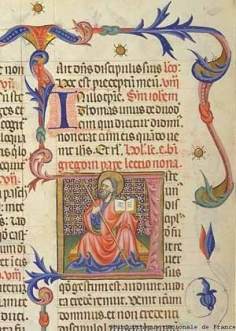 I’m slowly getting back in oscillationem rerum with Latin. The grammatical concepts are all more or less there, it’s just little things like, oh, vocabulary and the whole freakin’ verb system I have to cram back into my head. Optare, optavisse, optaturus esse, optari, optatus esse, optatum iri… if you see me on the elliptical machine at the gym looking like I’m having a very agitated conversation with myself, I’m reviewing Latin.


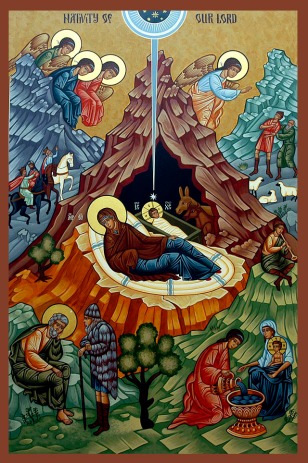 And it came to pass that Mary was enrolled with Joseph the old man in Bethlehem, since she was of the seed of David, and was great with the Lamb without seed. And when the time for delivery drew near, and they had no place in the village, the cave did appear to the Queen as a delightful palace. Verily, Christ shall be born, raising the likeness that fell of old.(Troparion from the Royal Hours of the Nativity, Byzantine rite)


 Leitourgeia kai Qurbana: Contra den Zeitgeist