Archive for the 'Media' Category


St. Paul’s Choir School, Harvard Square

As a brief follow-up to yesterday’s post — I made reference there to my advocacy for Orthodox use of the choir school model. As part of that, I give you the video from this morning’s appearance of St. Paul’s Choir School at Harvard Square on CBS This Morning.

http://www.cbsnews.com/videos/catholic-boys-choir-brings-its-music-to-the-masses/

It’s a pretty good summary of what I maintain are the opportunities and advantages of such an approach — a high level of musical education, liturgical participation, spiritual formation, and overall engagement with the tradition starting from a young age, a focus on excellence and discipline, an excellent means of outreach via performance and recording, and traveling to perform in amazing places. I’d advocate a co-educational school along the lines of the Choir School of the Madeleine (see my comments about that institution here), but regardless, this clip is another excellent “proof of concept”.

I’m working on setting up a meeting with John Robinson, St. Paul’s music director, sometime in January. I want to chat with him and also observe how the school works. What would you like to know about such a place? How might you envision such an undertaking moving forward in an Orthodox setting? Talk to me — I’m very serious about wanting to see something like this come together. I’d love to be able to send Theodore to a school just like this — how can that happen?

Thoughts on the Twin Peaks revival (SPOILERS; DO NOT READ IF YOU DON’T WANT TO BE SPOILED)

Yesterday (Friday) was my birthday; I’m 38 now, I guess beyond doubt putting me in my late thirties. Twenty years have passed since I became a legal adult; I’ve known my wife for almost twenty years; Kurt Cobain has been dead for more than twenty years; Soundgarden has been broken up long enough to get back together and to remaster old albums. Hammerbox remains broken up after a failed revival, which, alas, is probably for the best (although their in-studio acoustic performance was pretty awesome). It’s been 20 years since George Lucas made it clear that he really did intend to make the Star Wars prequels, and now next year we’re going to get Episode VII. Tim Burton’s first Batman movie is 25 years old, old enough for Michael Keaton to make a movie that effectively functions as metacommentary on his time in the role.

And, now, Twin Peaks has been over long enough to get a third season continuation.

(That’s fan-made, by the way. It’s fifty kinds of awesome, but it’s fan-made.)

Y’all have no idea how big of a deal this is to me. A Cocteau Twins revival would be just about the only thing that could possibly make me giddier at this point, but I’d be wary of that after how Hammerbox’s reunion was apparently over before it began.

Flesh of My Flesh threw me a lovely dinner party with several of our new friends here at Holy Cross, and instead of making me a birthday cake, she made me a cherry pie (using the Access Guide recipe) as a way of celebrating the news; our crowd last night was mostly too young to have seen Twin Peaks, however, so this required some explanation. Explanation led to watching the pilot episode with some of our guests; I expect this will lead to watching future episodes with some of them.

Much pixelage has already been employed in speculating about what the 2016 season might look like, so I don’t want to repeat any of that. The series finale and Fire Walk With Me both suggested that there was still a lot of story that Lynch had to tell, so I’m not particularly concerned about that (particularly with Laura Palmer’s line to Cooper about seeing him again in 25 years).

What I am wondering about, however — and not from a standpoint of concern; I want my Twin Peaks revival and I want it now; bring me a TARDIS so I can go to 2016 immediately and watch this — is this: Twin Peaks, when it came out in 1990, had a context of a particular widely-held image of the Pacific Northwest. Money Magazine had declared Seattle the best place to live in the United States in August 1989, to be sure, but keep in mind that this was pre-“Smells Like Teen Spirit” (Melody Maker had only just run their first major article on the “Seattle sound” in March 1989), and Microsoft had only just made their initial public offering in 1986, not to mention that Windows was only on version 2.x, so the tech industry had yet to permeate the Northwest landscape the way that it would by the late 1990s. Really, the main things that the Pacific Northwest was known for when Twin Peaks debuted were serial killers, UFO sightings, Boeing, mountains, and logging; Twin Peaks needed all of that to work, and it played with each of those elements on some level.

So, twenty-five years later, when Pearl Jam is now what Aerosmith was when Twin Peaks came out and Kurt Cobain is the Northwest’s iconic rock death (surpassing even Jimi Hendrix, maybe), when the image of the Pacific Northwest is now split between Seattle as the techie haven for the nouveau riche and Portland as the hipster capital of the world, when the Seattle Mariners are tied for the most wins during a season, the Seahawks have won a Superbowl, and basketball has left Seattle in favor of soccer, what will the town of Twin Peaks look like 25 years later? Now, the show was specific about locating the town in the northeast corner of Washington state, which is still basically the middle of nowhere, but if the Twin Peaks of the revival still looks exactly the same as the Twin Peaks of 1990-1992, well, it would be tempting to say that it’s David Lynch’s riff on Brigadoon. One wonders if technology might be kept self-consciously retro — will Cooper still be dictating notes to Diane via microcassette recorder even while the rest of the world has moved on to smartphones? Will we know that he’s still possessed by BOB because he drinks K-Cup coffee?

And, of course, there’s the question of how a new Twin Peaks season can break new ground after twenty-five years’ worth of television that has been influence by Twin PeaksX-FilesNorthern Exposure, even Veronica Mars — heck, for that matter, Hannibal the last couple of years, in which Mads Mikkelsen has given us a Hannibal Lecter with Ray Wise and Frank Silva as reference points every bit as much as, if not moreso than, Anthony Hopkins. What can Lynch bring to the form now, a quarter-century later?

Speaking of Ray Wise, since Fire Walk With Me he’s been a bad guy in 24 and, quite literally, the Devil in Reaper. Frank Silva passed away in 1995, so presumably Leland will now be BOB’s permanent form. The way they could get around this would be to cast Silva lookalike and opera star Greer Grimsley, but I’m not holding my breath on that.

I will say that the perspective I have now of Twin Peaks at 38 is wildly different than that which I had even twelve years ago. Watching the pilot last night, things that used to seem self-consciously melodramatic now seem quite real. Where I once might have wanted to chuckle at how deliberately over-the-top Lynch was being — for example, his cutting back and forth between a hysterical and screaming Sarah Palmer on one end of the phone line and a Leland Palmer who, presumably, is coming to the dawning realization that his daughter has been murdered and reaching hysterics himself (but is he? Even after Fire Walk With Me, this is still ambiguous) — now I look at it and think, “Yeah, that’s about what it would be like if I got the news that my child had been killed; Lynch just isn’t letting the camera move away, no matter how much I might want him to.” Broadchurch (and Gracepoint, to the extent that it’s a scene-for-scene remake) also manages to capture this rawness of parental grief, but in a much different way; it’s a far more self-consciously realistic treatment of a similar moment.

One final thought for now — Twin Peaks was a cultural moment, not unlike the ’89 Tim Burton Batman (yes, I know, that’s a touchstone that makes a particular kind of sense to me and perhaps nobody else), that was about the end of the 1980s marking some kind of a generational shift. Batman looked at this from the urban angle; Twin Peaks looked at this from the small town angle. Batman played with deliberate anachronism, putting Prince songs in the same world as 1920s-era gangsters, creating a Gotham City you couldn’t really locate on either a calendar or a map but that was still identifiable as a caricature of a New York that had produced Michael Milken, Ed Koch, John Gotti, and Bernie Goetz. Twin Peaks didn’t go the route of anachronism; rather, it gave the audience a world that was very specifically dated (24 February 1989 is the date given in the pilot episode, meaning it took place exactly 12 years before my wedding day) but that also freely employed the ethos of an earlier generation, while implying very strongly that that there was something seriously rotten underneath that generation’s surface. Certainly the presence of flannel, jeans, saddle shoes, and a sheriff named Harry S. Truman made Twin Peaks feel like a town that had been spared the nastiness of the ’80s; then there was the cast. All the young, scrubbed, shiny faces of James Marshall, Lara Flynn Boyle, Sherilyn Fenn, Sheryl Lee, Madchen Amick, and Dana Ashbrook made the town look like a place where young people might be bored but safe (which made it all the more shocking when their faces might be smeared, sometimes with running mascara, sometimes with blood, sometimes both); Kyle MacLachlan’s lantern jaw, black suit, and slicked-back hair was clearly intended to evoke somebody like Efrem Zimbalist, Jr.’s character from The F. B. I.; amongst the older adults, there was Russ Tamblyn, Richard Beymer, Peggy Lipton, Ray Wise, Piper Laurie — heck, even Michael Ontkean — all recognizable faces from the ’60s and ’70s, all of them now able to put on a sheen of middle-aged respectability, and the show subverted and undermined their respectability from the first scenes of the pilot episode. A generation that had grown up in the ’50s, become adults in the ’60s, and had kids in the ’70s were now having to face the consequences of their choices, Lynch seemed to be saying, and their children weren’t necessarily turning out any better just because they had fled the city for small-town life. This wasn’t Family Ties. Maybe small-town life just made it easier to hide weirdness, ugliness, and evil in plain sight.

Thing is, all of those concerns are basically old hat at this point. Many of us assume these days that the cities are corrupt hellholes and that there is no Mayberry, that small towns are probably cesspools of backwardness, ignorance, and abuse that cover it up with a sheen of self-righteousness that refuses self-reflection. We know that there are no safe havens anymore; New York isn’t really the land of opportunity and the small town in the middle of nowhere isn’t a sanctuary against the evil that men do. And, unfortunately, it’s no longer the bloodcurdling shock that it once was when we find out that Daddy was doing bad things to his kids, and we don’t need the distance of demonic possession to make it believable. We accept it, we process it as just one more tragedy, and we know that the generation that’s growing up right now is basically screwed no matter where we live or what we do. We’re over it; life goes on somehow. Next topic.

So, the point of this is to say — how will a new Twin Peaks season engage our current cultural anxieties the same way the original did, using the original’s setting? I assume Lynch and Frost must have something in mind for how they might do this, but how? In the real Pacific Northwest, the Ghostwood Country Club and Estates were eventually built everywhere, replacing the woods. Does that mean that the evil lurking in the woods has been let out into the open? Or has it just been built over for now, and it’s biding its time?

I guess we’ll find out in 2016.

When Roman history makes the news

Pre-modern historians often lament that our subjects are treated as irrelevant by society at large. While this is often true, and is certainly frustrating when it comes to convincing the general public to be interested in what we do, I’m not at all certain that it’s better when public figures feel empowered to misuse the materials of the pre-modern historian in order to serve their own agendas or to make themselves look they are of loftier minds than they actually are. (I also think it’s a problem when otherwise intelligent people respond in kind by simply re-subordinating those materials to their own agendas, but never mind that now.)

Senator Ted Cruz’s recent appropriation of Cicero (or, really, Charles Yonge’s translation of Cicero) has already been well-examined by classicist Jesse Weiner, writing for The Atlantic. I don’t think there’s a ton to add there, but I would consider the longer arc of history as well; Cicero’s militant defense of what he saw as the fundamentals of the Roman Republic did nothing in terms of the big picture to keep the Republic from turning into an Empire less than 40 years later. I’m not the kind of historian who talks about this or that person being on “the wrong side of history”, but I think it’s hard to get around the fact that Cicero was on the losing side, at the very least.

What perhaps might be more useful is considering the Empire’s relationship with its provinces, and how eventually, in 212, an emperor named Caracalla found it useful to extend citizenship to the provincials:

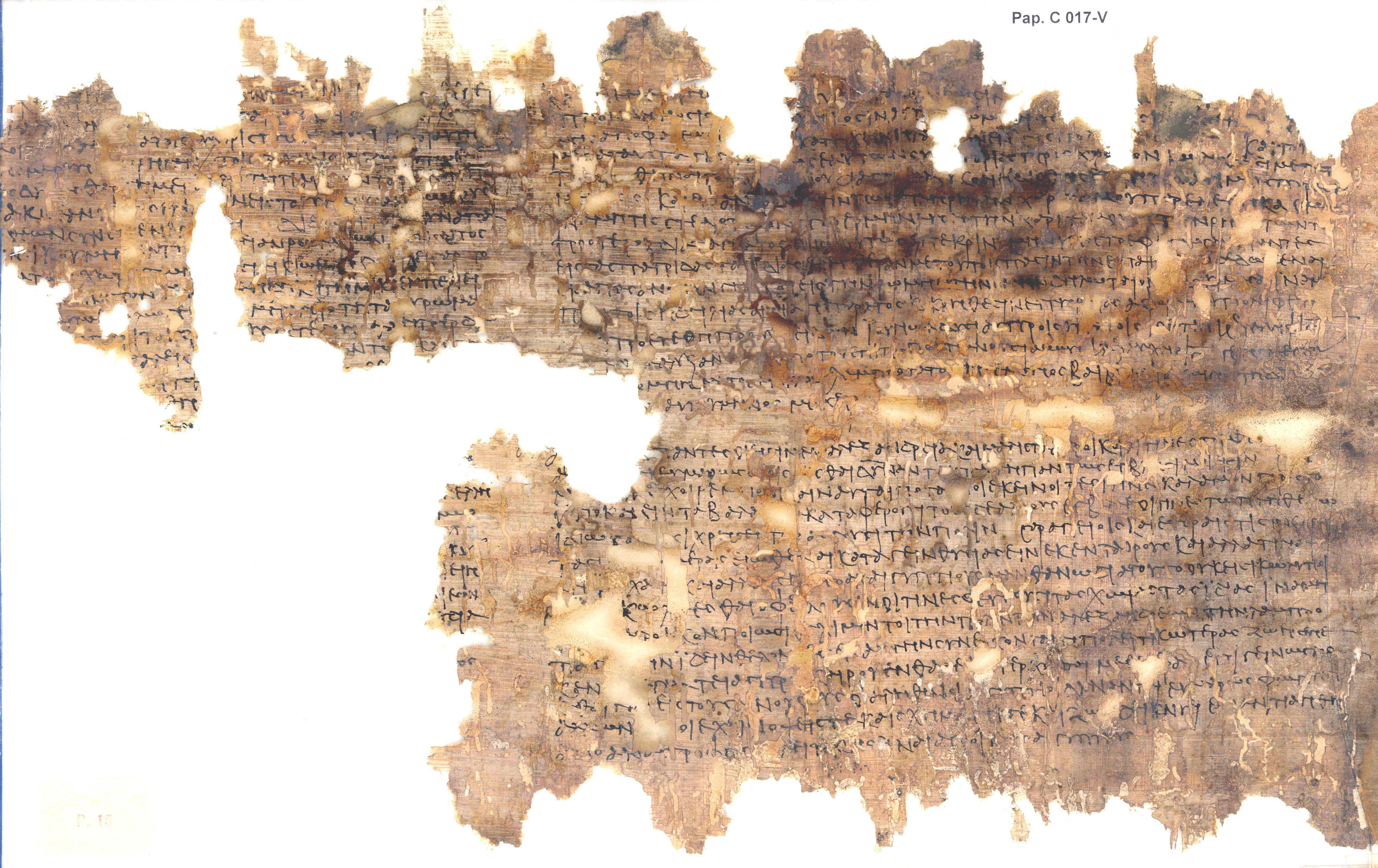
I grant Roman citizenship to all aliens throughout the Roman world, except the dediticii [meaning obscure], local citizenship remaining intact. For it is proper that the multitude should not only help carry all the burdens but should also now be in included in my victory. (Giessen Papyrus 40.1)

pgiss-inv015recto-1600kb


One can interrogate Caracalla’s motives — broadening the tax base? Making sure Christians were subject to Roman laws? — and there were consequences to this that were both positive and negative, to be sure, but destroying the Empire wasn’t one of them.

Maybe the Edict of Caracalla is applicable to today’s circumstances, maybe it isn’t; the point is that you can’t just do a Google search on English translations of Latin rhetoric and cherry-pick what sounds useful. Using Cicero as an out-of-context prooftext for your political aims, pro or con, is simply stupid. I think I’d rather stay irrelevant than see my area get abused by opportunistic demagogues.

Pushing to a finish line

Hi.

I’ve been a bad blogger for… well, awhile. I had a nice stride going in 2008-2009 (you know, back when I was despairing about life and could basically blog at work); then I got into grad school, and it’s really been hit or miss since then. I’ve been busy busy busy, I’ve had to teach, I’ve had to write papers, I’ve had to study for exams, I’ve had to write a dissertation proposal, I’ve become a father, and so on.

I know, I know. Excuses.

Here’s the thing. I’ve thought about formally closing it up. Leave it online, as a snapshot of something I did for awhile, but put up one final post saying, I’m done, look for me when you see me.

But… nah.

See, I don’t write this for hits. I don’t care if nobody reads this, and I never have. I write this for myself. In the beginning, it was so I could have an excuse to do something to build up some discipline where writing was concerned. Somewhere along the way, I wrote a couple of things that a few people liked and linked to, and before I knew it, I was… a really marginal figure on the fringes of a really marginal subculture of blogging. My biggest day was 906 views; historically it’s been more like 100-150 when I’ve been really active. It’s surprised the heck out of me when people I have met have said, “Oh, yeah, I read your blog,” because that’s incredibly unlikely, statistically speaking. But whatever; that’s not the point. You don’t do public access for the ratings.

Anyway, I still have things I want to say for myself in this venue, so even if it’s not consistent enough to “build readership”, that’s not really of interest to me. I’ll say things when I have them to say. I have ongoing things here and elsewhere I need to finish; I will finish them, and I’ll continue writing other things. So, I’m still here, but look for me when you see me.

One item of national (more or less) news I want to say something about very briefly — maybe 12, 13 years ago, the friend who was my best man was telling me about a new church venture he was involved with in West Seattle. This friend had long been involved in “postmodern Christianity”, an approach to “doing church” that, as he put it, didn’t assume that anybody walking in the door knew anything about what was going on. This new project in West Seattle was going to draw on elements that contemporary American Protestants generally ignored, like liturgical seasons, and explore the reasons for why those things had become a part of the tradition in the first place; it was also going to work cooperatively with a group of other local churches, centralizing administration and using that centralization as a way of helping to organize leadership and planting across that group of churches.

(“Huh,” I remember wanting to say to him. “Kind of like, oh, I don’t know, a diocese?” But I digress.)

This West Seattle church was being organized, at least at first, by a pastor to whom many of my friends from Bellingham had been close; he had been involved with The Inn campus ministry up there, and was now getting this going.

His name was Bill Clem, and the church was called Doxa Church. The faux-diocese was called the Acts 29 Network. (A presumptuous name, to be maximally kind.)

Except now Doxa is called Mars Hill. You might have heard of it. Also, it’s not part of Acts 29 anymore. Further, Bill Clem hasn’t run it since 2006; he’s now in Portland, and is advertising his connection in his current professional biography neither to Doxa or to Mars Hill.

I have a lot I want to say, but I will limit my comments to this: if I were Bill Clem, I would be thankful that I managed to get out when I did, and whatever the circumstances were that forced me out of what I had worked my tail off to start, I would call them God’s providence.

I’ll leave that there for now.

To make at least a nod towards catching up — the last several months have been among the most stressful of my life. We learned at the beginning of April that we’d be spending the year at Holy Cross Greek Orthodox School of Theology; that was awesome, but it meant we had a move to prepare for with a kid and a parakeet, to say nothing of a house that had nine years’ worth of stuff packed into it that would have to be pared down for a two bedroom apartment. At least one garage sale seemed in the offing; it turned out to be two.

I also had a summer course to teach — a six weeks long medieval survey course, starting 23 June and going two hours a day, Monday through Thursday, until 1 August. I had never taught my own course before, and I had a lot of materials to prepare.

I had three conferences over the course of the summer that I knew were coming, too; I had a paper to present at the International Medieval Studies Congress in Kalamazoo, MI, where I was also one of the organizers for two sessions sponsored by the Byzantine Studies Association of North America, and where I was also participating in activities related to my service on the Graduate Student Committee of the Medieval Academy of America. Then, in June, I had Kurt Sander’s 2014 Pan-Orthodox Liturgical Music Symposium at Northern Kentucky University, where I was going to be singing in their festival choir, presenting a status report on the Psalm 103 Project, and also giving a talk on the Anglophone tradition of Byzantine chant. Oh, and we were trying to organize another working session for all of the composers while we were there, too. Finally, in July, we had the wedding of an old friend in Cleveland (also Theodore’s godfather), in which I was an attendant. I also knew I was going to be presenting a Byzantine chant workshop at the Mid-Eastern Federation of Greek Orthodox Church Musicians at the convention in Columbus, Ohio.

Right. So, preparing for a move, teaching a class, a wedding, and presenting at three conferences. That was enough, right?

During Holy Week, I got a text message from my friend Mark Powell, asking if I was available in May for two Cappella Romana concerts at the Getty Villa Museum in Los Angeles, doing a program of Holy Week and Pentecost material. Wednesday through Monday in LA — three days after getting back from Kalamazoo, which itself was Thursday through Sunday of Finals Week. And leaving from Chicago rather than Indianapolis was going to be more flexible in terms of flight options. I think my reply was “Well, of course, I’ll have to check my calendar and carefully consider my commi–YES OF COURSE I’LL DO IT”

Then there was an issue of availability with respect to the other course assistants for the professor I was working for last spring. One was an international student whose visa was expiring just in time to preclude their ability to do any grading of the final whatsoever, and the other was somebody who was just having to leave town the Monday after Finals Week. With around 150 exams to grade… yeah. Something got worked out where I got paid something extra for doing it, but from Sunday night when I got back from K’zoo to Tuesday afternoon when we were having to get ready to drive to Chicago, I was eating, sleeping, and breathing blue books.

Oh, yeah, one other thing — in April, I took my beloved 2000 Subaru Outback, which I had bought in 2000 with five miles on it, in for an oil change, tire rotation, and alignment check. I got it back with the technician saying that I needed to get some rust on the rear subframe looked at. The manager of a body shop took one look underneath the car and said, “Wow, that’s scary. You don’t want to drive on that.” (This was the week before I had to drive to Kalamazoo and then to Chicago, I should note.) When asked what it would probably cost to fix, he said that it would probably be upwards of a number that was more than the car was worth by this point. Because, you know, this was the perfect moment in our lives to be needing to buy a car.

A rental car got me to and from Kalamazoo and then to and from Chicago for the Los Angeles trip. The Subaru — of blessed memory — wound up being replaced with a 2014 Chevrolet Equinox after I got back from LA; I am eternally grateful to my mother and stepfather for what turned out to be an early PhD graduation gift.

(Ponder my progression of cars: first, a 1992 Volkswagen Golf GL, a German stick shift hatchback. Then, a 2000 Subaru Outback, a Japanese stick shift wagon. Now, a 2014 Chevrolet Equinox, an American automatic SUV. I have become the enemy. Oh well.)

The Los Angeles trip was, I have to say, a blast. A full write-up deserves its own post; suffice it to say that it’s an experience I hope to repeat.

(That said, I’m afraid that the Arctic Light review has to be my last for Cappella; too much of a conflict of interest otherwise.)

Then Lycourgos Angelopoulos passed away. Memory eternal.

Kurt Sander’s Symposium was a wonderful experience; a somewhat abbreviated version of the writeup I was asked to contribute may be found here. My presentation on the Psalm 103 Project is here; the audio of my Byzantine chant talk is here.

Then Richard Toensing passed away. Memory eternal.

And then we packed, I taught my first class as the instructor of record, we went to the wedding in Cleveland, and I went to the last of my conferences.

And then we moved, leaving our house on 1 August, with a move-in date of 11 August (that actually turned out to be 10 August). We killed time in Chicago, Cleveland, and South Canaan, PA.

Did I say that the last few months were stressful? They were stressful. Yeah.

I’m in Boston, by the way. We’ve been here for a day over four weeks; it’s been lovely so far, and we actually wound up getting a three bedroom apartment. The first three weeks was a bit of a vacation since the school year wasn’t yet going and the library had really limited hours; we enjoyed mild, beautiful, coastal weather; I’ve chanted in the chapel; I subbed unexpectedly for a few services at a Greek-only parish (that, I have to say, pays their chanters verrrrrrry reasonably); we enjoyed seafood on the wharf and a tour of Boston Harbor on a tall ship; we got unpacked; we made nachos. Last week was the start of the term, and I’ve been clearing the decks since then, dealing with a to-do list of administrivia that has managed to build up since we left Bloomington. It’s all stuff that’s had to get done for me to be productive in the way I need to be productive here, and I think I’ve got the list checked off sufficiently that I can actually get to the concrete work I need to do here on my dissertation.

A word about that: today (well, yesterday, when I started writing this) was the Feast of the Nativity of the Virgin. This feast employs one of the only festal hymns shared between the Byzantine chant books and the Latin chant books:

Your birth, O Mother of God, revealed joy to the civilized world, for from you the Sun of Justice rose, Christ our God, having destroyed the curse he gave a blessing, and having abolished death, he gave us eternal life.
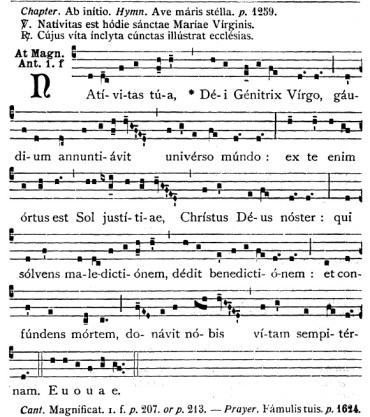
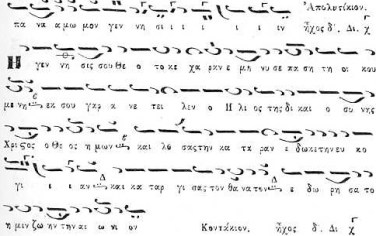
nativitas tua, liber usualisi gennisis sou theotoke, kypseli versionIt’s curious for a number of reasons; one is that the Latin version is in the first mode, and the received Byzantine version is in the fourth. However, 10th/11th century Menaia show an ascription of first mode rather than fourth, suggesting that the Latin books preserve an older practice.

More curious is this — in the late seventh century, one of the so-called “Byzantine popes”, Sergius I, imported the Feast of the Nativity of the Virgin onto the Roman calendar as one of a group of Marian feasts. This would, theoretically, have been a moment of liturgical unity between Rome and Constantinople; and yet, this hymn is the only piece of it that really survives.

There’s a paper I wrote on this several years ago, the first paper I ever wrote for a grad school class, that collected several observations about this issue. Some of the observations might be still valid, but I probably did a lot I was in no way qualified to do at the time and probably got a lot wrong. I’ll revisit it down the road when I need articles for the tenure clock, but I think that I actually need my dissertation done first, both so I can actually get a job, and also because I think any argument I’d make about this now would depend on my dissertation’s argument.

So, I’ve got to get the dissertation done — which is what I’m here to do — in order to finish the work that helped get me thinking along the lines of my dissertation. (I’m also going to take the Byzantine Chant certification exam while I’m here, but that’s a separate post.) It’s a dissertation that is largely inspired by those observations made back in 2006, so it seems appropriate that today’s the day I finally get settled enough to get down to work.

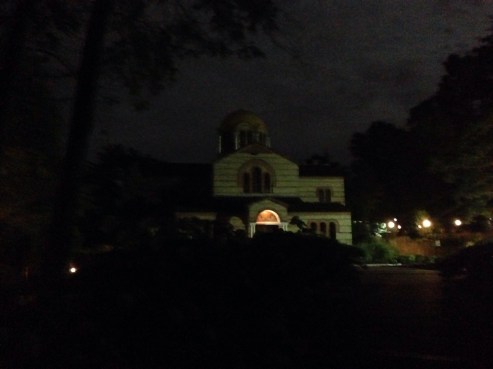
I will keep up with things here as I can; I’m not going to close up shop until I want to, even if that means not posting as often as I’d like, or if what I post winds up being somewhat random. First priority is getting the dissertation done and out the door; I want a real job before I’m 40, even knowing full well that I’ll then be busting my chops racing the tenure clock. Oh well; that’s the life I’ve chosen, and I’ve got to get past at least the first finish line, even if it’s not really a finish line by any reasonable definition. I’ll be trying to pop back here when I can, at any rate, and hopefully that’s more often than it has been. We’ll see.10667519_10104638060805829_761200563_oThat’s what I walk past on my three minute and forty-five second commute home. It’s not a bad state of affairs by any means.
More later.

CD Review: Cappella Romana, Arctic Light: Finnish Orthodox Music

arctic_light_finnish_orthodox_import-cappella_romana-26407367-859743431-frntSo, occasionally I wake up in the middle of the night in a cold sweat because I think I’m going to have to learn Finnish. I have this harebrained research idea about analyzing the Byzantine liturgical cycle as a national epic (I would still need to figure out the “for whom”, “where”, and “when” aspects of the matter), and since the Kalevala is the prototypical national epic, I’d have to be able to read Finnish to be able to do it properly.

Then my wife and my advisor both take turns in slapping me, yelling, “YOU HAVE ENOUGH TO DO!”

Still, I find the case of Finland fascinating. To break out a couple of academic buzz words, it’s an oddly liminal and contested place; the language, of course, is not Indo-European but rather Finno-Ugric (as the joke goes, Finnish and Hungarian used to be married, and when they got a divorce, Finnish got all the vowels), and it’s right smack dab in middle between Russia and Scandinavia, with whom there are contentious histories, as well as contentious identity issues. The Finns are decidedly not Scandinavians or Russians — there is much more affinity with Estonia, which of course has its own issues with respect to contested identity — but the cultural contact happened, and there are imprints of both them to be found in Finland. They are not Russian, they are not Scandinavian (or Germanic at all) — they are Finnish.

Religion is a part of this strange mix; Karelia is the part of Finland that is traditionally Orthodox (so I’m told), which is also the homeland of the Kalevala poetry, in which we see odd references to Orthodoxy, like “standing in front of the icons” being used as a description of a wedding service. It’s enough of a part of the cultural fabric that it’s one of the two state religions of Finland; at the same time, there’s a cultural Protestantism that is also enshrined into law with the Lutheran church being the other state religion. I’m reminded, vaguely, of Germany’s religious schizophrenia as the birthplace of Lutheranism but also home to some fierce cultural Catholicism depending on geography. That’s got an entirely different history than Finland’s religious culture, but it’s the only comparandum I can really call to mind.

Where there is an intriguing religious culture, one hopes there will also be an intriguing culture of religious music, and Fr. Ivan Moody, conducting Cappella Romana, makes the case for the music of the Orthodox Church of Finland on the disc Arctic Light: Finnish Orthodox Music. Finland represents an Orthodox musical culture still very much in its infancy, far moreso than the United States; it has been an independent state only since 1917, with the Church having been granted autonomy in 1921, subsequently coming under the wing of the Ecumenical Patriarchate in 1923. The transition to Finnish from Slavonic as the liturgical language then helped a unique Finnish musical voice begin to emerge. Basic parish repertoire, I am told, remains St. Petersburg Court Chant sung in Finnish, but over the last century a variety of composers have written music for the Church, contributing to a rich, beautiful body of repertoire. If it’s a bit “anything goes” still, well, they have some top-tier composers writing for them while they figure it out.

Fr. Ivan and Cappella Romana present a survey of the 20th/early 21st century Finnish repertory, starting with early experiments by Pekka Attinen (1885-1956) and Boris Jakubov (1894-1923), followed by Paschal music from the present-day “elder statesman” Leonid Bashmakov (1927-), a Psalm 103 excerpt and Trisagion from Timo Ruottinen (1947-), a Cherubikon from a young Finnish composer, Mikko Sorodoff (1985-), and then festal hymns from the Dormition of the Virgin from Peter Mirolybov (1918-2004), who is presented as the composer in the group most connected to the Finnish Church’s Russian musical inheritance, as well as perhaps the one most attentive to this music’s liturgical context. In addition, Fr. Ivan himself (1964-) contributes a concert setting of the Exaposteilarion for Dormition.

I have to say, this has been a very difficult recording for me to figure out how to review, for many of the same reasons that Tikey Zes’ Divine Liturgy recording required an entire blog post’s worth of a prologue before I could talk about how I evaluate its musical merits. The problem is, of course, is that it’s not just a matter of evaluating musical merit; it’s also a matter of talking about how it functions as liturgical music, which is a sensitive conversation for Anglophone, North American Orthodox. This recording, much as with the Zes disc, is largely unconcerned with the categories of that conversation (although Fr. Ivan’s excellent liner notes touch on them briefly) while seeking to maximize the musical quality of the compositions performed. That’s a touchy thing to address when one is an American writing about an American composer in an American context, as with Tikey Zes; I’m writing as much more of an outsider in this case.

Still, there was something I realized while reading Fr. Ivan’s notes, particularly concerning the biographies of the composers. The American anxieties about the categories of “art music” and “liturgical music” overlapping are, frankly, minority concerns borne out of poverty — poverty when it comes to our music, who writes it in many cases, how we’re used to hearing it sung, and how our musicians and composers interact with the outside world, so to speak. There are notable exceptions, of course, but even some of those notable exceptions have to be a bit self-conscious because they’re the exceptions. Plus, there is something of a discourse about “Orthodoxy doesn’t do art”, problematizing concert pieces and such, meaning that when Orthodox Christians here do in fact do art, there’s some way in which they have to apologize for it, defend it, explain it, etc. In terms of how it presents Orthodoxy, this “Orthodoxy doesn’t do art” position is a defensive stance, culturally speaking, and it has consequences. I know composers who are Orthodox, very good composers who are renowned in secular music circles in fact, who absolutely refuse to pick up their pen to write music that could be sung in church; there’s simply too much baggage.

In the case of Finland, however, what the music on the recording suggests — and what the biographical notes in the booklet confirm — is that we’re talking about “real” composers, as it were, for whom there’s nothing necessarily self-conscious about writing Orthodox church music; it’s just one of the things you do if you’re a composer who happens to be Orthodox in Finland. Attinen, for example, taught in conservatories, wrote film music, and taught at the Orthodox seminary in Helsinki; his Cherubikon sounds very much like it is in dialogue with late 19th/early 20th century Romanticism, while still being a Cherubic Hymn meant to be sung in a Divine Liturgy (although it is evidently difficult enough that this is a rare occurrence). In any event, the hard and fast distinctions we want enforced here about “liturgical” vs. “concert” music don’t really apply; it’s a question of “good” vs. “bad” music, and that’s informed by tradition and liturgical function, but it’s also informed by musical education and exposure to the broader artistic conversation.

So, from that perspective, Arctic Light then becomes a relatively easy recording to review; it’s an aural treat in every way, with the vowel-rich language sparkling in the voices of Cappella’s singers. One can hear the Finnish language “in dialogue” with the ecclesiastical past of its country; fragments of Russian chant melodies echo in Bashmakov’s Paschal Ikos, for example, but they are transformed by the needs of the language and augmented by a harmonic vocabulary employed by an expert composer, and the result is something that “sounds Orthodox” (whatever that means — more to come on that later), but that also sounds like something new, and that could be as easily at home on the concert stage as well as in the choir loft. Sidoroff’s Cherubikon is a highlight, being perhaps a bit more conservative in terms of the sonorities he’s willing to use, but his use of different vocal textures — such as moving back and forth from men only, women only, and the full choir — makes it a rich contribution. Ruottinen is the most experimental of the group; he makes the least effort when it comes to invoking a chant foundation (he uses bits of the same melody as Rachmaninoff used for Psalm 103 in the All-Night Vigil), and at times he writes chords that sound like vocal jazz. The result is not unpleasant by any means, but it does stand out as one of the aesthetic oddities on the disc, and underscores that even within a musical culture that doesn’t feel the need to be self-conscious, perhaps some boundaries need to be kept in mind.

Fr. Ivan’s own contribution is noteworthy for multiple reasons; he is a non-native speaker of the language, and he uses the third mode Byzantine melody for the basis of his setting of the Exaposteilarion for the Dormition (“O you Apostles…”). The result is something that is clearly not operating in the same context as the rest of the repertoire on the disc, but the irony is that it is also the centerpiece of the program. It was written as a concert work, and despite using a different melodic vocabulary than that of the other composers presented, he is able to manipulate the Byzantine melody and build harmonies around it so that it sounds very much of a piece with Attinen and Bashmakov.

Fr. Ivan as the conductor gets Cappella Romana singing this kind of polyphonic repertoire as well as they have in years; the choir sounds bright, clear, and musical. At times the clarity and power of individual voices comes at the cost of blend — particularly in some of the higher voices — but it’s a tradeoff that allows the ensemble to play to their strengths.

If there’s something curious that I find in this collection — well, I should say it’s more about what I don’t find. There doesn’t seem to be a connection to a vernacular kind of singing in this music (although, ironically enough, elements of Ruottinen’s “vocal jazz”-ish choices sound somewhat like stereotypically Balkan folk music), and to the extent that there’s a musical conversation going on here about Finnish national and religious identity, that strikes me as strange. There is Finnish folk singing that has played what I would describe as an archetypal role in the building of national identity (such as what got compiled into the Kalevala); why would such elements be absent from this other project of identity-building? I may misunderstand the issues so much as to have come up with a meaningless question, but in any event, I am left curious about the interaction of Finnish Orthodoxy with Finnish folk culture.

In sum — Arctic Light is a complicated program. Finland, Finnish Orthodoxy, and Finnish Orthodox music have a complex history, and this disc is, in its own way, a document of some of that history. The result is that Fr. Ivan and Cappella Romana are able make some beautiful, engaging music within that context, and provide a fascinating snapshot of an Orthodox musical culture that is developing its own very strong voice. Recommended.

For your consideration: Robotech Academy on Kickstarter

http://www.youtube.com/watch?v=eUk_2JebvrA

I am bringing the Kickstarter campaign to fund a proof-of-concept pilot of a new Robotech TV series called Robotech Academto your attention. I think you should fund it. However, I’m not happy about it.

Being an eight year old kid enamored with Star WarsStar Blazers and Transformers, I remember that all the advertising for Robotech caught my eye, and I thought it looked awesome. My interest was piqued, at least in part, because I had the Jetfire Autobot amongst my Transformers, I didn’t understand what this whole intermediate mode was supposed to be, and a lot of friends of mine had the Bandai/Takatoku Valkyrie VF-1S version that Hasbro repainted for Jetfire. (There used to be this extremely awesome toy store in Woodinville, Arnie’s Toys, that had a whole freaking wall of imports of the Japanese versions of lots of things. While I wish I still had a lot of the original Generation 1 Transformers I had back then, I also wish I had asked for more of the Japanese versions.)

But there was a problem — Robotech wasn’t on when I could, y’know, watch it. It was on at some ridiculous time like 7 or 7:30 in the morning, when my dad was watching the news on one TV and my mom was watching The 700 Club on the other TV. I think all I ever saw when it was broadcast was like five minutes of the Southern Cross episode “The Final Nightmare”, and I was really confused because all of the advertising was about this guy named Rick Hunter, and he was nowhere to be found. Then, by the time my family figured out how to program our VCR, it was off the air.

There was this older kid I was friends with, Stefan Hahn, who had all of the “Jack McKinney” novels (little did I know at the time that Brian Daley, writer of my beloved TRON novelization and the Han Solo books, was one half of “Jack McKinney”); he loaned them to me, and I devoured them all over the course of about a month. I was captivated. I started buying the Palladium role-playing game books. I bought the Robotech Art books. I read the comics. I kept hearing about this sequel series called Robotech II: The Sentinels that was supposed to come out. I bought the Perfect Collection soundtrack album on vinyl. My first published writing anywhere was Robotech fanfiction and a book review in the fanzine Protoculture AddictsI was into it, man.

I just had never actually seen any of the friggin’ TV series. It was kind of like reading a whole bunch of Orthodox liturgical books and listening to a lot of Orthodox music without ever having the chance to go to a service.

Somewhere along the way, Robotech Art 3 came out, which told the whole sad story of why neither The Sentinels nor the promised Robotech The Movie: The Untold Story would ever see the light of day as envisioned. What it boiled down to was that Robotech’s holding company, Harmony Gold, wasn’t a production company, as such; they were a dubbing and distribution company, and they had no facility or finances to produce anything on their own. All they really had the wherewithal to do was adapt existing properties. Carl Macek had accidentally hit upon something that resonated with people when he came up with the idea of stringing MacrossSouthern Cross, and Mospeada together, but it wasn’t like he could create animation out of thin air (even if it seemed like maybe he came up with Protoculture as the MacGuffin across the three generations out of thin air). Harmony Gold and Macek were dependent on toy sales to make the economics work for anything beyond the first couple of runs of the 85-episode cycle, and, well, to say Matchbox’s toy line fell short of expectations both in quality and sales — heartbreaking, really, when you think about how toy-friendly the series actually was, even with interesting human characters in the foreground — doesn’t even begin to cover it. It didn’t help that the dollar collapsed against the yen during the initial phases of production.

Harmony Gold squeezed out a video release of what little had been completed of The Sentinels; ironically, I think it was the first actual animation from Robotech I ever saw. Over the years I caught bits here and there; a local Blockbuster had the Family Home Entertainment VHS releases (that cut each episode down to 15 minutes from 22), and then I bought the first wave of Robotech DVDs when they were released.

Toynami started a new toyline about 13 years ago, but basically they were incredibly expensive, slightly-smaller retoolings of the Bandai toys with an extra bell here and a whistle there, and they got a small production run of a few thousand apiece. I got a couple of them, but it just wasn’t worth it. I would have loved to have gotten one of the Alpha/Beta Fighter pairs, but that was going to be a poor use of $200+, and let’s not even talk about what the Cyclone toy cost. That thing cost something like $20 at Arnie’s Toys back in 1985; don’t even try to tell me that $200 is a reasonable price for one made today.

The Robotech.com website seemed to promise a new series, which became a different series, which then became a movie, which then became a direct-to-video release, which took them forever to release because whatever distribution deal they’d had — or thought they’d had — when they started production fell apart. The Shadow Chronicles came out a good year or so after the website had assured people that it was done and just around the corner from a major release that surely would re-ignite the franchise and only be the first of several new OVAs, if not a new TV series, that would give the Robotech saga its due at long last.

Well, um, about that. The Shadow Chronicles wasn’t bad, exactly, it just wasn’t really worth the wait, and it didn’t exactly set the world on fire. As yet, a promised followup — Shadow Rising — has yet to materialize, and a live-action deal made in the wake of the success of Transformers in 2007 has gone nowhere. Carl Macek passed away in 2010. I didn’t bother at all with the 2012 OVA Robotech: Love, Live, Alive (a Robotech-izing of Mospeada: Love, Live, Alive, which was released in 1985). Harmony Gold, as I understand it, has largely transitioned into being a real estate company at this point; there is a team that still works on Robotech, but mostly what they seem to do is appear at conventions, maintain the website, and talk about how they can’t talk about anything.

So, now there’s a Kickstarter campaign for the pilot episode of a new series. This is being sold as an idea of Carl Macek’s, it would happen in the Sentinels timeframe, and the pilot would be used as a proof-of-concept for selling a new series.

In other words, at the end of the day, if it’s funded, you’ll have yet another standalone video release of a Robotech project that may or may not be continued or finished. This is Sentinels all over again, but instead of Matchbox’s failing toy sales paying for all of an hour’s worth of footage, the viewer is being asked directly for money to come up with “an entire 24 minute episode”. Well, okay; as dinky as the deal has gotten (“A new 65 episode series in syndication plus a movie!” has, almost 30 years later, become “Buy a Blu-Ray of a pilot that we have so little confidence will get picked up as a series we won’t pay for it ourselves!”), I’d love to see a new Robotech series get completed, and I’d love to see it breathe new life into a franchise that never seemed to get its due or be managed by people who truly knew what to do with it. The truth is, Carl Macek seemed to catch lightning in a bottle back in 1985, but he needed a bigger player behind him than he had. Harmony Gold has played small ball with the Robotech property since day one, and it’s really irritating. It’s a franchise that wants to be, can be, by all rights would be the animated version of Star Wars, and instead it winds up being Starship more often than not. It’s the right series being shepherded by the wrong people.

Still, all right, take my money. Veronica Mars has set the precedent, done so reasonably well, and heck, it can even work for Orthodox music projects. So, yeah, go support Robotech Academy, I guess. Best case scenario, there’s a new Robotech series that comes out of it that might have a chance at fulfilling the promise of those TV and print ads back in 1985, that might have a chance as being as good as Carl Macek wanted the original to be. Worst case scenario, it goes on the shelf next to Shadow Chronicles as a reminder of what could have been. Nothing ventured, nothing gained, I guess… but can we do it right this time, please?

A few items of special (read: “geeky”) interest for sale

Howdy — with twenty-five days left before we have to be out of our house in Bloomington (with it being somewhat up in the air when precisely we’ll land in Boston), I have a few special items for sale that it may be easier to deal directly on rather than wait for somebody to find them on Amazon. (I also have several books that I’ll devote a blog post to shortly, but I’ll start here.) All serious, conscientious offers will be, well, taken seriously. If interested send me an e-mail — rrbarret AT indiana DOT edu.

Update, 11 July 2014: I have listed all of these on eBay. Links to the eBay listing are with each item.

The items are:

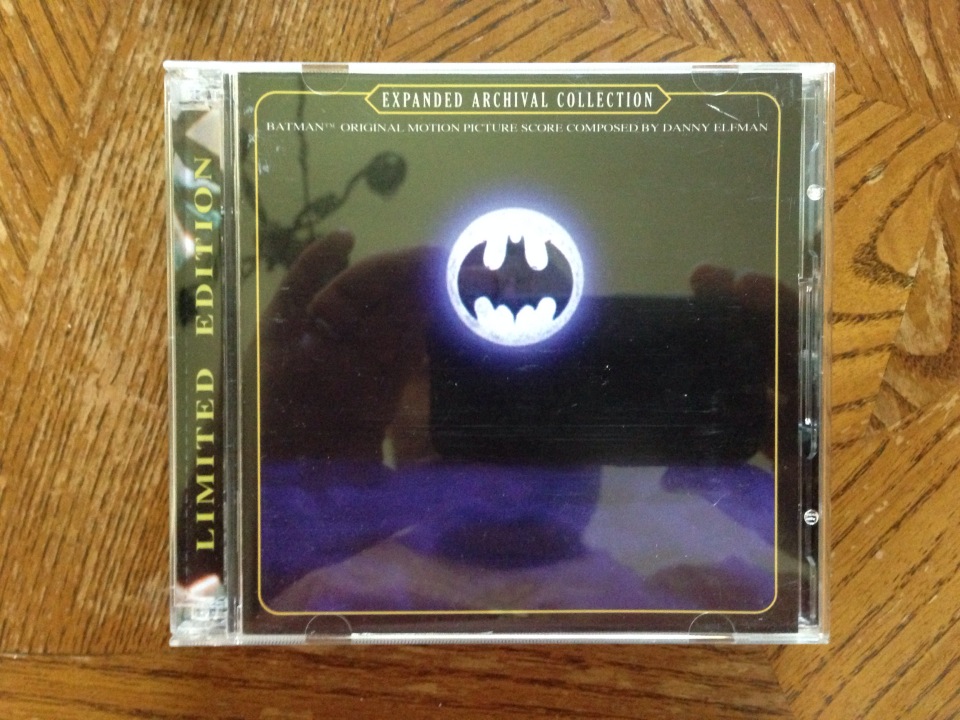
  • Batman Original Motion Picture Score, Composed by Danny Elfman. Expanded Archival Collection, La-La Land Records LLLCD 1140, Limited Edition 2 disc set, 5000 printed. eBay listing.batman 1989 expanded score


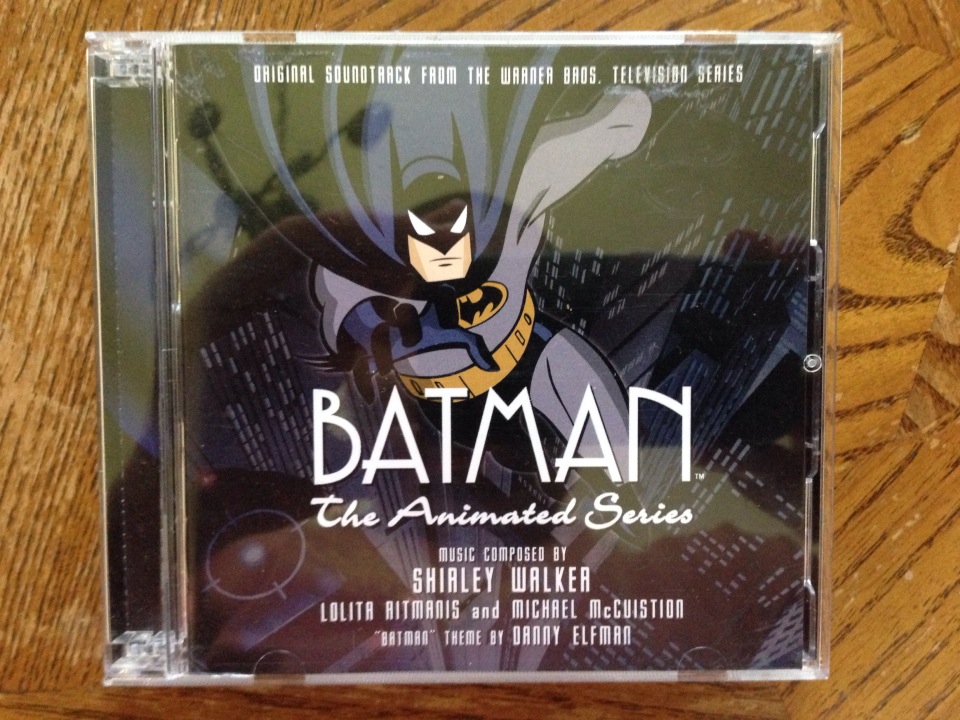
  • Batman: The Animated Series, Original Soundtrack, Music Composed by Shirley Walker. La-La Land Records LLLCD 1082, Limited Edition 2 disc set, 3000 printed. eBay listing.BTAS score


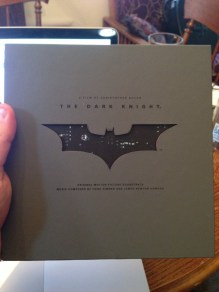
  • The Dark Knight Original Motion Picture Soundtrack, Music Composed by Hans Zimmer and James Newton Howard. Warner Bros. 511104-2, 2 disc Special Edition. eBay listing.TDK special edition


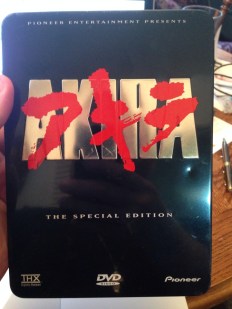
  • Akira: The Special Edition. DVD, Pioneer 11537. 2 disc special edition in tin case. eBay listing.AKIRA Special Edition DVD


Two more last-nanosecond gift ideas

I meant to include the following items in the previous post, and, well, it just didn’t happen. So, here we go:

– All Creation Trembled: Orthodox Hymns of the Passion Service, by the St. Romanos the Melodist Byzantine Choir of Holy Cross Greek Orthodox School of Theology (reviewed here). This is a half-in-Greek, half-in-English recording of Orthros for Holy Friday, and it’s a fantastic aural snapshot of what services are like in Holy Cross’ chapel. It’s chanted by the seminarians under the direction of Grammenos Karanos, the professor of Byzantine chant and protopsaltis for the chapel, and it’s a great addition to the growing number of recordings of Byzantine chant composed specifically for the English language. The St. Romanos Choir is a men’s ensemble; a recording of Holy Cross’ women’s chant ensemble, the St. Kassiani Choir, was made during the same sessions and will be coming out soon.


– The Choir (reviewed here). A fascinating documentary on a truly admirable musical institution in this country, the Madeleine Choir School. The Madeleine Choir School is a ministry of the Cathedral of the Madeleine (Roman Catholic) in Salt Lake City, and they do some amazing work. The DVD gives a look at the experience of participating in the academic and musical life of a choir school — an experience that might be relatively common — or at least not unknown — in England, but is esoteric in the States to say the least. This is a wonderful gift for anybody who is a choral singer or a music educator.

Need last-minute gift ideas?

It’s Monday of the week before Christmas. Do you have all your Christmas shopping done? Of course you don’t. So, here are some suggestions:

The Gifted Pan prosphora baking dish. For the would-be ecclesiastical baker who feels stymied by handheld seals that seem to have never been applied five minutes after what seems like pressing down with all your might.


Scapple. If you’re a Scrivener user, this is an excellent companion application that basically allows you to doodle your ideas without having to go quite to the intellectually self-conscious extreme of “mind-mapping”.


– Turning to Tradition: Converts and the Making of an American Orthodox Church by Fr. Dellas Oliver Herbel (Oxford University Press, 2013). I reviewed the book here; in short, it’s a great book for anybody interested in North American religious trends or Orthodox Christianity in the United States, with a lot to digest in a very reasonable length.


– Stocking stuffer 3-pack of CDs: Cappella Romana‘s Tikey Zes: The Divine Liturgy of St. John Chrysostom (reviewed here) and Robert Kyr — A Time for Life: An Environmental Oratorio (reviewed here), with Archangel Voices‘ Panagia: Orthodox Hymns to the Mother of God (reviewed here). Three very different kinds of recordings of what one might broadly call “Orthodox music”, and each very good in its own way. The Kyr is an oratorio informed by Orthodox liturgy; the Zes is an Orthodox liturgy that at times feels like an oratorio; and Panagia is a themed recital of Orthodox choral music about the Virgin Mary. What’s funny is that the Zes disc is sung entirely in Greek but often seems quite Italian; Panagia is all in English but feels quite Russian. What can you do (or, if you like, Τι να κάνουμε)?

– Sweet Song: A Story of Saint Romanos the Melodist by Jane G. Meyer (reviewed here). A beautifully-illustrated (and not distractingly anachronistic) children’s book set in sixth-century Constantinople during an episode in the saint’s life. If you’ve got a young reader who’s interested in singing in church or who has started to develop an early fascination with Byzantine and hagiographic arcanity, this is the book you want.

– 75 Years of DC Comics: The Art of Modern Mythmaking by Paul Levitz (Taschen, 2010). And this would be the book for the reader who is simply a geek and unashamed to admit it. Like, you know, me. (Just sayin’, just sayin’s is all.)

– Finally, if none of these speak to you, I offer the possibility that you could make a donation to The Saint John of Damascus Society. We’ve got a lot of different things that we’re working on, including the Psalm 103 project but also much more, and making a gift in the name of somebody you care about would be a lovely gesture for all concerned. All gifts are tax-deductible to the extent allowed by law. The above link will take you to our website’s “Support” page; click the “Donate” button and PayPal will take care of the rest. If you’re interested in giving a gift but want to have a conversation with a person about it, get in touch with me (either via the combox here or by e-mailing richardbarrett AT johnofdamascus . org), and I’ll be happy to talk to you.

And, should you for some unknown reason be looking to give me a Christmas gift, well — you can certainly give something to the Saint John of Damascus Society, and it will definitely make me happy. I also wouldn’t sneeze at 75 Years of DC Comics. And, hey, this blog has its own “Make a Donation” button. If those options don’t speak to you, well, there’s always this.

Okay — may you all stay well the rest of the fast (and beyond, of course)!

CD Review: Cappella Romana — Robert Kyr: A Time for Life: An Environmental Oratorio

Robert-Kyr_A-Time-For-LifeI am not otherwise familiar with the work of Robert Kyr, but this intriguing collaboration with Cappella Romana and the Third Angle New Music String Quartet (actually a trio) makes me very curious to become so. As performed on Cappella’s new CD release, A Time for Life: An Environmental Oratorio is a moving musical dialogue between Judeo-Christian and Native American prayer texts about the created order and our relationship to it.

Kyr here has constructed a libretto that brings together portions of two different Orthodox texts, the Akathist in Praise of God’s Creation and the Office for the Environment (observed on 1 September by the Ecumenical Patriarchate), as well as selections from the Psalms, Jeremiah, Isaiah, Ecclesiastes, the United Nations Environmental Sabbath Service, and prayers and hymns from the Sioux, Navaho, Pawnee, Ojibway, Chinook, and Netsilik Inuit tribes. It is in three parts: Creation, Forgetting, and Remembering. Kyr’s structure seems to express the idea of our present-day ecological concerns being a function of the fall of mankind; we were created first in right relationship with God and creation, but in our hubris we chose our own way over God’s, harming our relationship to both. Parts II and III express this right relationship in terms of memory; “We forget who we are; help us to remember” is the refrain throughout Part II. Part III weaves together the different ways all of the texts use the idea of remembering. “O Lord, help me to remember who I am”, says the Orthodox Office for the Environment; “Remember, remember the circle of the sky,” replies a Pawnee/Osage/Omaha song. If we can but remember, we will be able to repent; “Restore my mind for me,” the words of a Navaho chant plead. Repentance, as Kyr’s own words then tell us at the end of the peace, will then allow us to understand, to rejoice, and to appreciate the beauty of God’s created order.

Kyr does a very nice job of arranging these texts so that the dialogue never seems forced; he seems to want them all to speak on their own terms, in their own spirit. I am familiar with similar attempts to interweave religious texts from different traditions that do not give them the same respect; Giles Swayne’s Stabat mater, for example, is principally interested in using other texts to marginalize the particularity of the Virgin Mary’s lament at the cross. Musically, Kyr’s language here is not the angry, mushy, ambient noise that so much contemporary music can be; rather, the interplay with the voices and his adeptness at sung musical phrases reminds one more of Britten (and, often, Britten’s own invocation of Purcell). His music is restrained and tasteful, allowing the texts and ideas to be front and center. The “We forget who we are” refrain in Part II is particularly haunting, as I suppose it should be.

For Cappella, this CD is something of a departure; while concert works informed by Orthodox liturgical music are nothing new for the ensemble (see, for instance, Richard Toensing’s Kontakion on the Nativity of Christ and Fr. Ivan Moody’s Akathistos Hymn), this is not really a choral piece but rather a piece for a solo octet, and while they have recorded with orchestra before as well as with organ, this seems to be their first time on record with a chamber music ensemble. It is nice to see Cappella championing repertoire like this; it demonstrates an impressive artistic vision.

Happily, the performance on the disc demonstrates a very real breadth of ability that is equal to that vision. All of the soloists do marvelously with the score; in particular, Mark Powell and LeaAnne DenBeste — who was excellent as the Mother of God soloist in the Toensing Kontakion — are excellent, with crispness of diction and clarity of voice that serves Kyr’s music very well. The Third Angle New Music string trio accompanies the solo octet with a lot of sensitivity, but they are also present enough to never sound like they’re holding back in order to be a “pit band”.

The booklet contains the complete libretto of the oratorio, as well as essays from Dn. Dr. John Chryssavgis, Kyr, and Cappella’s Artistic Director Alexander Lingas. The essays are very much worth reading; they provide useful context for Kyr’s composition, Cappella’s own involvement with its performance and recording, and the interest and theological perspective of Ecumenical Patriarch Bartholomew as regards environmental concerns.

I’ll close this review with Kyr’s own words. He closes his own essay with the following:

I believe that music and the arts have a crucial role to play in the transformation of the current energy of cynicism and destruction into the life-sustaining attitude and energy of creativity.

Indeed. Go and do likewise.


adventures in writing alexander lingas all saints bloomington all saints orthodox church american orthodox architecture american orthodox music american orthodoxy Antiochian Archdiocese Antiochian Orthodox Christian Archdiocese of North America Antiochians books byzantine chant cappella romana chant church architecture ecclesiastical chant ethnomusicologists ethnomusicology fellowship of ss. alban and sergius Greece Greek greek food greekness hazards of church music international travel tips ioannis arvanitis joe mckamey john michael boyer kurt sander Latin liturgical adventures liturgical architecture liturgical music liturgical texts and translation liturgy liturgy and life lycourgos angelopoulos medieval byzantine chant Metropolitan PHILIP militant americanist orthodoxy modern byzantine architecture modern greek music music as iconography my kids will latin and greek when they're newborns my kids will learn latin and greek when they're newborns orthodox architecture orthodox architecture is bloody expensive Orthodox choir schools Orthodox Ecclesiology orthodox outreach orthodox travel pascha at the singing school Patriarchate of Antioch Patriarch IGNATIUS IV Patriarch of Antioch publishing random acts of chant richard barrett in greece richard toensing rod dreher sacred music st. vlads st john of damascus society Syriac the Bishop MARK fan club the convert dilemma the dark knight The Episcopacy The Episcopate the only good language is a dead language this american church life travel we need more american saints why do we need beautiful music in churches?

Blog Stats

  • 262,832 hits

Flickr Photos