It’s the Barretts’ last night as residents of Bloomington, at least for the foreseeable future.
I got here 3 weeks shy of 11 years ago, coming here with the specific objectives of finishing an undergrad degree in voice, possibly going on to a Masters, all in the service of the overall goal of setting myself up to be A World Famous Operatic Tenor. Seattle was a place you could be from and do that, but not if you never left Seattle, and IU seemed like just the kind of place where I could get what I needed in terms of final polish and stage time. I figured we’d be here three years tops.
11 years is almost 30% of my life, over 80% of my marriage, 100% of my time as a father, 100% of my time as an Orthodox Christian, 100% of my time as a Byzantinist.
I arrived thinking, based on what I had been told in Seattle, that I had most of what I needed to put together a great operatic career, and I just needed to get the right opportunity onstage in front of the right people. I leave with such musical successes as I have had being elsewhere than the operatic stage, with the vast majority of my success being in the academic arena rather than in the performance arena, and with the platform I have had for that success being largely hard-won.
I arrived hoping I would get to learn French, Italian, and Russian. I leave with some competency in French and Italian, yes, but also having studied Greek, Latin, Syriac, and Arabic (and brushed up on my German).
I arrived thinking I’d be making my name as somebody who sang high notes down center onstage. I leave building a profession of lecturing at the front of a classroom.
I arrived thinking that maybe I’d get a Masters. I leave in the process of finishing a PhD.
I arrived thinking my wife is brilliant; I leave knowing that she is, and that that is only one of her many amazing qualities.
I arrived scared of fatherhood. I leave loving it, and wanting more.
I arrived having wanted the chance to travel really badly since I was a little kid. I leave having been to some pretty cool places like Greece, England, New York, Washington, D.C., and so on.
I want to wrap this up with a simplistic “I arrived a boy; I leave a man” but that’s false. I’m 37, married, with a toddler, and I’m still — as one person phrased it — in the U-Haul stage of life. Whenever it is we do wind up in a position to buy our own home, I expect that we will probably live in that first bought home for less time than the nine years we have spent in our little rental house. I hope and pray that I will have a real job before I’m 40; God knows. I had what would count as a “real job” from the time I was 21 to the time I was 26; I guess I’ve done some things in the wrong order. Oh well. For the last five years I’ve enjoyed the ride at least, which is more than I could say about big chunks of the previous six years, and I can look at the experience in its totality and see that nothing was lost, only that some things were transformed.
Two organizations/communities in particular have meant a great deal to me in my time here and have a special place in my heart — The Archives of Traditional Music, where I worked from April 2008-June 2009, and Holy Apostles Greek Orthodox Church of Indianapolis, where we have gone to church since January 2013. These were both places where warm welcome and appreciation were expressed at very key moments, and they both allowed the space for me both to do things I was able to do as well as to consider bigger possibilities I hadn’t thought of before. Another thing they have in common is that I got to spend far too little time at both places — just over a year for ATM, and about a year and two-thirds for Holy Apostles. Much gratitude to Alan R. Burdette, Marilyn Graf, and Susie Mudge at ATM, and another generous helping of thanks to Fr. John Koen, Debbie O’Reilley, Panos Niarchos, Angelo Kostarides, Dr. Thomas Kocoshis, Peter Americanos, and so, so many more at Holy Apostles. Special mention to Dean Maniakas and Fr. Bill Bartz of Holy Trinity Greek Orthodox Church in Indianapolis, who have made us feel incredibly welcome and who have made it clear that we have friends at Holy Trinity.
I have not always enjoyed the experience of the last 11 years, as both of my longtime readers doubtless well know. Still, I am grateful to have had it, even if I still massage some literal and figurative scars that serve as reminders of certain lessons.
Time to go. Tomorrow we’re out of here. See everybody in Boston when we arrive. Glory to God for all things.
I’m somewhere between 3-6 weeks from leaving Bloomington. Our lease is up 1 August; we have a move-in date at Holy Cross of 21 August. We’re seeing if we can close the gap at all, but we won’t know if that will work until next week. We’re getting ready to sell one of our cars. We’re packing. I took a load of clothes to Goodwill two days ago. We just wrapped up our last moving sale. We’re selling books.
I’m thinking a lot about what I’ve learned from living in Bloomington the last 11 years. The vast majority of my marriage has been here. The entirety of my experience as a father has been here. I have been in school for all but eight months of that time. I converted to Orthodox Christianity here. We’ve not only outlasted just about everybody who started here with us, we’ve outlasted just about everybody who ever knew them. The nine years we’ve lived in our little rental house has been the longest I have ever lived in the same place, and it has been a home even when, at times, Bloomington itself has defiantly refused to be.
I have written a lot in this blog about the experience of this town (like this, for example) from my vantage point as a university student, an Orthodox Christian, a worker bee, the spouse of a graduate student, and a church musician. I have found myself deeply concerned about and involved with mission from those perspectives; I have been, in many ways, an envoy on behalf of Orthodox Christianity to this strange university town that is Bloomington, but I have also had to represent the university to Orthodoxy at least as often.
As a result of these activities, I believe very strongly that there is much to be done in and for Bloomington that is not being done. Before I go into that, though, you need to read this. Also, there’s something we have to establish first.
There is not an Orthodox church in Bloomington.
There is an Orthodox church with a Bloomington address, yes, but particularly from the standpoint of an Indiana University undergrad without a car, that really is not the same thing. Regardless of what post office serves it, it is two and a half miles into unincorporated county; none of Bloomington’s municipal services reach it (including the bus), it is part of Perry Township, and it is closer to Smithville’s town center (1.6 miles) than Bloomington’s (6.2). (“But Smithville isn’t a town! It’s nothing!” I’m hearing some people say. Right. That actually underscores my point.) For all practical purposes, it is the closest Orthodox church to Bloomington, perhaps, but it is not a Bloomington church. That’s not a bad thing in and of itself; it’s a great thing for the people who go there. As I’ve written before, its own population is made up largely of people from areas peripheral to Bloomington; a fair number of people drive up from points south to attend there, and it serves that population very well. But, again, it is not a Bloomington church in the sense of being accessible to people who live and work in and around the university campus and the downtown area. This is manifest in the fact that IU’s OCF chapter isn’t even part of the Campus Religious Leaders Association here.
Along those lines — a friend of mine posted this on his Facebook timeline today:
it’s not a competition, but today I remembered that Bloomington is the best place to live in the world. Everything you could ever want in a city…on a much smaller scale.
Walk from church to coffee shop: 15 seconds. From coffee shop to music store: 2 minutes. From music store to comic book store: 30 seconds. From comic book store to amazing restaurant: 45 seconds. From restaurant to bike shop: 2 minutes
Now, there are multiple churches in Bloomington for which this is true, and what is further implied is proximity to the university; if you are Anglican, Presbyterian, Lutheran, Unitarian, Methodist, Evangelical, Roman Catholic, Disciples of Christ, Mormon, Christian Scientist, American Baptist, Church of Christ, United Church of Christ, Korean Methodist, Jewish, or Muslim, there is at least one congregation within a 5 minute bike ride or so from campus if not a 5 minute walk. Then, yes, from there a short hop, skip, and a jump to a coffee shop etc. And, if you’re Lutheran or Anglican, there’s even a campus house for you.
Let’s at once broaden and narrow the scope. Let’s broaden to the whole of the Big 10, and narrow to Orthodox churches specifically. Here’s a quick ‘n dirty chart for Orthodox churches in the Big 10 (click to enlarge). For each school, I list the number of parishes within 10 miles of campus (according to Google Maps and OrthodoxyInAmerica.org), the parish that’s closest to campus and its distance from campus (again, according to Google Maps), whether or not that’s walkable (that is, 2 miles or less from campus), walking time if so, transit time from campus to church via public transportation if applicable (again, according to transit data provided on Google Maps), drive time, the size of the metro area by population, and other relevant data.
We have to be careful here — these numbers don’t adequately take into account the size of the campus’ footprint and how that might impact distance from church, for example, and not everybody lives on campus. Still, I think there’s a decent initial picture that emerges here, even if it is a little rough.
So, with those numbers, on average, throughout the Big 10, there are about 5 Orthodox churches within 10 miles of the campus, and the closest church is an average of 3.14 miles away. Again, we have to be careful with what we’re looking at; these averages are driven up by Northwestern, for example. Northwestern has 19 Orthodox churches within 10 miles by virtue of being in Chicago, but their closest church is also, across the Big 10, the second farthest, at 5.3 miles away (and a pain in the neck to get to from campus, I’m told).
Also, Penn State, University of Iowa, and University of Urbana-Champaign are doing really well in terms of proximity; I know from personal experience how walkable St. Raphael of Brooklyn Orthodox Church is from University of Iowa, I’ve visited St. Nicholas at UIUC, friends of mine live in State College, PA, and those parishes really are standouts in terms of making themselves accessible (plus UIUC’s OCF has a house and an alumni association). Throughout the rest of the Big 10, in the main it’s not too bad, with churches being basically a 5-10 minute drive away. Public transportation doesn’t tell a great story there, with 5 schools not having Sunday bus service, and it taking 30-40 minutes to go 2-4 miles in those places that do have it on Sunday. We could be doing better in specific cases; we could also be doing a lot worse in terms of averages.
Here in Bloomington, the church that’s here is the one that’s the farthest away from campus in the whole Big 10; if you look at the campus religious guide linked to above, you’ll see that, except for an independent Baptist church one town over, it’s the farthest listed congregation away from campus of all of them. A 15 second walk to a coffee shop afterward? Heck, even a 15 minute walk? Nope, the nearest coffee shop according to Yelp is 2.6 miles away. My friend’s praises of Bloomington’s walkable accessibility simply don’t apply here; for an Orthodox undergrad without a car, getting to church on Sunday here is an exercise in tracking down a ride and going out to the middle of nowhere. To refer back to the linked Antiochian.org article above, in which ACROD’s Bp. Gregory expresses the hope that “our young college students will not only stay connected but deepen their faith during their years in post-secondary education and graduate to be faithful stewards of parishes across the country”, I have seen this lack of proximity and accessibility function as a major barrier from keeping young college students connected. I have also seen it work, to be sure, but the distance remains something that has to be overcome a lot of the time.
Indiana University is home to around 42,000 students, 3,000 faculty members, and I have no idea how many other staff members. There is a humongous international population here. It is home to major centers of scholarship for early Christianity, Modern Greek, the Middle East, Russia, the Balkans, and Eastern Europe (and that’s all about to become a much bigger deal with the School of Global and International Studies). It is a very attractive place to be for people who are either cradle Orthodox or otherwise interested parties. There are a lot of thoughtful people here in general who would likely be open to what Orthodox Christianity is if it were but visible in the middle of the community. The parish with a Bloomington address but that isn’t actually in Bloomington is not in a position to engage such a population; they are more of a mission to rural southern Indiana, and, again, they are doing very well with that as their mission field.
The situation that is here in Bloomington is one that is ripe for a jurisdiction to take advantage of, and to build a flagship parish that would be a model of pan-Orthodox (in the best sense, where distinct traditions are acknowledged and embraced) university ministry. A parish close to campus, that can be accessible to students and faculty (and anybody else), that can be a resource for the departments and faculty whose work involves Orthodox Christianity, that can be a resource to the greater community about Orthodoxy. A congregation that can be connected to the IU community, and that can be home-away-from-home for students, be they Greek, Russian, Arab, Anglo, Georgian, or whatever. A place where serious, sincere conversations about Orthodox Christianity, be they with students who need an ear or with adults who have hard questions, can happen on Orthodoxy’s own turf and terms. Perhaps a parish that can support a house. A parish where students who want to learn more about Orthodox music can do so. A place where the greater Bloomington community is just a walk of a minute or two away, where the parish can throw open its doors to the greater community and the university, and where the parish can function in a manner that is connected with the community and the university.
Is this all a tall order? Yes. This would require, first and foremost, a great deal of prayer and guidance; it would require a bishop (if not multiple bishops) with vision and savvy; it would require a multitalented priest; it would require some cooperative and interested faculty (perhaps the easiest part, frankly); and it would require a lot of money and clever marshaling of resources, plain and simple. This is a big idea. At the same time, I have seen how this place works for the last eleven years; I’ve been an undergrad, staff, and a grad student here; I was actively involved in OCF for three years, hosting it at our house for one of them; I’ve organized a lot of events on campus; I was part of an attempt to cultivate an IU Orthodox alumni association; I have listened to what a lot of people have to say about why some things work here and some don’t in terms of church, university, and community. From what I’ve seen and heard, I firmly believe that it can be done with good planning, good leadership, and building of goodwill. More importantly than it being possible — it is needed.
There’s another component that’s vital here, and that’s creating an opportunity for Bloomington’s cradle community to fulfill the Great Commission in their own lives. For various complicated reasons, some of which I understand and others I don’t, many of them choose to not attend the parish that has set up shop in unincorporated county; some of them have lamented to me that, were there a church closer to campus, they would be more involved. Well, this would be exactly that chance — but besides being close to campus, it would be a chance to reach out to young people who wouldn’t really be able to pay them back, or even really be able to support the parish. Nonetheless, this would be good soil for those young people and students. It would be an opportunity for Bloomington’s cradle community to gather together, pool their resources, build something, hire someone, and pray hard. Even beyond that — here’s an opportunity to make this a movement, a change in the way jurisdictions think about how they plant churches in college towns, with cradles and converts alike encouraging their families in other college towns to make sure that there is a church within walking distance for Orthodox young people, and supporting exactly that in their own areas. Bloomington definitely isn’t the only college or university that needs this vision; it isn’t even the only Big 10 school that needs it. Still, it might need to be the place where it gets started.
How might such an undertaking be planned? Well, as long we’re dreaming here — if there were already sufficient seed funding to get something established, as well as a blessing from a bishop to form a parish with an assigned priest, two things would be important immediately, from where I sit. The first thing to do would be to form a non-profit organization that would serve as the umbrella organization for the education and culture side of things, with the board consisting of people in the community, Orthodox and non-Orthodox alike, who have an interest in furthering those aims, with at least one student representative. Then, what would be great in terms of establishing initial visibility as well as the pan-Orthodox nature of the effort, would get it set up at a location — even if it is temporary at first — that is visible and easily accessible from campus, then inviting all of the bishops for the area — Metropolitan Nicholas of Detroit (GOA), Bp. ANTHONY of Toledo (AOCANA), Bp. Peter of Chicago (ROCOR), and whomever else would be appropriate — along with somebody like Donna Elias, National Programs Manager for OCF, and then the priest for the chapel as well as all other area clergy to come to open it, with a procession from the Monroe County Courthouse in the square to the chapel’s location. It would be vital to see that it is well-publicized, and to treat it like a public event of community interest.
That’s where I think it could start. You’d have to do it in phases, certainly, and those would be negotiable — but something that would need to be treated as absolutely non-negotiable and vital to the exercise is proximity and accessibility to the university. It would be a tragedy to start out in a temporary location that’s a 30 second walk from Kirkwood Avenue only to wind up on the far west end of town halfway to Bloomfield. That would require, again, being smart and careful in terms of planning.
Now, I know full well that nobody is going to read this and say, “Well, heck, what are waiting for? Let’s do it!” I have no illusions about that. My point is simply that there is so much that can be done here, so much that needs to be done in terms of revealing Christ to Bloomington in the Orthodox Church; it’s not going to get done by one person with a vision, not by a long shot, but somebody has to be willing to commit to forming a vision for this kind of university ministry, articulating it to the people who can participate, and then bringing it about with God’s help. It can be done here, it can be done right, and I think it can even be a model for how you do it right. The harvest is plentiful if the workers will be there.
Wow. I haven’t posted since two days before Christmas. Yikes. Sorry about that; we spent Christmas in Alaska with my mother and stepfather, had a lovely time seeing them, spent a great Sunday afternoon with several of my relatives on my dad’s side (none of whom had yet met Theodore), attended Christmas services at Holy Transfiguration Greek Orthodox Church in Anchorage, and then came back for New Year’s in Cleveland with our friends, the newly-engaged Benjamin and Emily, and Paul.
Since then, I’ve mostly been a stressed-out wreck, wondering just where in the heck we’re going to be after the summer.
See, it’s been the idea for some time that we would do our level best to make AY2013-2014 our last year in Bloomington. Both Doctors-to-be Barrett being at the dissertation stage, there’s no concrete reason to stay here; to the extent that there might be external opportunities that would be better-suited to the completion of our respective dissertations (dissertatia? dissertationes?) in terms of working environment and locale, then it would be well worthwhile to try to take advantage of said opportunities.
This meant a lot of fellowship applications in October and November. My sights were zeroed-in on Dumbarton Oaks, of course; I was there two summers ago, and I’d very much like to go back. Fellow housing is right there, a 2-3 minute walk from the compound, the Greek cathedral is a 15 minute walk away, and you’re right there in the middle of Georgetown. What would be not to like? That was just one of several applications, though; I applied for the Notre Dame Institute for Advanced Study, too, and then I also applied for something called the Future Faculty Teaching Fellowship, which sets up advanced graduate students with yearlong Visiting Lecturer positions at Indiana University branch campuses. I thought perhaps I might be able to get a spot at IUPUI, and just relocate all the way to Indianapolis, since our lives have kind of re-centered around there lately anyway. Besides those, I applied for several non-residential fellowships; the Charlotte Newcombe Dissertation Fellowship, administered by the Woodrow Wilson Foundation, was one, as well as several IU-internal awards — generic dissertation fellowships, and a couple of named awards that were significantly bigger, like the John Edwards Fellowship and the Herman B. Wells Fellowship. If nothing else, maybe we could take the money and go spend the year in Alaska.
The other thing that was happening was that two close friends of mine started as seminarians at Holy Cross Greek Orthodox School of Theology this last fall. Holy Cross had piqued my curiosity back in 2010, when I found out that my chant teacher, Ioannis Arvanitis, was applying for the chant professor position there (and I was singularly annoyed with some friends of mine there when he was brought to campus as a finalist the following spring and nobody told me). He didn’t get it, but I was nonetheless intrigued by the possibility of spending a dissertation year there. I made some initial contact with the patristics professor there at the Byzantine Studies conference in Chicago in 2011, and visited the campus the following spring. Yes, people do come the way you’re talking about, I was told, but we’re not sure about the mechanics. Usually they come with their own funding. Hm. Well, that’s not altogether promising for a graduate student. Okay, well, maybe it’s not a realistic possibility. Still — well, who knows? When my friends got there last September, I told them, only half-joking, keep your ears to the ground. If you hear about a faculty member going on sabbatical, or a grant opportunity, or anything, let me know.
In December, one of my friends contacted me and said, hey, you realize that there’s a Fellow In Residenceposition outlined in the catalog? He sent me the reference in the catalog; I made some initial inquiries, and was put in touch with the Dean — who, now, is the very person I first had this conversation with in Chicago three years ago. We were going to make a visit to the campus over MLKJr weekend anyway, so we set up an in-person meeting during the trip. He was positive about the conversation, but he was nonetheless clear that it was a competitive process and subject to a faculty vote. He took my materials and said, we’ll get back to you by the end of February, I think — but if you get Dumbarton Oaks, go to Dumbarton Oaks for heavens’ sake.
Well, shortly thereafter, I started to get rejections back — the internal, generic dissertation fellowships were the first to get back to me, and those were “no”s. I got an interview for a Future Faculty Teaching Fellowship spot, but at Indiana University Columbus, which would be an hour’s commute without being worth a relocation. The interview went fine, but I think it was probably evident that I wasn’t excited about it, and ultimately that was a “no”.
Dumbarton Oaks had said that fellows would be notified in February; February came and went with no word from them or anybody else quite yet. I went back out to Holy Cross at the end of February for a conference, and the Dean made a point of telling me, hey, we hoped we’d have something to tell you by the time you got here, but we’re not going to be able to have a faculty meeting to decide until the second half of March. So, sit tight.
To say that I was tenterhooks waiting to hear where I would be in the coming year, be it Bloomington or elsewhere, was an understatement. I’ve also since realized that this is something that people tend to go through with college and grad school applications; they apply to several possibilities, wait to see what comes back, and then make the best decision they can based on the options. Well, I never did that; I only applied to one school for undergrad, and I only applied to one school for grad. This was my first time going through anything like this process.
Shortly after I got back from the conference, Dumbarton Oaks got back to me with their “no”, as did the Notre Dame folks. At the same time, the Newcombe people let me know I was a finalist, and they said I’d hear by the end of March.
The jawdropper was on Friday, 7 March, when I got the e-mail telling me I was the Wells recipient for AY2014/2015. Then, Monday, 31 March, I got a phone call from the Dean of Holy Cross, telling me that the faculty had voted to recommend me as the Fellow in Residence; the only thing left was to get the President’s office to okay it, and he didn’t anticipate that being a problem. Two days later, he called to confirm that the President had indeed approved my appointment — and that was that.
In August of 2003, I pulled into Bloomington, expecting I’d be here three years at the absolute most and then it would be back to Seattle. In August of this year, we will finally leave Bloomington, and we will do so for Boston. I am looking forward to this immensely; I’m looking forward to living in the Northeast corridor, I’m looking forward to good seafood, I’m looking forward to a 45 second walk to church — and, of course, I’m looking forward to structuring my time around writing my dissertation, something I just haven’t been able to do this year, at least not in the way that is maximally productive. I will have absolutely no excuse not to be done, that’s for sure. While I was most definitely disappointed about Dumbarton Oaks, this is probably as good of a deal as we could have possibly hoped for — and one thing that we’ll have at HCHC that we wouldn’t have had at DO is a group of people we know. That’s going to be important, particularly for Megan and Theodore.
Holy Cross was at once a somewhat after-the-fact Hail Mary pass, while also being something I had been making a nuisance of myself about for a couple of years. However it worked out, I’m not going to complain; glory to God.
I will say, though — I’m looking at our 10 large bookshelves thinking, um, yeah, so, storage. If anybody has done something like this before and has suggestions about what to do with too many damn books, I’m all ears. I’m also having to scan and return my accumulate and perpetually-renewed library books, piling up over the last 11 years. That’s going to be a project in and of itself.
I’ll also say that, while I don’t normally do this, now would be a welcome time for anybody who wants to click on the “Tip Jar” tab up above to do so, what with a move to Boston in our immediate future and all. If you’ve got any questions about any of that, drop me a line — richardbarrett (AT) johnofdamascus . org. Thanks in advance for your consideration.
Okay. I have books to scan. Back in a bit with a review of Cappella Romana’s Finnish CD.
It’s Monday of the week before Christmas. Do you have all your Christmas shopping done? Of course you don’t. So, here are some suggestions:
– The Gifted Pan prosphora baking dish. For the would-be ecclesiastical baker who feels stymied by handheld seals that seem to have never been applied five minutes after what seems like pressing down with all your might.
– Scapple. If you’re a Scrivener user, this is an excellent companion application that basically allows you to doodle your ideas without having to go quite to the intellectually self-conscious extreme of “mind-mapping”.
– Stocking stuffer 3-pack of CDs: Cappella Romana‘s Tikey Zes: The Divine Liturgy of St. John Chrysostom(reviewed here) and Robert Kyr — A Time for Life: An Environmental Oratorio (reviewed here), with Archangel Voices‘ Panagia: Orthodox Hymns to the Mother of God (reviewed here). Three very different kinds of recordings of what one might broadly call “Orthodox music”, and each very good in its own way. The Kyr is an oratorio informed by Orthodox liturgy; the Zes is an Orthodox liturgy that at times feels like an oratorio; and Panagia is a themed recital of Orthodox choral music about the Virgin Mary. What’s funny is that the Zes disc is sung entirely in Greek but often seems quite Italian; Panagia is all in English but feels quite Russian. What can you do (or, if you like, Τι να κάνουμε)?
– Sweet Song: A Story of Saint Romanos the Melodist by Jane G. Meyer (reviewed here). A beautifully-illustrated (and not distractingly anachronistic) children’s book set in sixth-century Constantinople during an episode in the saint’s life. If you’ve got a young reader who’s interested in singing in church or who has started to develop an early fascination with Byzantine and hagiographic arcanity, this is the book you want.
– Finally, if none of these speak to you, I offer the possibility that you could make a donation to The Saint John of Damascus Society. We’ve got a lot of different things that we’re working on, including the Psalm 103 project but also much more, and making a gift in the name of somebody you care about would be a lovely gesture for all concerned. All gifts are tax-deductible to the extent allowed by law. The above link will take you to our website’s “Support” page; click the “Donate” button and PayPal will take care of the rest. If you’re interested in giving a gift but want to have a conversation with a person about it, get in touch with me (either via the combox here or by e-mailing richardbarrett AT johnofdamascus . org), and I’ll be happy to talk to you.
And, should you for some unknown reason be looking to give me a Christmas gift, well — you can certainly give something to the Saint John of Damascus Society, and it will definitely make me happy. I also wouldn’t sneeze at 75 Years of DC Comics. And, hey, this blog has its own “Make a Donation” button. If those options don’t speak to you, well, there’s always this.
Okay — may you all stay well the rest of the fast (and beyond, of course)!
My professional categories are sort of screwy. I have an undergraduate degree in music performance, a Masters degree in History with a PhD on the way, specializing in late antique Byzantine history. I am also a practicing church musician who has made a few professional-level contributions in that field, such as it is. My day job as a historian, in which I study the social and political context of liturgy, is informed by my lived experience as a church musician; both of these categories are informed by my conversion to Orthodox Christianity, which itself was informed by musical and historical endeavors. I’m not a historian of American issues as such, but as a historian who is an Orthodox Christian in an American context, I wind up thinking about issues of “American Orthodoxy” a fair amount, and this blog winds up being where those musings wind up. My efforts where the topic of “American Orthodoxy” is concerned aren’t really formal enough to be considered “research” or to function well as journal articles, but the blog is a fine enough outlet for the level of what I do, and probably winds up having appropriate readership numbers as a result (i.e., slim to none). If somebody came to me and wanted to do an essay collection, I wouldn’t sneer at it, but I certainly don’t see that happening anytime soon, so the blog it is.
On this topic, I’ve commented about the problems the topic of “American Orthodoxy” has as a scholarly category, particularly when tackled by people who aren’t fighting their intellectual weight and who have a strict ideological/confessional narrative that they want to support rather than an objective of honest inquiry. I’ve pondered the category errors that converts to Orthodoxy seem to represent for some people. I’ve talked about the struggles that some Americans seem to have distinguishing between cultural encounter and religious encounter in Orthodox Christianity — both in terms of not differentiating enough between them, as well as differentiating too much. I’ve asked the question, both as an American and as an Orthodox Christian, is Orthodoxy ultimately a solution for a problem America doesn’t think it has? Is Orthodox Christianity just fundamentally in the wrong “key”, as it were, for it to be taken on its own terms in an American context?
I have struggled with this question both on an intellectual level and on a personal level, and I have struggled with it at levels micro and macro, internal and external, local and regional. It’s a question that people make about music and language and architecture and heritage and so on, but it’s not really about any of those things, I don’t think. Translating the services into English isn’t enough. Building Orthodox churches that look like Methodist churches with domes isn’t enough. Adapting to an Anglican-style choir-and-organ musical model isn’t enough. Welcoming converts isn’t enough. There’s still something wrong, some people tell me, there are still ways it’s just too “Eastern” for me to not feel like I have to pretend to be something I’m not. So what’s the deal? Where does this sense of things being a put-on come from? Why is it that when a Roman Catholic or Anglican priest vests he’s, well, vesting, but when the Orthodox priest vests, he’s putting on a costume? Where does this sense of English services coming across as defective Greek or Slavonic services come from? How do you adapt for American culture without it feeling so self-conscious that it doesn’t really matter if it’s a good or a bad adaptation, it just feels wrong for some people?
What’s the end vision for what an “American Orthodoxy” will look like? Democratic? Run by lay committees and commissions? English-language — but which register? Liturgically redacted and shortened, if not completely revised? The Synaxarion and festal calendars started over more or less from scratch except for a few “greatest hits”, so that we can hopefully have room for Ss. Joe and Bob and Amy and Jennifer down the road and we can stop hearing so much about Photios and Paphnutius and Varvara and Thekla? Musically simplified, maybe using Gospel music or Sacred Harp or some such? Iconographically simplified, so that we don’t have all that gaudy stuff hanging around that looks like the Renaissance never happened, but then we don’t go to the naturalistic extremes of the Renaissance either? Architecturally simplified, so that we basically go with whatever size big concrete box that we can afford? Maybe we pull out historically relevant Byzantine or Russian prototypes of various things to emphasize particular feast days, but on the whole we recognize that to do it all every single service is just overdoing it, plain and simple, and we dial everything way back? Will it all feel “Western” enough if we do all of that? Will it feel enough like Orthodoxy actually belongs in twenty-first America if it does all of that? Or is the issue still something else?
I don’t have answers to any of that, but all of those are things that I’ve heard people say, converts, ex-converts, and ex-inquirers alike. In some cases, the people I’m thinking of seem to have realized that what they meant by “Western” was “Anglican” or “Catholic” or “Baptist” or, for that matter, even “unaffiliated”, and subsequently went to those places. It’s enough to raise the question — in an American context, can ecclesiology ever really trump “culture”, whatever we mean by that? What would it look like for it to do so? We value heritage in America, we tend to treat religion as a category of heritage, but then we also treat religion as something one self-identifies as, which you can’t really do with heritage. We also have a culture of pluralism where both are concerned, which means that no religion or heritage is (theoretically) any better than any other. So then what happens when somebody self-identifies, that is to say self-consciously identifies oneself as, a particular religious category that somebody else identifies with in a non-self-conscious way as a result of heritage? Ostensibly the religion is the same — but it doesn’t mean the same thing. Eventually the people self-identifying either isolate themselves so that they’re only interacting with other self-identifiers, they make some kind of peace with the issues of heritage, or they decide that heritage really is the determining factor after all and seek out a religious category where their heritage seems more appropriate. Various flavors of Anglo-European being the dominant heritage in the United States, it’s less of a weird thing, perhaps, for a Greek to become an Anglican or some other flavor of Protestant, because that’s a minority assimilating, as is, some might argue, not only appropriate but respectful to one’s “host”. For an Anglo-European American to become Orthodox — well, you’re not assimilating, and you’re self-consciously embracing abstractions that the heritage practitioners may or may not relate to, so, yeah, sorry, that’s just weird, and you’re really playing spiritual dress-up at the core of things. Go back to being whatever you were. Go be a Catholic, since that’s probably what you really want to be anyway, you just don’t want to be one those Catholics who sings “Gather Us In”. Ecclesiology has nothing to do with it — this is America, and ecclesiology is basically irrelevant here.
Is that basically what it boils down to? I don’t know. To reiterate something I’ve noted elsewhere — as Neo says, the problem is choice, or at least pluralism. What does it mean to choose a religious tradition that self-identifies as an exclusive truth in a context of inclusive religious pluralism, and then what does it mean when our weird American heritage and identity issues appear to create a conflict with that choice? How do you resolve the problem without factoring out lived experience and reducing the religion to a set of abstractions, or feeling required to “go native”, or effectively choosing one’s own adventure and creating a “personalized” version of the religion? Can you resolve the problem, or is one of those three choices effectively inevitable (with the tacitly expressed fourth choice being that you throw up your hands and walk away)?
This brings us to Fr. Oliver Herbel‘s book Turning to Tradition: Converts and the Making of an American Orthodox Church (Oxford, 2013). Fr. Oliver contributed some excellent essays to the site OCA News, hewas a co-founder ofthe Society for Orthodox Christian History in the Americas, and he also became a bit of a folk hero in some circles for taking a rather unappreciated public stand with a particular hierarch. Both his writings and his questioning of this bishop managed to annoy, shall we say, the right people, and his work influenced, in no small part, this piece of mine on historiography of Orthodox Christianity in America. The publication of his book, if nothing else, means that there is now on the shelf a serious monograph on the history of Orthodox Christianity in America by a serious Orthodox scholar, rather than, well, less-than-serious books by less-than-serious people who may be Orthodox but are obviously non-scholars.
Fr. Oliver’s book is, effectively, a collection of case studies of conversions in an American context. First, he looks at the now-St. Alexis Toth, the nineteenth-century Carpatho-Rusyn Eastern Catholic priest who converted to Orthodoxy after he moved to America and found the Catholic scene here rather less-than-welcoming for “Uniates”. Toth evangelized many of the Carpatho-Rusyns in this country, convincing many of them to convert (and ultimately laying the groundwork for what would become the Metropolia and the OCA). He also looks at the case of Fr. Raphael Morgan, an Englishman of African heritage who was baptized and ordained in Constantinople in the early twentieth century, and traveled back to the United States to evangelize about Orthodox Christianity to African Americans, providing something of a counter-narrative to Marcus Garvey. In this context, Fr. Oliver briefly discusses the “African Orthodox Church” that attempted to establish a distinct presence in, among other places, Uganda, only to fall apart and eventually become Greek Orthodox. He then studies the conversion of Fr. Moses Berry, who identified his experience as a black American with the experience of late antique Egyptian Christianity, and eventually became Orthodox via a path that included the Holy Order of Mans. Finally, he spends two chapters on the Evangelical Orthodox Church, who would notably join the Antiochian Archdiocese via a mass conversion in 1986; in particular, he complicates the “sanitized” narrative of the EOC’s journey to canonical Orthodoxy as presented by Fr. Peter E. Gillquist in his book Becoming Orthodox.
This is what amounts to Fr. Oliver’s thesis:
In many respects, the idea that such a traditional church in America [such as the Eastern Orthodox Church] would attract outsiders seems counterintuitive… paradoxically, what one encounters in the West… is a tradition of change, or an anti-traditional tradition, as found in the scientist, whose duty it is to find a flaw in the tradition that has gone before. The point is not that an exemplar of the anti-traditional tradition will reject any and all aspects of what went before, but rather that he or she may select some individual part of the preceding tradition in order to enact something entirely new or at odds with the tradition itself. American religion is also characterized by an anti-traditional tradition. As a phenomenon within American religion, it is denoted by a long tradition of mavericks who engage in religious choosing and novelty-creation by selecting and emphasizing a part of the religious tradition they inherited to create something new. The result over the last two centuries has been that the American religious scene has become ever more diversified and complex. Indeed, here one ought to think of the many restorationist movements dedicated to restoring, or re-embodying, the early Christian Church.
[…]In the converts studied here, their conversions demonstrated their Americanness in two different (though overlapping) ways: as a response to oppression and as an ironic species of the anti-traditional tradition… Though intended as a break from the anti-traditional tradition, by utilizing restorationism, the turn to tradition becomes an expression of religious identity creation in a very novel way. The conclusion (Eastern Orthodoxy as the Christian Tradition over and against a diversified, fragmented American Christian landscape) may at first appear rather un-American, since it is not the creation of a new subset of Christianity, much less a new religion, but the road to that conclusion is, ironically, precisely an expression of the anti-traditional tradition. Furthermore, inasmuch as these converts are seen as exemplars for other other converts, these conversion patterns themselves establish a tradition, one more tradition built out of the anti-traditional tradition. (pp3-6)
In other words, the way of solving the problem in an American context is to appropriate the cultural anti-traditional instinct (exemplified by a church called The Salvage Yard on the south side of Indianapolis that, when it opened, had as its motto “No Traditions, No Politics, No Baggage”, but then after six months or a year it took the sign down, presumably because it realized that it couldn’t honestly advertise those absences after a certain amount of time of being in operations), re-analyze it as its own tradition, and redirect the effort towards restoring the historical imaginary of the “early church” under some kind of rubric of “authenticity” rather than joining a lived tradition. No, we’re not becoming Orthodox; we’re restoring the real — or perhaps “authentic” — Apostolic Church in the West, and the Orthodox Churches are just being smart enough to validate our efforts. The EOC was hipster Christianity before there was such a thing as hipster Christianity, one might say.
(The thesis, by the way, reminds me of this essay that I wrote some six and a half years ago. There are a few things I’d perhaps put differently today, but this is a pretty good snapshot of how I was expressing and working through some of Fr. Oliver’s questions myself after maybe four years of moving in Orthodox circles.)
In terms of the thesis of anti-traditional tradition — I’m also reminded of this piece, specifically the part about the “culturally Western” critique of Byzantine chant. Basically, so some would argue (like a former EOC priest, for example), the received tradition of Byzantine chant itself isn’t “authentically” Byzantine but rather Turkish and Arabic (an outdated scholarly argument, but never mind for now), so re-appropriating parts of it, doing something new with them, and throwing out the rest isn’t just okay, it’s actually more authentically Orthodox to do so, because “real” Orthodox Tradition adapts to the culture it finds itself in. So, we don’t just get an Orthodox music that’s “more authentic”, we get an Orthodox music that’s “more American” at the same time. This is wrapped up in a number of concerns like Orientalism, a search for some kind of “original purity” (manufactured for the here and now if we can’t find it organically), and also a desire to assert some kind of American national identity in a religious context that claims catholicity but, practically speaking, has a sacred history that ends 39 years before Columbus sailed to the New World.
Anyway, the point is, it seems to me that implicit in the embrace of Orthodoxy in a context of anti-traditional tradition is an assent to the content while also including a critique of the form. To a certain extent, that critique may be legitimate in an American cultural context; the combination of how religion works in this country with how Orthodox Christianity came here deals a pretty crippling blow, at least for now, to Orthodox ecclesiology, and I don’t see that ideal managing to reconcile with the practical reality on the ground any time soon. If you’re in a country like Greece or Russia, then you can see the diversity that exists in those places as a deviation from a strong mainstream; a diversity in unity, if you like (while acknowledging some outliers like the Old Calendar breakaway groups). Here, though, while the cultural ideal is perhaps unity in diversity, what we actually kind of have is a plurality in diversity. It seems to me, anyway, that there are, in effect, multiple “Orthodoxies” in the United States with no strong mainstream holding them together.
In terms of Fr. Oliver’s EOC material, I must say up front that it’s a bit awkward for me to say much knowing personally some of the players involved, but I will say that there was very little in the EOC material I hadn’t heard before (Becoming Orthodox being a sanitized version of the EOC’s history, the EOC was authoritarian and cult-y, etc.) and there were a couple of things I was somewhat surprised not to see; new to me was how Fr. James Bernstein’s departure for the OCA in 1981 was handled (that is to say, poorly), the EOC’s welcoming of a cleric (I assume he means Fr. David Anderson) disciplined by the OCA being the reason why the OCA seemed not to be on the table as a possible entry point for the EOC, and Fr. Thomas Hopko’s involvement in the inter-episcopal discussion leading up to the EOC’s reception by AOCNA. Over the years, a couple of knowledgable individuals in the Greek Archdiocese have told me that, in fact, Constantinople had given the EOC a conditional “yes”, but the sticking points were that the EOC clergy would have had to go to seminary, and Fr. Peter was insisting on being received as a married bishop (something alluded to, but never explicitly stated, in Becoming Orthodox). The trip to Constantinople, according to them, was the EOC’s attempt at an end run around these logjams. If that’s true — oh, how much hair-pulling and sorrow perhaps could have been avoided if they had gone to seminary! Again, if everything had been normalized from the get-go in the context of “living tradition”, with a full dose of having to co-exist from the start with clergy who had always been in that living tradition, rather than being allowed to persist in what amounted to “American exceptionalism” turned into its own vicariate, we would be having a very different conversation right now about so many things.
Fr. Oliver does a nice job, I think, of setting up studies of a number of subsequent questions. What are the forces at play in terms of a group like the EOC, or HOOM, or the African Orthodox Church wanting to “become Orthodox” but insisting on doing so on its own terms? If they want to be Orthodox, what’s to stop them from converting as individuals instead of being “received” as a group? Why the necessity of preserving a distinct group identity? What are the cultural dynamics at work, with a predominantly white, Anglo-American group like the EOC being under the ecclesiastical authority of Arabs/Arab-Americans?
How does the “restorationist” impulse cast Orthodox converts in comparison to explicitly “restorationist” Protestant groups? At least here in the Midwest, there are a lot of converts from Campbell/Stone circles — and they all say the same thing, some variant of “You’re brought up to believe that you’re in the one true church; you realize very quickly that this isn’t true if you think about it for more than few minutes, but then you’re left with the conviction that such a thing ought to exist.”
How are forces of anti-tradition traditionalism and restorationism at play in the various American jurisdictions even without the issue of converts? He briefly looks at this at the very end, and I think it’s worth its own treatment. For American cradles who are accustomed to Orthodoxy as a lived tradition rather than a self-conscious “return to the early church”, “restorationism” can mean restoration of an “authentic” national Orthodox practice. In the Antiochian Archdiocese, for example, “Antiochian tradition” is a very complicated term that can mean one of four things — 1) “authentic” Patriarchate of Antioch tradition as practiced in Syria and Lebanon, 2) the parish practice of an “ethnic” parish in AOCNA (which is somewhat redacted from the first definition, and also depends somewhat on whether or not it’s a parish that was under Toledo or Brooklyn before 1975; those under Toledo seem to have been rather Russified, perhaps for obvious reasons), 3) Antiochian Village camp practice, and then since 1986 there’s definition 4) — practices imported by the EOC that have spread and been somewhat normalized. In the Greek Archdiocese, there are “restorationist” arguments about Byzantine chant, language, and so on — but at the same time, you have Greek-Americans for whom the music of Frank Desby and Tikey Zes are their “lived tradition”, not Byzantine chant. There is, of course, the issue of calendar and the “restorationist” overtones where that’s concerned; apropos to the book, I’m not sure that most of “continuing, real, authentic, Church Abroad in Exile” people who left ROCOR after they made nice with the MP in 2007 aren’t converts with a “restorationist”, or perhaps a “purifying”, impulse. Greek Old Calendarists are a somewhat different matter, but they’re certainly in the mix too.
I think there’s a bigger question too, of what “restorationism” means for people who convert. Is Orthodoxy in fact the intended end? Or is its function simply instrumental for another end? If its value is instrumental, why Orthodoxy in particular? Is it its relatively low profile in this country, making it attractive as something that can be “made over”, as it were? Is it a kind of paternalistic Orientalism, the taming of the exotic East by sympathetic Westerners both for its own good as well as for the good of other Westerners? Something else?
And, while I’m thinking about it, I will say that I’d be very interested to know what somebody who’s more up on race than I am as a historical category would make of Frs. Raphael Morgan and Moses Berry.
I still think that the definitive history of the EOC has yet to be written, but Fr. Oliver’s treatment of the material certainly outlines what I think some of the contours probably need to be. An idea that he outlines but never explicitly states is that one of the ways Gillquist sanitized the EOC’s history was to give the EOC’s objective, more or less from the start, as putting itself out of business and joining up with a canonical church. It’s clear from people I’ve talked to that this may have been a majority view, perhaps (and I do say “may”), but it was never universally held, and there were a good number of EOCers who wanted the EOC to be its own thing and to remain separate from the canonical churches. Some of this may have boiled down to xenophobia (something I still notice in a lot of oldtimer former EOC people), but I think some people just genuinely didn’t relate to the ecclesiological issues that Gillquist et al. were trying to push. I think on the whole there’s a lot more to be said — response to the ’60s hippie movement (it is very strange to me that nobody has done a scholarly comparative treatment of HOOM and EOC — same time period, same end more or less, but very different ideological starting point, different cultural context of NoCal vs. SoCal, and very different means to the end), Evangelical infighting (as Fr. Oliver points out), appropriation of “community” in a culturally conservative context (a former EOC cleric once told me that EOC communities were basically “right-wing communes”, and surely there is some hay to be made about the “fateful” meeting concerning the direction of the EOC in the early ’70s being entirely a group of middle-class white Protestant men), and the question of what “American identity” actually, particularly when counterposed with “Orthodox identity”. For the EOC, “American identity” seems to basically refer to the middle-class WASP, and they’re ultimately more liberal and syncretistic in terms of ecclesiastical practice; by contrast, former HOOM folks seem to be more inclusive in terms of race and class (Fr. Moses, Fr. Jerome Sanderson, etc.) but they embrace a far more conservative vision of Orthodox church praxis and polity. I think the lesson with both groups is “don’t receive groups as discrete bodies; receive individuals, period”, although obviously there are good things and good people that have come out of both (the priest my current GOA parish in Indianapolis is former HOOM, for example, and he’s wonderful; nothing guru-esque about him, to say the least). Indianapolis is an interesting case for all of this, actually; it’s very representative of the various Orthodox jurisdictions (except, curiously, cradle Russians; there’s a Bulgarian parish, a Serbian parish, and a Romanian parish, but no “mainstream” OCA parish or ROCOR parish — the cradle Russians all seem to have wound up at the big Antiochian parish over the years, which is perhaps not surprising given its status as a “Toledo” parish). Indy was home to an EOC as well as a HOOM community, both communities eventually became Orthodox (although the EOC group was one of the holdouts in 1986 and didn’t come in until later, and then under the OCA), and today there’s a lot of going back and forth between the two parishes. Indianapolis is also home to one of the splinter EOC remainder communities, and I’m told that the individuals who make up said remainder community are an interesting reminder of just how idiosyncratic these groups actually were.
I will note that I’m speaking from the point of view of presently being at a GOA parish, and that’s after I spent nearly a decade at an AOCNA parish that was never part of the EOC and was started by Greeks and Arabs, but functionally treated as an AEOM community because of its location in south central Indiana, ultimately becoming home to a plurality of Hoosier locals instead of the Greeks and Arabs who founded it, as well as sort of a home base for a big chunk of the Gillquist family. From my perspective, I once again say that it’s too bad that the EOC wasn’t “normalized” from the get-go. The idiosyncrasies introduced, and the way those idiosyncrasies have contributed to and exacerbated personal problems, have been counter-productive. Maybe it’s been a way to “engage America”, but I think it’s also set up false expectations about what Orthodoxy is and what it looks like.
Fr. Moses’ “flowers in God’s garden” image is actually really interesting in the light of the arguments about how to “Americanize” Orthodoxy. It’s fascinating to me that somebody like him can look at late antique Egyptian Christianity and see the continuity with Orthodox Christianity as well as with contemporary African American existence. And yet, we “Anglo” types are constantly wringing our hands over Orthodoxy not being “Western” enough or “American” enough or whatever. Somehow, Fr. Moses is able to see the flowers that look like him, so to speak, in Orthodoxy, where many Westerners cannot, or at least will not, see the flowers that look like us. What is that saying? Does it have more to do with Orthodoxy or with us? Is that, perhaps, a manifestation of white, or at least Occidental, privilege that we expect to be catered to and for things to be customizable for our ends? Again, does it boil down to a form of Orientalism and/or xenophobia that’s just culturally ingrained?
From a practical, pastoral standpoint (insofar as I have any business claiming such a perspective), much of what Fr. Oliver has to say about anti-traditional tradition is why I find myself at this point really resistant to self-conscious “Americanizing” efforts. How is it going to be helpful to make “American Orthodoxy”, whatever we mean by that, more idiosyncratic rather than less? Multi-generational models of lived experience are needed for the convert, I think, not reconstructions and restorations done by people who are still drying off from their baptism. The trouble with that, though, is that it’s counter to the American instinct to “do it yourself”, and for reasons I’m still not sure I understand, it seems that a good number of people think that the practical upshot of what I’m suggesting is that they need to “pretend to be Eastern”. I go to a Greek parish, I speak some Greek, I chant partially in Greek, and so on, but I don’t think of myself as “pretending to be Greek”; as far as I’m concerned, I’m just trying to understand how to be Orthodox, what that means and what that looks like, from people who have been Orthodox all their lives and whose families have been Orthodox for as long as they can remember. Maybe that’s a distinction without a difference; your mileage may vary.
A more immediate practical concern than “Americanization” is — yes, converts need multi-generational models of lived experience. Are we going to able to produce them ourselves if we experience them? To put it another way, is there a second generation that will come about by births, or is “American Orthodoxy” effectively the Shakers without celibacy, hoping to grow by conversion rather than procreation? I know my share of kids of convert priests who either left or are simply indifferent, and then geographic mobility means even if you stay, you’re probably not at the parish Mom and Dad went to/converted at/helped establish/etc.
So, here we have a cradle Orthodox expressing perhaps exactly the opposite concern of the individuals studied by Fr. Oliver. Here is not restorationism, but the question of how to rearticulate a lived tradition in a new cultural context in a way that is distinctive but inclusive — and doing so to ensure survival, so that it doesn’t have to be “restored”. While I grant that Fr. John’s use of the word “Hellenism” probably will go over like a ton of bricks for some, but I think what he’s saying needs to be understood properly. To me it’s clear he’s drawing a contrast between “Greekness”, Greek heritage as simply Greek heritage, and “Hellenism”, which he’s using here in a very Byzantine way, to mean the best parts of “Roman” culture which both provided a framework for Christianity and which were also transformed by Christianity — and it’s telling to me that he uses “converting the Russians to Christianity” and “Hellenizing the Russians” interchangeably. (I recently read the Greek life of St. Maximus the Confessor, and one of the things it says is that St. Maximus leaves the service of Heraclius’ court to pursue “philosophy” — a very Byzantine way of repurposing the word for an aspect of Hellenic culture to describe something in Christianity — i.e., monasticism.)
I’m not going to disagree that this sounds way off-key to American ears, but again, in terms of what I think he thinks he means, I actually think he could do a lot worse. One can argue about it being an effective strategy for evangelism; “translated” properly, shall we say, he might have a point. I think he’s also explicitly agreeing with the statement “You don’t have to be Greek to be Orthodox” (which itself is a paraphrase of Isocrates saying in the Panegyricus that one is Greek by education and culture, not blood), as evidenced by his example of the African-American cathedral parishioner at the end.
Okay, fine, I can get that, but is that going to be a meaningful distinction, or paint an attractive picture, for anybody else? Is even an inclusive “Hellenism”, that is to say an inclusive lived tradition of Orthodox Christianity, going to look inclusive enough to mean anything to the person who can’t handle how “non-Western” it is once he/she sees Greek or Slavonic script (and let’s not even bring up Georgian or Arabic), or a three-bar cross, or a Byzantine-looking icon? Are restorationism and anti-traditional tradition really the only ways forward? Can it be “Yiayia’s church” and my church at the same time, or are those always going to be mutually exclusive categories?
This has been a ridiculous semester on multiple fronts. I have been assisting with a course where there has been a constant cascade of homework to be graded pouring on top of my head, plus I’ve been trying to write a dissertation, plus I have a child I’m trying to rear, plus I’ve had extracurricular activities, plus I’ve got a 1:15 commute to church on Sunday I didn’t have a year ago, plus I have a spouse dealing with all of exactly the same things. Too much fun.
As somebody who has been fortunate enough on a small handful of occasions to attend services in the Holy Cross chapel, I can happily tell you that All Creation Trembled is a pretty accurate snapshot of at least the aural experience of the chapel. The students chant in antiphonal choirs, often divided by language (while not represented on this disc, Thursday evenings have of late been dubbed “Antiochian night”, where the Antiochian seminarians get the right choir and chant in Arabic, while the left choir gets Greek.) They do so from classically composed scores in Byzantine notation, in both Greek and English, and they do so under the expert direction of Dr. Karanos, who functions as the protopsaltis (first cantor) of the chapel. At the same time, they have also in the last few years had a group of particularly strong students to help, especially John Michael Boyer, who has been the lampadarios (director of the left choir) of the chapel for the last couple of years, and Rassem El Massih, a Lebanese-born seminarian who studied Byzantine chant with Fr. Nicholas Malek at the Balamand before emigrating to the United States. Other standouts, at least when I’ve been there, have included Niko Tzetzis, Gabe Cremeens, Andreas Houpos, and Peter Kostakis (and others — forgive me if I’m blanking on a couple of names).
The disc’s repertoire is hymnody from Holy Week, specifically from the Matins for Holy Friday (sung on the evening of Holy Thursday), and it is about 50/50 Greek and English. The English scores, composed by Boyer, employ the translations of Archimandrite Ephrem (Lash), occasionally modified by Boyer for metrical purposes. The recording quality is very clean, and the singing is robust and clear throughout, with an ensemble sound never dominated by one voice. This in particular is a point I want to praise; the recording could have very easily become “The Karanos/Boyer/El Massih Liturgical Variety Hour”, and it never goes there; even Karanos himself is only heard a couple of times as a soloist. A sense of the chapel choir as, above all, a liturgical ensemble is always maintained, with everything they sing and how they sing it dictated by liturgical concerns. The result is well-balanced and it sounds wonderful. If it is not quite professional-level — some background noise creeps in, and sometimes it sounds like the microphones are not quite optimally placed — well, it’s still an excellent entry in the category of American recordings of Byzantine chant, and it still captures the moment very well, a moment that represents a revitalized program in its early days, one that is starting to have an impact elsewhere — El Massih is now teaching Byzantine chant at St. Vladimir’s Seminary, for example, and that can only be for the good. If this can be taken as a statement of intent on Dr. Karanos’ part, then the future is encouraging.
The Certificate program also suggests an encouraging future; it’s intended to be the equivalent of a conservatory program in Greece, and it looks like it’s pretty comprehensive. I know one person who was going through a try-out version of it, and it sounds like it would be well worth the two years. One hopes that eventually there might be some financial assistance available for students who would want to go through such a program but aren’t there for M.Div. work. I would also very much like to see the program replicated elsewhere (I’ve discussed my own curriculum proposal elsewhere); if I have any particular critique of all of these efforts, it is that they are ultimately inaccessible for those of us not in the Northeast. I would have no problem with the Northeast functioning as a central location for a network of programs, but access to this training and to these kinds of opportunities needs to be geographically more spread out than it is. In the Greek Orthodox Archdiocese alone, there’s no reason there couldn’t be a formal training program and Byzantine choir in every Metropolis (although color me skeptical about attempts to do this kind of thing online as a normative approach — I can’t imagine any of my voice lessons from the old days going well if done that way).
I leave you with the video of the Archdiocesan School’s concert at Agia Irini. Enjoy.
Kh. Krista West has made a name for herself as a wonderful tailor of Orthodox church vestments. She does lovely work; I bought an exorason from her three years ago to replace the cheap, ill-fitting, mass-produced cassock that I originally got when I was tonsured as a reader, and it is high-quality. I have heard people gripe about her work being supposedly “the exact same thing you can get through one of the ecclesiastical suppliers, just for three times the cost”, but I know the difference, and that’s just not true. If one follows the principle that the most cost-effective way of doing anything is to do it right the first time, then Kh. Krista’s work is definitely worth it. Yes, I may pay four times for an exorason from her what I paid for one from one of the supply houses, but I expect one of her garments to last me a lifetime if I take care of it properly, as opposed to replacing it every few years.
Kh. Krista has done a lot of work, through media efforts like The Opinionated Tailor, to try to inform laypeople about the importance of, not just vestments, but good vestments. She’s a practitioner of a liturgical craft who, to the best of her ability, tries to be as informed about her craft as she can be, and also an evangelist through that craft, and through education about that craft. This is something I truly respect. As somebody with similar objectives in the craft I work in, I find it intriguing, but also unfortunate, that the people who work seriously with the liturgical crafts of Orthodox Christianity are put in a position of having to be the best advocates for those crafts, rather than the leadership of the Church itself. Sometimes it can very much seem like lay and clerical leadership tries very hard to downplay advocacy for liturgical crafts, either out what is called “pastoral necessity” or a desire to “not reify worship” or simply from a lack of resources making it necessary to speak of them from a spiritual, rather than practical, standpoint. I’ve seen this with music, I’ve seen it with architecture, I’ve seen it with vestments. Orthodox Arts Journal I think is a good venue for discussion of a lot of these things, and I’d love to see Kh. Krista write a piece for them. Architect Andrew Gould also has pulled together his own workshop/cooperative for liturgical crafts, and vestments are among what his collaborators are producing. My hope here is that “more is more”, and that this points to more of quality being produced by all involved, in all disciplines.
I’ll talk about the book in a moment. Before I do so, however, I need to talk about how I approach reviews for this blog. As a blogger, I really try to review things first and foremost from an inherently friendly, constructive, and appreciative perspective. This isn’t to say I try to make every review an exercise in sending everybody off with a head pat and a “Good try!” at the very least, but I also don’t want to be a nitpicky critic who tears things down because he enjoys tearing things down, because I don’t enjoy tearing things down. I should also say that this is different from my persona as a writer of academic book reviews for scholarly journals, where it is my job to be critical and merciless where it is necessary (and I have most certainly done that when I have had to). Bottom line, I don’t like to be jerk if I don’t have to be, and even when I have to be, I try to not be any bigger of one than is necessary.
However, even within the rubric of “not being a bigger jerk than I have to be”, I still have to report fairly and honestly on things I review for this blog. If something has problems, I have to be up front about what those problems are — but I will endeavor to be as constructive in my discussion of those problems as I can manage. I don’t want to be in the business of hatchet jobs; I want to be helpful, not obnoxious.
So, all of this is is a very long-winded prelude to saying that there are severe problems with Kh. Krista’s book that can’t be sugar-coated, and this is going to be a negative review (one that I really don’t want to write). My hope is that it can be a constructive review, however, because there is a lot here that deserves a hearing; there’s just a long way to go yet before it gets there.
First off, this is a great topic. Vestments are, along with iconography and architecture, one of the most striking visual elements of an Orthodox service. Even if one is in a storefront church with two mounted print icons on easels at the front, there’s going to be a fully-vested priest (probably). The iconography of the priesthood that the vestments carry will at least go with with the person who himself stands as the icon of Christ at the altar, even if other iconography might be lacking. Kh. Krista seeks to cover a lot of ground with this topic, too, starting off with a Prologue that summarizes her own journey from recent convert to experienced vestment maker, with a discussion of Photios Kontoglou’s writings on Byzantine aesthetics as providing a basis for her understanding of the principles at work. The first chapter outlines the theological import of vestments in terms of incarnational theology, the sanctification of matter, and the heavenly beauty of the Church; the second chapter traces the historical development of garments from antiquity through late medieval Byzantium; the third chapter discusses in detail present-day use and practice; the fourth chapter looks at church furnishings or “paraments”; the fifth chapter is a discussion of the Byzantine perception of color and how that applies to the colors of vestments used throughout the liturgical year; the sixth chapter is about the history of textiles used for Orthodox liturgical vestments. There is then an Afterword that is something of a manifesto about how Orthodox Christians in this country need to approach the vestment tradition, and then appendices on the practical care of vestments, the prayers of vesting, and a glossary of terms.
Secondly, this is a great topic being tackled by somebody who clearly has a lot to say about it and has gone to great lengths to understand it from the inside out. As the above outline hopefully makes clear, Kh. Krista speaks about vestments from a number of different vantage points; the history of their development, the materials they’re made from, how rubrics in the service books about color assume a different perspective on color than our modern view, how they work in conjunction with other liturgical furnishings, how the textiles are made, and so on. These are all worthy things for Orthodox Christians to think about, whether they might be wearing them, making them, or simply looking at them being worn. What do these colorful garments mean, where do they come from, and why do our clergy wear them?
Unfortunately, this book is hampered by a lack of an obvious intended audience, which subsequently keeps the book from having sufficiently specific focus or a clear structure. It is further hampered — and this, I think, is the core problem — by an apparent lack of proofreading or outside readership at the pre-publication stage, which is made evident in some obvious factual errors and an approach to citations that is at once overdone to the point of being distracting, but also not as informative as one would want. To put it another way: this is a book that needs to decide whether it is primarily for clergy and interested laypeople, or if it is a more academically-shaded work (but perhaps still at the popular level). Right now it is trying to be both, but it manages to be neither.
Let’s start with the factual errors: the most obvious, and therefore the most troubling, are in the chapter on historical developments. Page 60, for example, tells the reader the following:
At the Council of Laodicea in Phyrgia [sic], at the end of the fourth century (AD 342-380), minor orders were forbidden to use the orarion, which demonstrates that the garment was already well established as an identifying mark of the clergy by that time.xxii In Canon 23, St John Chrysostom provides the first extant mention of the sticharion as a purely liturgical garment (although he refers to it as a “chitoniskos” which is linguistically related to “chiton,” the ancient Greek word for tunic).xiii [sic]
First of all, there’s the typo on Phrygia, but then there’s the reference to the Council being “at the end of the fourth century” with the years given as 342-380. 342-380 cannot be considered “the end of the fourth century”, but then Laodicea was actually in 363-64 to begin with, which also can’t be considered “the end of the fourth century”. And while she’s right that Canon 23 speaks of the orarion, to attribute Canon 23 of Laodicea to Chrysostom is a head-scratcher, since he wasn’t there and would have been all of 16 years old when it took place. To Kh. Krista’s credit, her footnotes help one track down the error — although, again, a typo hinders the effort somewhat; note that we go from citation xxii to citation xiii. Since the next citation is numbered as xxiv, I assume she means to give the notes in sequence, so looking at citation xxiii, she cites page 37 of Archimandrite Chrysostomos’ Orthodox Liturgical Dress, published by Holy Cross Orthodox Press in 1981. Page 37 of this book does indeed talk about the orarion and Chrysostom’s mention of it: “The first use of the sticharion as a purely liturgical garment is recorded in the writing of Saint John Chrysostom. Chrysostom describes a garment which in every respect is the sticharion, but he uses the word chitoniskos to identify it.” The author provides a footnote; it’s a Patrologia Graeca reference, and looking it up, it’s from chapter 6 of Chrysostom’s Homily on Matthew 26:26-28, not the acts of the Council of Laodicea. Finally, as a minor point, describing chitoniskos as “linguistically related” to chiton is too imprecise of a statement to be at all informative. “chitoniskos from chiton” would be sufficient here.
Another factual problem is Figure 10 on page 66 (below).
This is a mosaic she refers to as “[a] mosaic from Sant’Appolinare in Classe depicting courtiers wearing the pallium.” The trouble is, it isn’t; it’s the mosaic of Justinian from San Vitale in Ravenna, one of the most identifiable mosaics from Late Antiquity:
Again, to her credit, her footnotes help track down the problem. Kh. Krista cites Plate 27 of Sacred Fortress by Otto Von Simon [sic, actually Von Simson], which is this image:
This is, in fact, Sant’Apollinare in Classe, but it’s not the same image as what she shows. I grant that they are similar enough in the broad strokes that it’s easy to see how the error might happen, but this is still a major misidentification. It’s particularly unfortunate because later in the book Kh. Krista mentions seeing San Vitale in person; it’s clear she knows the difference, but this mistake made it into the manuscript and through the editorial process regardless.
The book’s citation system is helpful in cases like this, but it is also at once overdone and underdone. Kh. Krista, for some reason, uses both endnotes and footnotes, inserting numbered footnotes for additional commentary and Roman numeral endnotes for source citations. I’m not sure I understand what this accomplishes, and it’s certainly not a standard approach. Better to do all endnotes or footnotes, or, if one must separate source citations from comments, to use parenthetical citations. The problem isn’t just how she does it but also when, however; in the third chapter, she speaks extensively of practical matters concerning vestments — how they are made, what they look like, who wears them, and when — but cites almost nothing in terms of sources of this information, and this is particularly concerning when she asserts that this is the oldest tradition or that one is not in keeping with tradition.
To be clear, Kh. Krista is forthcoming about her own limitations in the acknowledgments and the Prologue; she describes herself as “just a tailor… I do not have any letters after my name and I certainly am not a scholar” (p. 16). Well, it is clear from the scope and the effort put into this book that she is more than “just a tailor”. At the same time, this is a big project with an expansive scope, and details such as those I’ve described are going to matter. Another point where the boundaries of her abilities don’t help her is with non-English sources; she is, again, up front about her limitations where this is concerned, but it means she isn’t able to engage things that should directly impact some of what she discusses. There is, for example, her discussion of the use of the exorason by cantors:
The outer cassock, known as the “exorason” in Greek or “ryasa” in Russian, is the more voluminous form of the cassock and is worn over the inner cassock in semi-formal, formal, and liturgical settings. Of elegant design, the exorason features the same front and back construction as the zostikon, but instead of angled fronts a triangular-shaped section is sewn to each front and the particular cut of this piece allows the fronts of the garment to overlap along the center without any closure, save for the hook-and-eye closure at the mandarin collar (whereas the zostikon has multiple collar variations, the exorason invariably features a mandarin collar). These front edge panels are fully lined so that, when they fall open as the wearer walks, the back side of the piece is as beautiful and finished as the front side. The garment employs the same general sleeve panel arrangement as the zostikon, but instead of a tailored sleeve-and-gusset combination it has a very large kimono sleeve sewn to a side panel which has eight-inch vents at the hem to allow greater freedom of movement while walking.The width of the sleeves is an indication of rank: chanter’s width sleeves are approximately thirty-six inches in circumference, the deacon’s and presbyter’s are forty-eight inches, and the bishop’s width is sixty inches. The sleeves have a six-inch deep lining that is made from the same fabric used for the lining of the front edge panels. The sleeves are worn long, typically two to three inches longer than inner cassock sleeves and thus covering the hands entirely when the wearer stands with his hands at his side. […]
In the Greek tradition the exorason is worn for services by chanters and sextons (liturgical assistants) with the narrowest-width sleeves and with no inner cassock underneath… Orthodox faithful in North America are sometimes puzzled by this liturgical use of the exorason by members of the laity, particularly when it is worn by women chanters. In this regard it is helpful to note that the narrow-sleeved version of the exorason is essentially the traditional Greek Orthodox Christian version of a choir robe. In Greece the chanter’s exorason is often made distinctive by the placement of galloon or colored, decorative banding upon the collar. (pp.114-116, emphasis mine)
There are three more problems I’ll mention briefly; there is a historiographical problem, in that her historical treatment (particularly of textiles in chapter 6) does not adequately acknowledge periodization. Does the rich textile industry she describe persist from late antiquity until the Latin Empire in 1204? How, then, to make sense of Liutprand of Cremona, who writes during his visit to Constantinople in the middle of the 10th century that the robes are “old, foul smelling, and discolored by age”? Periodization is always arbitrary, to be sure, but it will be helpful here to keep from misleading. There is also a bibliographic problem, in that even in English language literature, there is much missing from her citations that would help her discussion. One of the most interesting chapters in the book is about how the Byzantine conception of color is very different from the modern understanding of the spectrum, and the work of Liz James here would be incredibly useful — notably, Light and Colour in Byzantine Art (Clarendon Press, 1996), as well as her more recent article “Colour and Meaning in Byzantium” (Journal of Early Christian Studies 11.2, Summer 2003, pp223-33). Mark Bradley’s Colour and Meaning in Ancient Rome (Cambridge University Press, 2011) would also probably be a worthwhile reference.
Finally, there’s a theoretical problem, and it’s one that troubles everybody who would be a practitioner of traditional Orthodox liturgical crafts in this country; p.79-80 avers that “[t]he study of vestment construction… must be based upon the traditional apprentice and master model in which one desiring to learn the craft of vestments must study with a master tailor for a period of several years.” And yet, what Kh. Krista tells the reader of her own journey to being a master tailor she tells in largely the language of an autodidact. How do we reconcile this? I don’t know. It is certainly the reality of being an Orthodox Christian in this country that easy access to the sources for this kind of knowledge is not readily available — as I’ve recounted here before, the closest Byzantine chant teacher to where I live is five hours away, and I ultimately found it more practical to go to Greece for a summer and find somebody there.
All of this said — and I need to stress this, since I’ve spent around 2000 words talking about the problems — there is a lot here that’s good, it’s just a question of getting clear on the audience and reworking it accordingly. The good parts here are disjunct; her foregrounding of Photios Kontoglou’s aesthetic writings is really nice, for example, but it’s not threaded through the entire book sufficiently to feel like a framework. Besides that, it feels like there are pieces of at least three books here; a historical treatment, a description of present day practice, and a call-to-arms about what Orthodox Tradition means in the United States. These parts can be synthesized into an organic whole, but it’s not there yet.
Right now, the problem with citations aside, the chapter where she talks about present-day practice is her surest footing, and is what I would look to as the centerpiece of any revision. Perhaps the book is really for an audience that doesn’t need citations, just a list of books at the end titled “Additional Reading”, in which case the history chapter really could get away with being a summarized version of its present form that’s a few pages long. Or, maybe it really is a more scholarly treatment, in which case the third chapter is still a great anchor, it just needs to be clearer where she’s getting her information. In either case, once the focus is figured out, then the long block quotes from secondary literature need to be summarized rather than quoted, the citation system needs to be straightened out, the errors need to be fixed, and I would also make a strong plea for at least some color plates.
I’d like to close this review by saying that I think Kh. Krista has probably made about as honest of an effort as somebody in her position could possibly make on the first draft of a project like this. Errors happen, focus gets lost, chapters get away from people — even for the most celebrated of scholars! Unfortunately, much of the apparatus that used to be standard for publishers in terms of getting books to the next level after the first draft — outside readers, copy editing, fact checking, etc. — is, so people at my own lowly level are told when we attend publishing workshops, cost-prohibitive for all but the most financially secure of presses. It is unlikely that even a seasoned academic will be able to successfully edit and evaluate their own book without mistakes creeping through, so as far as I’m concerned, none of this really reflects badly on Kh. Krista, the “just a tailor” who is clearly more than “just a tailor”. My sincere hope, however, is that this feedback will help spur discussion between the author and the publisher on how to make the second edition the excellent book that it I have no doubt that it can be.
Still, to give a brief rundown as to where things are at —
All of our composers are coming into town next month; they’ll all be here by Friday, 11 October, and they’ll have a working weekend where they put together their creative scheme for the composition of piece. As part of the weekend, they will do a public presentation called “Networks of Echoes: Collaboration, Community, and Creativity in the Musics of Eastern Orthodox Churches”. Each composer will talk informally for probably 10-15 minutes about their approach to collaboration, what specifically they bring to the collaboration, how they see the different repertoires people are working with fitting together, etc. There will also be a 12-piece choir on hand to sing representative musical examples chosen by the composers, and it will be conducted by Christopher Grundy, a doctoral student here at the IU Jacobs School of Music who is the former Assistant Conductor of the Yale Russian Chorus and the Yale Glee Club. After each composer talks for a bit, there will be a roundtable Q&A with everybody. It’s free and open to the public, and it will be at 7pm on Saturday, 12 October at First Christian Church in Bloomington, 205 E. Kirkwood Ave (right off of the square on the main drag in the center of town). It’s the same day as All Saints’ Festival on Fairfax; that goes until 5pm, and we start at 7, so if you’re coming into town for the Festival, please stay for our event!
This is a couple of months ago now, but Come Receive the Light on Orthodox Christian Network also ran a bit about us over the summer, and that’s definitely worth a listen.
In any event, we’ve got no shortage of publicity at this stage of the game — what we need to make sure we have now is an audience sitting there on the evening of 12 October. So, please — if you’re anywhere nearby, make time to come and see what we’re doing, and help us get the word out!
Along those lines, it matters when somebody claims to have credentials that, upon closer inspection, seem to be somewhat misrepresented. However, it also matters when somebody is accused of lying about credentials but, upon closer inspection, it seems that there is perhaps more to the story. In neither case does it matter much whether I agree or disagree with the views of the person in question; what matters is nipping the misrepresentation in the bud.
I have not read any of Elizabeth O’Bagy’s writing on the Syria situation or heard any of her commentary on CNN. I had never heard of her before the story surfaced this morning about her alleged inflation of her credentials, and immediately something seemed off. Every story seemed to suggest something different about just what her status actually is — is she ABD? Has she defended but has not yet been hooded? 26 isn’t completely unheard of for finishing one’s PhD, not if one goes straight through everything, and one of the possibilities with respect to her Masters being awarded in 2013 is that her department doesn’t award a terminal Masters but it’s awarded at the same time that you complete the PhD requirements. That’s not entirely unlike how History does it at IU.
In any event, I’d be really surprised if somebody who works for a DC think tank would be able to just lie about a PhD from Georgetown and get away with it. That may be naive on my part, but this really seems fishy to me.
So, did Elizabeth O’Bagy lie about a PhD from Georgetown? Internet Archive shows the following on her staff website for the Institute for the Study of War:
She is in a joint Master’s/PhD program in Arab Studies and Political Science at Georgetown University and is working on a dissertation on women’s militancy… She holds a bachelor’s degree in the Arabic Language and Arab Studies from Georgetown University.
That’s from January, and it seems to be the same up through June. So, if she was lying about it, she wasn’t lying about it until after June. It seems more likely to me that it was her employers who trumped up her credentials, doing so for their own purposes, and then they turned her loose for their own purposes with this as the excuse.
That said, this isn’t a closed case for me at all. If she didn’t, in fact, lie about her credentials, then something else is going on here, something not right. Maybe her views are such that this is a good outcome regardless; greater minds than mine must judge that. Still, if she did lie about her PhD, then I wash my hands of the matter. I know too many people who have worked too hard to actually earn those damn letters to let that pass.
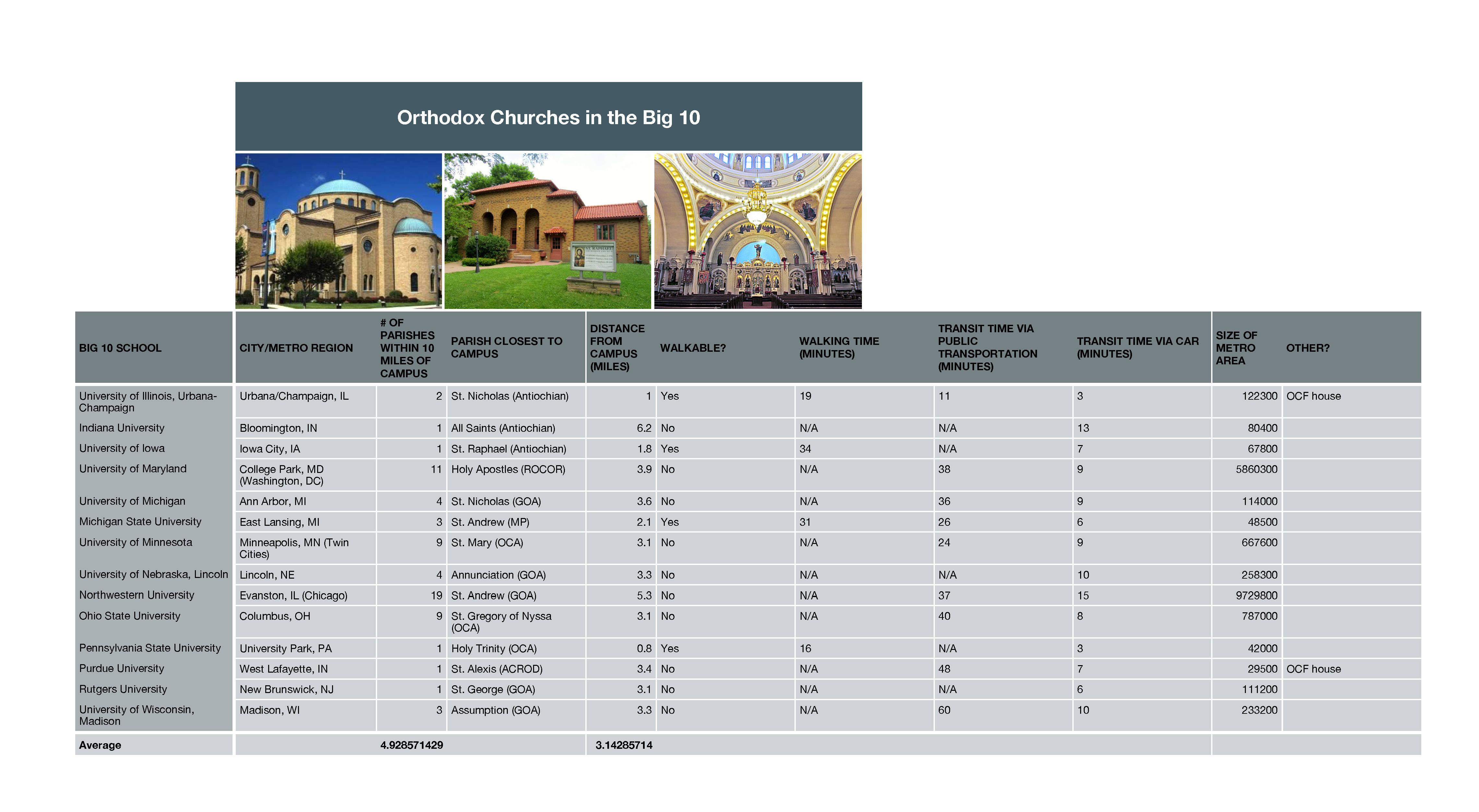


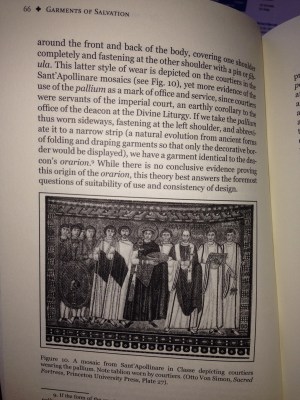

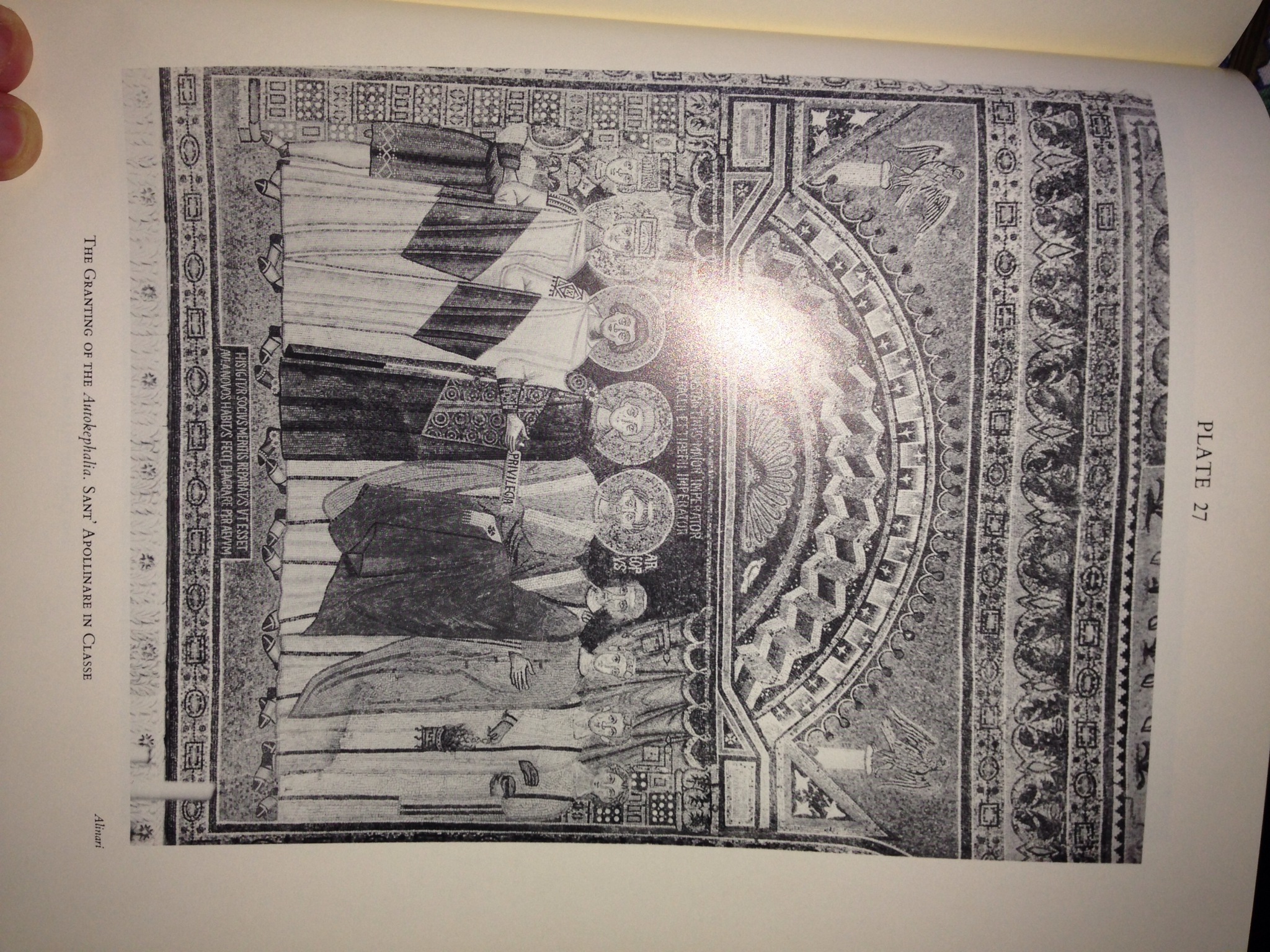


 Leitourgeia kai Qurbana: Contra den Zeitgeist