It’s not often that I get requests. However, I got one a few weeks ago (scroll down to comment #77 if you want to cut to the chase). Here is my step-by-step attempt to make transparent the methodological points that were being discussed. I look forward to any and all comments.
—
Update, 18 November 2011: Taken down for the time being. I’ll hopefully have more to say later as to why (but don’t worry, it’s not because anybody sent me nasty letters or any other bad reason like that).
—
Update, 20 March 2012: Restored, and I’m not going to go into what was going on right this second, except that it’s evident to me that the piece was conceived for this setting and should probably stay in this setting. It’s not worth it to me to go through the rigamarole otherwise for this particular essay.
—
American Orthodox Christian Historiography:
The Methodological Problem
By
Richard Barrett
I. Introduction and thesis
The fundamental role of the historian, according to a current introductory text on historiographical methodology, is “to choose reliable sources, to read them reliably, and to put them together in ways that provide reliable narratives about the past” (emphasis in the original).[1] Georg G. Iggers, in discussing how methods of historical writing, and the theories which govern those methods, have developed in the twentieth century, observes that the modern historian faces the problem that there is a “fluid border…between historical discourse…and fiction…but also that which lies between honest scholarship and propaganda.”[2] This problem does not relieve the historian of any responsibility, however; “in the final analysis,” Iggers writes, “every historical work is a literary work which has to be judged by categories of literary criticism,”[3] but nonetheless the “distinction between truth and falsehood remains fundamental to the work of the historian.”[4] Therefore, it may be said that the use of reliable sources is in fact what distinguishes the modern historiographer from the fiction writer or the propagandist. For those who would write the history of Orthodox Christianity in the Americas, then, it is vital to understand not only what constitutes a reliable source, but also how to best use that source, lest the “fluid border” be improperly transgressed.
II. Methodology of sources
A. Definition, categorization, and typology of sources
To begin with, what is a source? Robert F. Berkhofer, Jr. suggests that “[s]o multiple is the number of survivals of interest today that it is difficult to find any easy classification system of their nature,”[5] but Howell and Prevenier provide a set of general, useful guidelines. First and foremost,
[s]ources are…those materials from which historians construct meanings… a source is an object from the past or testimony concerning the past on which historians depend in order to create their own depiction of that past.[6]
To this end, Howell and Prevenier offer two broad categories of sources, relics or remains, objects which “offer the researcher a clue about the past simply by virtue of their existence,”[7] and testimonies, “the oral or written reports that describe an event… [which] provide the historian information about what happened, how and in what circumstances the event occurred, and why it occurred.”[8]
Howell and Prevenier continue, describing a three-pronged approach to categorizing written testimonies:
- Narrative or literary sources. These might include newspaper articles, diaries, memoirs, biographies, or tracts, among others; under some circumstances, possibly novels and poetry as well.[9]
- Diplomatic sources. These include charters, wills, mortgage agreements, or some other kind of legal instrument intended to either document a contemporary legal reality or to generate a new one.[10]
- Social documents. Howell and Prevenier classify these as “the products of record-keeping by bureaucracies such as state ministries, charitable organizations, foundations, churches, and schools.”[11]
With respect to oral testimonies, these may take many forms; sagas, folk songs, rituals, protest songs, and interviews, among others.[12]
Types of sources that fall under the classification of relics, that is to say unwritten material sources, are sketched out briefly as including archaeological evidence, currency, paintings, drawings, photographs, and other kinds of imagery.[13]
B. Primary vs. secondary sources
In an examination of what constitutes a source, it is also necessary to discuss the difference between a primary and a secondary source. Berkhofer says that
[historians] believe those sources coming most directly from the times they are researching offer the best clues to those times. Historians emphasize this preference in their research by distinguishing between what they call “primary” as opposed to “secondary” sources.[14]
Broadly speaking, this distinction may be understood as primary sources being contemporary with the period being studied, or sometimes simply the oldest available evidence about the period, and secondary sources being of a later origin, thus having to rely on sources from the former category. Berkhofer does allow that “what is a secondary source for one question may be a primary source for another question… [which] shows the importance of using contemporaneous evidence in historical research that applies to the question asked.”[15] For an immediate example, this paper being a discussion of historiography, the historiographical writings themselves are the primary sources, whereas for the periods and events they discuss, they constitute part of the secondary literature.
C. Reliability of sources
Having established a basic typology of sources for the purposes of this brief discussion, the next question is that of reliability. Per Howell and Prevenier, this is a matter of content and form. Most fundamentally, is the language of the source understandable? Is the provenance, date of origin, and authorship of the source discernible? Finally, is it authentic – in other words, is what it claims to be?[16] These are deceptively simple questions that may require various kinds of technical expertise to answer properly, but an exhaustive examination of this is outside of the scope of this paper.
Once these matters are settled, traditional source criticism then evaluates the following seven internal criteria:
- Genealogy. Is the document being examined an original? A copy? A copy of a copy? If it is a copy, is there a way to determine its relationship to the original, if an original is even known to exist?[17]
- Genesis. This is a somewhat less technical question than that of provenance – in this case, what is of interest are the circumstances under which the source was created, by what kind of institution, and with what authority.[18]
- Originality. Does the text in question borrow from other texts within the contemporary intellectual tradition? If it does borrow, does it do so intentionally?[19]
- Interpretation. What was in the intended meaning of the source?[20]
- Authorial authority. What reason(s) does the author have to record the information in the source? Were they an eyewitness to particular events? A newspaper reporter? A monk compiling accounts from pilgrims?[21]
- Competence of the observer. How trustworthy is the observer’s point of view given various factors, such as psychological state, outside influences, personal biases, et al?[22]
- Trustworthiness of the observer. To what extent might politics, personal vanity, or other factors shade the reporting of events?[23]
It is necessary to note here that reliability represents a range rather than a binary value, even within a given source; for example, a document may be more reliable about certain events it reports than others.
III. Representative example: Jaroslav Pelikan
With this as a methodological starting point, then, it is useful to examine the work of a known, established historian and to see how they operate within this framework. A natural choice who should be uncontroversial given the audience and context for this discussion, is Jaroslav Pelikan and his magnum opus, The Christian Tradition: A History of the Development of Doctrine.
In his preface to the first volume, Pelikan writes:
This volume is based on a study of the primary sources in the original languages – Greek, Syriac, and Latin. To cite these, I have devised a system of marginal annotation which will, I hope, serve the interests of the scholar and the needs of the student simultaneously, without intruding the apparatus of erudition on the reader who is not interested (not yet interested or no longer interested) in the footnotes. […] The book has also derived much benefit from secondary works, a small number of which are indicated in the Bibliography, where I have given preference to the books from which I have learned the most and to those books which will take the reader to the next level of specialization.[24]
Pelikan subsequently requires nine pages, single-spaced, to list his primary sources for the first volume. With each source typically taking up no more than a single line, this indicates close to four hundred primary sources alone.[25]
Pelikan’s sources belong predominantly to the category established here as testimony, as opposed to relics. This is logical, as he is dealing with a particular kind of intellectual history. Within this category, there are several different types of testimonies, both written and oral, that he adduces as evidence. Some examples:
| Literary sources |
Letters (e. g. The Epistles of Gregory the Great[26])Tracts (e. g. Tertullian’s On Fasting[27])
Memoirs (e. g. Augustine’s Confessions[28])
Biographies (e. g. Gregory the Presbyter’s Life of Gregory of Nazianzus[29])
Poetry (e. g. Ovid’s Metamorphoses[30], Venantius Fortunatus’ Poems[31]) |
| Diplomatic sources |
The Canons of the Second Council of Constantinople[32] |
| Social documents |
Acts of the Council of Chalcedon[33]Prosper of Aquitaine’s Official Pronouncements of the Apostolic See on Divine Grace and Free Will[34] |
| Oral sources |
Gregory of Nazianzus’ Orations[35] |
It is possible to argue that canons of an Ecumenical Council might be better classified as a social document rather than a diplomatic source; for the purposes of this discussion, canons are understood as a form of lawmaking, certainly one that would have had imperial endorsement, and thus their publication is considered here a legal instrument. Acts of a given Council, however, being the recordkeeping of a social body, as opposed to prescriptions carrying some kind of legal force, have been classified here as a social document.
On the question of how Pelikan judges the reliability of given sources, a useful case is that of his use of the so-called Pseudo-Dionysius the Areopagite. A full discussion of the various issues surrounding Pseudo-Dionysius is outside of the scope of this paper, but it is informative to observe both how Pelikan uses him as a source, and how he does not, starting with the explicit identification of him as Pseudo-Dionysius in the table of primary sources.[36]
Pelikan discusses Pseudo-Dionysius in the context of the rise of mysticism as an important concept in Greek Christianity:
Mysticism became a major doctrinal force with the composition of the works that were published under the pseudonym of Dionysius the Areopagite, described in Acts 17:34 as one of the few Athenians who joined Paul and believed. Arising about 500, probably in the Monophysite circles of Syria, the Dionysian corpus soon achieved wide acceptance as a subapostolic (from the death of John of Patmos to the death of the Polycarp, roughly 100 A. D. until 156 A. D.) exposition of how the celestial hierarchy of God and the angels was related to the ecclesiastical hierarchy of bishops and priests with their sacraments. Here the mystical speculations of Neoplatonism and the spirituality of Origen were integrated into Eastern dogma in a way that was to shape the subsequent evolution of doctrine through such movements as the Hesychasm of the fourteenth century. It also shaped medieval Western theology, for the writings of Dionysius formed the basis for the mystical thought of Bernard of Clairvaux and Thomas Aquinas. These developments belong to later periods in the history of Christian doctrine and will be treated there, but the Dionysian system of mystical doctrine is itself an essential part of the story of catholic orthodoxy in the Greek church of the sixth century.[37]
Pelikan answers the questions of provenance and authenticity, while not answering questions that require speculation. Was the Dionysian corpus written under a pseudonym? Yes, but is it possible to know for certain what this meant to the author (or authors)? No – in other words, Pelikan does not ascribe an unknowable motive to Pseudo-Dionysius, but only notes that the writings were accepted by many as something they were not. Thus, while they are not a reliable source for the Apostolic or Sub-Apostolic period, they are nonetheless a reliable, and important, source for the period in which they were written and gained prominence, the sixth century, and this is exactly how Pelikan utilizes these sources.
For a representative example of exactly how Pelikan crafts a historical narrative using only primary sources, this brief passage on prayer is instructive, reproduced here, as accurately as possible, with his unique method of marginal source citation (a matter not entirely solved for purposes of web publishing, however it may have originally looked in Word, so the author begs your pardon for what is acknowledged to be a mean approximation and welcomes suggestions for fixing the formatting):
| Just. I Apol.65.1 (Goodspeed 74)Tert.Apol.30.5 (CCSL 1:142)
Tert.Apol.30.6 (CCSL 1:142); Tert.Jejun.16.5 (CCSL 2:1275)
Or.Orat.33.1 (GCS 3:401)
Athenag.Leg.13 (Goodspeed 327-28) |
But of course [Christian doctrine] began with, and presupposed, the fact of prayer and its forms. A Christian was a man of prayer. In the apologetic literature, the charge that Christianity was seditious was refuted by reference to the prayers that were offered for the empire and for Caesar. With rhetorical vigor Tertullian turned the tables on the critics with the assertion that it was the very refusal of the church to pray to anyone but God alone that supported Caesar and made him great. “I cannot ask this of anyone except the God from whom I know I shall receive it, both because he alone bestows it and because I have claims upon him for his gift.” This he set into contrast with the ritualism of Roman sacrifice. Reluctant though they were to expose the sacred mysteries of Christian worship to the blasphemous ridicule of their opponents, the apologists did occasionally feel constrained to describe the postures and gestures of Christian prayer as well as some of the content of the invocation, praise, confession, and thanksgiving spoken in public and in private. Significantly, however, the most complete explanations of the doctrine of prayer were reserved for writings addressed to the church.[38] |
Pelikan’s citations make clear to the reader that the First Apology of Justin Martyr is the example of “apologetic literature” referenced as refuting the charge of sedition (accessible in Goodspeed’s collection Die ältesten Apologeten[39]), Tertullian’s Apology as well as his tract On Fasting are the sources for his quotes, and Origen’s On Prayer Athenagoras of Athens’ Supplication for the Christians provide the evidence on which he bases the remainder of the excerpt. At no point does he reference a secondary source to support a claim of any substance. A historian seeking to disagree with Pelikan’s narrative must do so on the basis of the primary sources themselves, or through an analysis of other primary sources that provide different information and are set forth as being more reliable, with a compelling argument being made for their greater reliability.
III. Analysis of American Orthodox historiography
With a working methodological basis having been established and a control example discussed, it is possible to discuss the application of these concepts to the historiography of Orthodox Christianity in the United States and North America. This is an area of interest as yet so new as to have few defining examples, but an analysis of some of the attempts thus far may provide some useful working answers to important methodological questions. For purposes of this discussion, three will be examined: “The Myth of Past Unity,” a paper presented by Matthew Namee at the conference Orthodoxy in America: Past, Present and Future held in 2009 at St. Vladimir’s Orthodox Theological Seminary,[40] “Jurisdictional Unity and the Russian Mission,” an essay by Fr. Oliver Herbel published on the website Orthodox Christians for Accountability in 2009,[41] and The American Orthodox Church: A History of its Beginnings, a book published in 2003 by George C. Michalopulos and Herb Ham.[42] Both Namee and Herbel have the disadvantage of not currently being available in print, although the former is reportedly preparing his work for publication[43] and the latter is based at least in part on his doctoral dissertation, which is also being prepared for publication.[44] In the case of Namee, reference will be made to the video available of his presentation online.
It should be emphasized here that the analysis of these works is solely on methodological grounds; neither any ideological alignment, nor an endorsement of any particular author’s conclusions, is implied or should be otherwise inferred from these brief remarks.
A. Herbel (2009)
Herbel, by virtue of producing a rather informal reflection for a website rather than an article for an academic publication, has far less of an evident apparatus than would be ideal for this kind of discussion; nonetheless, he clearly interacts with the relevant primary sources throughout the piece, as he also does in its follow-up – indeed, he explicitly notes that “we need to be careful to conclude only what the sources allow us to conclude,“ and encourages readers to seek out and engage the sources themselves.[45]
In particular, he cites the report of St. Tikhon to the Holy Synod of Russia, published in November 1905, provides its publication details as well as two different avenues of locating an English translation,[46] and adduces it as useful evidence both for what it does say and what it does not say:
Furthermore, in the report to the Holy Synod of Russia, which was published in November 1905 and in which St. Tikhon proposed an autonomous diocese, he was simply making a proposal, hoping to address what he saw happening. Nowhere in that report to the Synod of Russia did he treat the Orthodox who were not part of the Russian Mission as schismatics, or uncanonical. He did not complain about foreign bishops adversely affecting his own ecclesiastical prerogatives. He was aware of the relative independence of St. Raphael (1860-1915), who was the bishop of Brooklyn from 1904 until his death in 1915, and oversaw the Syro-Arab community. St. Tikhon also explicitly noted that the Greeks were asking for a bishop from Athens. Tikhon was optimistic and considered it possible that America could become an exarchate of national churches. He did not claim such was already the case. What Tikhon was attempting to do was create canonical order out of a non-canonical situation. For possibly the first time in the history of the Church, several different autocephalous Churches simultaneously viewed their immigrant flocks as missionary outposts in a new land.[47]
Herbel’s reflections, while informal, nonetheless follow a methodology that focuses on evidence provided by primary sources, and this evidence therefore can be verified by reference to those sources.
B. Namee (2009)
Namee’s presentation provides more substance for analysis; being a conference paper, the listener does not have access to his footnotes, but he nonetheless makes clear reference to a variety of relevant sources throughout the presentation.
A general observation that may be made regarding Namee’s methodology is that the secondary literature is not appealed to as evidence in his argumentation; rather, secondary sources represent the arguments he is answering, elaborating, or otherwise engaging. In other words, Namee’s references to secondary works represent the scholarly discussion of the matter at hand to which he is contributing. An example may be found in the quotation of Fr. Alexander Schmemann early in his presentation:
Now, perhaps the most celebrated and often-quoted essay on the subject of Orthodoxy in America was written by Fr. Alexander Schmemann as an introduction to the 1975 book, Orthodox America… In this essay, Schmemann describes a utopian American Orthodox past and the Fall that destroyed it. He wrote, “Unity did exist, was a reality. The first Epiphany of Orthodoxy here was not as a jungle of ethnic ecclesiastical colonies, serving primarily if not exclusively the interests of their various nationalisms and mother churches, but precisely as a local Church meant to transcend all natural divisions and to share all spiritual values.” He goes on to say that “this unity was broken and then arbitrarily replaced with the unheard-of principle of jurisdictional multiplicity, which denies and transgresses every single norm of Orthodox Tradition. This situation which exists today is thus truly a sin and a tragedy.” Now, the view that Orthodox unity in America was broken presupposes some person or persons responsible for the fracture, and besides the obvious Bolshevik culprits abroad, some have pointed the finger at Ecumenical Patriarch Meletios Metaxakis, who spearheaded the foundation of the Greek Archdiocese in 1921. […] Now, some scholars have… argued that the Greeks in America were always independent of the Russian hierarchy.[48]
Namee goes on, reviewing from other secondary sources various points of view on the jurisdictional situation in the United States, but these secondary sources, including his reference to Schmemann, are only a jumping-off point for his argumentation, and do not represent principal means of support for his central thesis that administrative separation along ethnic lines existed in American Orthodoxy previous to the Bolshevik Revolution and the formal establishment of the Greek Archdiocese in 1921.
One representative example of how Namee does support his thesis provides a reference to a type of source not yet encountered in this discussion:
In 1890, only two Orthodox churches existed in the continental United States. […] The seven largest cities in America were without an Orthodox church. As for the New Orleans parish, its jurisdictional position was ambiguous. The 1890 U. S. Census describes it as part of the Church of Greece, in connection with the Consulate of Greece in New Orleans, and it was actually founded many years earlier by the Greek Consul in New Orleans. […] Thus, I would argue that it is impossible to speak of any kind of overarching Orthodox unity in America in 1890, there being virtually no Orthodox presence in America to begin with.[49]
In this portion of Namee’s argument, census data, a kind of diplomatic source which is clearly relevant, is adduced as evidence that a parish in New Orleans was administratively under the Church of Greece and not the Russians.
A second example is useful not only for the kinds of sources explicitly referred to but also those implied:
In 1891 – again, there being only two Orthodox churches in the continental United States – there was a growing Greek community in New York City, and it began to organize itself. It formed an organization called The Society of Athena, and this was composed primarily of Greeks from Athens. The Baltimore Sun reported at the time that “[s]ince the closing of the Russian chapel, they” – the Greeks – “have found the lack of spiritual aid and counsel to be a great drawback to happiness.” So, in 1891, the New York Greeks wrote to Archbishop Methodius of Syra, Greece. The Baltimore Sun reported, “The archbishop conferred with a dignitary at Athens, and the dignitary at Athens wrote to the Patriarch of Constantinople, and the Patriarch said, ‘To be sure, they must have a priest; as it is, their souls are in peril.’”[50]
The Sun article is the principal item cited here, with newspaper articles being a common type of literary source employed in historiography of modern times. What is also alluded to, however, are the records of the Society of Athena, which would themselves be a social document – minutes of their meetings, for example. Without Namee’s footnotes, it is difficult to tell for certain, but his transparency otherwise would make it a simple matter to either contact him directly for clarification; presumably the published article will make this clear. In the interest of fairness, it must also be stressed that this is potentially a point where Namee may be critiqued depending on his published footnotes; as a point of direct comparison and a cautionary example, Fr. Nicolas Ferencz also makes reference to the Society of Athena in his book American Orthodoxy and Parish Congregationalism, but the citation he provides is only of a secondary work, Theodore Saloutas’ otherwise fine The Greeks of the United States.[51] That having been said, Ferencz’ work is not primarily a historical study,[52] and may arguably follow a different methodological standard. In any case, it is at least useful to note that this is another kind of source that is employable in this kind of historiography.
Namee explicitly invokes another kind of social document in his paper, the Russian Archdiocese’s own published records:
It is not entirely clear whether the Russian Archdiocese itself even considered the Greeks to be under its own jurisdiction. The Russian Church issued official lists of parishes that they published in 1906, 1911, and 1918; they include no Greek communities.[53]
As with the earlier example of the census data, Namee’s central thesis is supported with a direct reference to a primary source; specifically, that the absence of Greek parishes from the Russian Archdiocese’s own published lists creates doubt as to whether or not the Russians considered those communities to under their authority.
C. Michalopulos/Ham (2003)
Focusing now on Michalopulos and Ham, it must be noted that The American Orthodox Church: A History of its Beginnings has two distinct advantages over Herbel and Namee: it has been published and is thus reasonably available for perusal, and the authors have included their apparatus – that is, they have made extensive use of endnotes and include a bibliography. In many respects, it is therefore easier to make methodological observations about this work than either of the other two examples.
The Acknowledgements section notes the following:
In addition to several primary, secondary, and even tertiary sources, some of which are no longer in print, oral sources have also been used. Those oral sources that have allowed the use their names [sic] for references have been so noted. Others have asked to be quoted only “on background” or only in paraphrase, as they are otherwise unwilling to lend their names for attribution. They are referenced only as “a priest in the Diocese,” or “a highly placed source in the Archdiocese,” or “a layman on the diocesan council” and so forth. […]As a co-author, [Ham] rewrote the initial drafts and crafted the research into its final form. The final product is an example of a collaborative process that joined research methodology with historical writing skills.[54]
Two points of concern are already warranted; first, use of anonymous “background” sources suggests a methodology approaching that of journalism, an approach against which Howell and Prevenier offer caution: “[H]istorians are not reporters or detectives. They are interpreters of the past, not its mediums.”[55]
Second, while interviews may well be legitimate oral sources, exactly what kind of interview serves the purposes of the historian is a matter not to be taken lightly:
The questions asked must be carefully designed, in accordance with an overall plan about the kind of information sought and about the tests of reliability to which it will be subjected; at the same time, however, the interviewer must be flexible, able to shift the terms of the interview to pursue unexpected avenues and avoid dead ends. In general, “hard” interviews can be distinguished from “soft.” In the first – the kind of real value to historians – the interviewer has worked hard to reconstruct the historical situation in which the informant lived in order to get beyond the simple narrative about what did or did not happen. A good interview is one in which the story becomes richer, more nuanced, more understandable in the telling, not one in which guilt or innocence is proved, a cause is vindicated, a person found out. Thus, even an interview constructed as though it were a “fact-finding” expedition is something much more; it is in itself an interpretation, a source that must be analyzed with extreme care.[56]
A certain amount of methodological transparency is required, then, of Michalopulos and Ham regarding the circumstances of the interviews they are adducing as evidence, a transparency which is not evident in their brief treatment in the Acknowledgements.
Setting these concerns aside, however, turning to Michalopulos and Ham’s list of works cited, another more serious issue presents itself. Of the some forty sources listed in the bibliography, the “several primary sources” mentioned in the Acknowledgements are nowhere to be found. Not a single listing is a primary source document of any kind; rather, all works listed belong properly to the category of secondary literature.[57] Perusing the 397 individual endnotes,[58] perhaps thirty may be considered references to primary source documents.[59] Of those thirty, four are patristic references outside of the period being directly examined,[60] and seven are of the type of interview and personal correspondence, anonymous or otherwise, which has already been discussed as being potentially problematic from a methodological point of view, and the aforementioned necessary methodological clarity is not apparent here.[61]
Of the nineteen remaining citations, only nine are cited in such a way as to be useful to the researcher attempting to follow their tracks.[62] For an illustrative example, compare the citation of a memoir with that of a letter:
Fr. Peter Gillquist, Becoming Orthodox: A Journey to the Ancient Christian Faith (Ben Lomond, Calif: Conciliar Press, rev. ed., 1992), p. 147.[63]
For this source, author, title, and publication information are provided, giving another researcher sufficient information to be able to consult the work themselves. As opposed to:
OCA “Letter on the Retirement of the Metropolitan.”[64]
Here, no useful information whatsoever is provided about how the source may be accessed. For an additional example, note V.5 is a citation of the decision of a court case, an otherwise interesting diplomatic source:
Memorandum on Opinion, Superior Court of Los Angeles: The Church of the Transfiguration et al vs. Rev A Lisin et al, 1948.[65]
This lacks any kind of pertinent publication or volume information that would make this source locatable.[66]
The endnotes also reveal another problem: many sources cited refer to websites that do not exist anymore. For example, note XI.7 tells the reader that “[t]he comments of Patriarch Ignatius IV of Antioch can be accessed at http://www.voithia.org,”[67] but an attempt to navigate to that URL reveals that it is no longer in service.
How do these issues of sources impact the argumentation? A significant problem may be illustrated with the following excerpt:
Before 1880, over 85% of the immigrants to the United States had come from Western Europe: England, Germany, Ireland and Scandinavia. After 1880, 80% of all new arrivals came from Southern and Eastern European countries: Italians, Greeks, Turks, Hungarians, Eastern European Jews, Armenians, Poles, Russians, and Slavs. The numbers were staggering. Between 1870 and 1910, more than 20 million immigrants came to the United States. In 1888, more than half a million Europeans arrived in the United States. By 1907, more than one million came into the United States via Ellis Island in New York City. Unlike immigrants from Western Europe who were mainly Protestants, these new immigrants from Southern and Eastern Europe were primarily Catholics, Jews, and Orthodox Christians.[68]
As Michalopulos and Ham are writing a history of a religion brought to the United States at least in part by immigration, clearly this is important information, a discussion of which should be expected in any reasonable work on the topic. However, not a single source is provided for any of these numbers. Census data is not cited (nor is any census data whatsoever among the nineteen citations of relevant primary source documents in the endnotes), and neither is any secondary work cited as a reference for immigration data. Indeed, the only note for this entire excerpt tells the reader only that “[i]mmigration statistics are often unclear in regards to the Turkish Empire. Syrians, Palestinians, and even Levantine Jews were often designated simply as ‘Turkish’ immigrants,” with no additional corroborative information.[69]
Another problem is demonstrated with this excerpt:
Bishop Alexander [of the ‘Greek Orthodox Church in the United States’ in 1920] realized that the downfall of his patron [Eleftherios Venizelos, Prime Minister of Greece] necessitated taking matters into his own hands. He invited “many, if not most” American priests to New York City to organize the “Association of Canonical Hellenic Clergymen,” whose “stated objectives were to preserve the doctrines of the Greek Orthodox Church and to proclaim the independence of the members of the association.” The Holy Synod of Greece took a dim view of this and summoned Alexander to appear before it in Athens. Alexander refused, arguing, “he could not communicate with ‘a degraded clergyman’ [without suffering] [sic] the penalty of his own degradation, in accordance with Canon 11 of the Holy Apostles.”[70]
In this one paragraph, several different primary sources are suggested. Perhaps Alexander’s letter calling for the convocation of the Association still exists in an archive, as might perhaps some kind of mission statement or other document stating the Association’s objectives. Surely the summons sent to Alexander by the Synod is accessible somewhere, as well as Alexander’s note of decline. Perhaps as many as four different sources might be adduced as evidence for the narrative of this paragraph – a paragraph which, as it turns out, only includes two endnotes, both of which refer to the same work of secondary literature (the aforementioned Saloutos book, The Greeks of the United States). In fact, the narrative of the following sixteen pages refers solely to Saloutos in the apparatus, comprising some thirty-three individual, consecutive endnotes. In all frankness, Michalopulos and Ham have effectively done little more than summarize Saloutos in this rather lengthy section, have added little new to the discussion, and in fact by doing so have diminished their own authority to be arguing the book’s central thesis of an Orthodox missionary effort in North America hampered by history.[71]
Unfortunately, as an examination of the apparatus makes clear, this is representative of the methodology throughout the book. Judging strictly by the endnotes, which in the first nine chapters are predominantly references to Saloutos’ work as well as Mark Stokoe’s Orthodox Christians in North America: 1794-1994, it is unclear how much the work may legitimately be considered original historical scholarship.[72] In fairness, it will be conceded that perhaps Michalopulos and Ham do not intend their work to be seen as such, in which case perhaps a title change might be considered for a future edition.
IV. Concluding remarks
With these various examples in mind, then, it is possible to make some basic statements regarding methodology, at least in terms of consultation of sources, in the field of American Orthodox historiography.
- Languages. While this has not been specifically addressed thus far, it has been an underlying issue at several points. In short, it is probably reasonable to conclude that Modern English is not the only applicable language for this kind of research. Written sources have been discussed which were in Russian and Modern Greek, and it appears likely that Serbian and Arabic are also useful. Depending on the researcher’s particular interests and focus of study, certain dialects of the Native Alaskans might also be necessary, as might Ancient and Byzantine Greek, Latin, and/or Syriac (if a more theological approach is to be taken).
- Sources. This is the central question of the entire discussion – what constitutes a reliable primary source for this field? In terms of written sources alone, this brief discussion has dealt with letters, minutes and mission statements of social organizations, memoirs, census and immigration data, published lists of churches, public reports, newspaper articles, and court records. This is by no means exhaustive; diaries, bills of sale, real estate records, membership rolls of parishes, baptismal certificates, minutes of parish council/trustee meetings, et al. appear to be other kinds of written sources likely to be encountered. Among unwritten sources, photographs, films, videotapes (particularly for events occurring the last twenty to thirty years), interviews with eyewitnesses, homilies, and public speeches seem reasonable to include on this list. Material sources, the relics discussed at the outset, are also not to be forgotten; church buildings and liturgical furnishings are possible objects in this category, among others. Reliability will have to be determined for a given source on an individual basis using the criteria discussed, along with whatever other technical evaluation might be required for the specific type of evidence.
- Use of sources. To contrast specific examples from the works analyzed here: Namee, citing census data, was able to demonstrate the existence of an Orthodox parish which administratively belonged to the Church of Greece in 1891, and was subsequently able to weave this point into his greater narrative. Michalopulos and Ham, in using immigration numbers without so much as a secondary source to back them up, failed to make them relevant to their discussion once the reader looked at their apparatus. Sources will always be far more reliable, to say nothing of effective, than assertions.
As a final point – considering the long-term implications of this discussion, it will be crucial to revisit this analysis when both Herbel and Namee have published works to review, as well as at such time as Michalopulos and Ham might decide to revise their book. To be plain, none of the three works discussed here are without disadvantages. Herbel and Namee are available as yet only in online versions – ephemera which, as shown earlier, should make any responsible historian nervous. To analyze their methodology under circumstances that allow their apparatus to be fully transparent is the vital next step of this discussion. Michalopulos and Ham, on the other hand, have the disadvantage of an apparatus far more detailed than their methodology will bear, reaching a level of detail that makes the flaws of the book clearer, it cannot be doubted, than the authors anticipated. It goes without saying that it will be vital to bring other historians of this period and area of interest, as well as their studies, into the conversation.
In conclusion – to revisit Georg Iggers, he discusses the historiographical assumption “that there are objects of historical research accessible to clearly defined methods of inquiry.”[73] To the extent that this assumption is legitimate, these short remarks have been an attempt to contribute to the conversation about how methods of inquiry relative to Orthodox Christianity in the United States may be clearly defined, given that it is a new enough field that it is in many respects undefined. Historians who wish to work in this field, particularly those who are themselves Orthodox Christians, should certainly be encouraged to do so, and to a large extent it is a wide open field for those scholars. Care must be taken, however, that their studies are conducted in a way that represents both good history as well as good Orthodox Christianity. Namee makes reference in his presentation to those historians who would appeal to “the past”;[74] the responsible scholar of Orthodox Christian history in America must do far more than just that.
Works Cited
Berkhofer, Robert F. Jr. Fashioning History: Current Practices and Principles. New York, NY: Palgrave MacMillan, 2008.
Ferencz, Fr. Nicolas. American Orthodoxy and Parish Congregationalism. Piscataway, NJ: Gorgias Press, 2006.
Gibaldi, Joseph. Mla Handbook for Writers of Research Papers. 5 ed. New York, NY: The Modern Language Association of America, 1999. Reprint, 2001.
Herbel, Fr. Oliver. “A Response to Some Objections.” http://www.ocanews.org/news/HerbelResponse5.1.09.html.
———. “Jurisdictional Unity and the Russian Mission.” http://www.ocanews.org/Herbeljurisdiction4.22.09.html.
Howell, Martha, and Walter Prevenier. From Reliable Sources: An Introduction to Historical Methods. Ithaca, New York: Cornell University Press, 2001.
Iggers, Georg G. Historiography in the Twentieth Century: From Scientific Objectivity to the Postmodern Challenge. Hanover, NH: Wesleyan University Press, 1997.
Michalopulos, George C., and Herb Ham. The American Orthodox Church: A History of Its Beginnings. Salisbury, MA: Regina Orthodox Press, 2003.
Namee, Matthew. “The American Orthodox ‘Historiographical Problem’: Comment 43.” http://www.aoiusa.org/blog/2009/07/the-american-orthodox-historiographical-problem/.
———. “The Myth of Past Unity.” In Orthodoxy in America: Past, Present and Future. St. Vladimir’s Seminary, Crestwood, New York, 2009.
Pelikan, Jaroslav. The Emergence of the Catholic Tradition (100-600), The Christian Tradition: A History of the Development of Doctrine. Chicago: University of Chicago Press, 1971.
[1] Martha Howell and Walter Prevenier, From Reliable Sources: An Introduction to Historical Methods(Ithaca, New York: Cornell University Press, 2001), 2.
[2] Georg G. Iggers, Historiography in the Twentieth Century: From Scientific Objectivity to the Postmodern Challenge (Hanover, NH: Wesleyan University Press, 1997), 13.
[3] Ibid., 10.
[4] Ibid., 12.
[5] Robert F. Jr. Berkhofer, Fashioning History: Current Practices and Principles (New York, NY: Palgrave MacMillan, 2008), 6.
[6] Howell and Prevenier, From Reliable Sources: An Introduction to Historical Methods, 19.
[7] Ibid., 17.
[8] Ibid.
[9] Ibid., 20.
[10] Ibid.
[11] Ibid., 22.
[12] Ibid., 23.
[13] Ibid.
[14] Berkhofer, Fashioning History: Current Practices and Principles, 19.
[15] Ibid.
[16] Howell and Prevenier, From Reliable Sources: An Introduction to Historical Methods, 43.
[17] Ibid., 61.
[18] Ibid., 62.
[19] Ibid., 63-4.
[20] Ibid., 64.
[21] Ibid., 65-6.
[22] Ibid., 66-8.
[23] Ibid., 68.
[24] Jaroslav Pelikan, The Emergence of the Catholic Tradition (100-600), The Christian Tradition: A History of the Development of Doctrine (Chicago: University of Chicago Press, 1971), x.
[25] Ibid., xiii-xxii.
[26] Ibid., xvii.
[27] Ibid., xxi.
[28] Ibid., xiv.
[29] Ibid., xviii.
[30] Ibid., xx.
[31] Ibid., xxii.
[32] Ibid., xvi.
[33] Ibid., xv.
[34] Ibid., xx.
[35] Ibid., xvii.
[36] Ibid., xvii.
[37] Ibid., 344.
[38] Ibid., 138.
[39] Ibid., xxii; Pelikan’s table of abbreviations for the editions and collections available for his primary sources is found on xxii-xxiii.
[40] Matthew Namee, “The Myth of Past Unity,” in Orthodoxy in America: Past, Present and Future (St. Vladimir’s Seminary, Crestwood, New York2009). Online at http://orthodoxhistory.org/?p=102.
[41] Fr. Oliver Herbel, “Jurisdictional Unity and the Russian Mission,” http://www.ocanews.org/Herbeljurisdiction4.22.09.html.
[42] George C. Michalopulos and Herb Ham, The American Orthodox Church: A History of Its Beginnings (Salisbury, MA: Regina Orthodox Press, 2003).
[43] Matthew Namee, “The American Orthodox ‘Historiographical Problem’: Comment 43,” http://www.aoiusa.org/blog/2009/07/the-american-orthodox-historiographical-problem/.
[44] Fr. Oliver Herbel, “A Response to Some Objections,” http://www.ocanews.org/news/HerbelResponse5.1.09.html.
[45] Ibid.
[46] Ibid.
[47] Herbel, “Jurisdictional Unity and the Russian Mission.”
[48] Namee, “The Myth of Past Unity,” 7:27-10:26.
[49] Ibid. 11:43-13:27.
[50] Ibid., 14:51 – 15:45.
[51] Fr. Nicolas Ferencz, American Orthodoxy and Parish Congregationalism (Piscataway, NJ: Gorgias Press, 2006), 130.
[52] As the section titled “Methodology” makes clear; Ibid., 8-10.
[53] Namee, “The Myth of Past Unity,” 28:09-28:28.
[54] Michalopulos and Ham, The American Orthodox Church: A History of Its Beginnings, viii.
[55] Howell and Prevenier, From Reliable Sources: An Introduction to Historical Methods, 60.
[56] Ibid., 27.
[57] Michalopulos and Ham, The American Orthodox Church: A History of Its Beginnings, 235-7.
[58] Ibid., 215-34.
[59] By this author’s reckoning: III.5, IV.5 and 14, V.5 and 7, VI.41, VII.10, 11 and 16, IX.34 and 35, X.2, 13, 18, 19, 27, and 28, XI.4, 5, 6, 9, 11, 14, 19, 20, 21, 22, and 25, XII.16 and 17.
[60] IV.14, X.13, 18 and 19.
[61] VI.41, VII.11, IX.34 and 35, XI.14, 19, and 21.
[62] III.5, VII.10 and 16, X.27 and 28, XI.4, 6, 9, and 11.
[63] Michalopulos and Ham, The American Orthodox Church: A History of Its Beginnings, 231, n. X.27.
[64] Ibid., 232, n. XI.22.
[65] Ibid., 221.
[66] For example, see Joseph Gibaldi, MLA Handbook for Writers of Research Papers, 5 ed. (New York, NY: The Modern Language Association of America, 1999; reprint, 2001), 177.
[67] Michalopulos and Ham, The American Orthodox Church: A History of Its Beginnings, 231.
[68] Ibid., 19-20.
[69] Ibid., 217, n. II.9.
[70] Ibid., 91.
[71] Ibid., 223, n. 6, 7, et al.
[72] Ibid., 215-28.
[73] Iggers, Historiography in the Twentieth Century: From Scientific Objectivity to the Postmodern Challenge, 8.
[74] Namee, “The Myth of Past Unity,” 4:27 – 4:34.
 In my research for the article on historiography of Orthodox Christianity in America, I encountered the book Orthodoxy and Parish Congregationalism by an Carpatho-Russian priest named Fr. Nicholas Ferencz. It was evidently his doctoral dissertation at Duquesne University, and it was published in 2006 by Gorgias Press under their “Gorgias Dissertations” imprint. It is, I think, a book that should be carefully read and considered by Orthodox Christians in America, and is far more of an intellectually honest look at certain issues than certain other books out there. Unfortunately, those certain other books are $15 a pop and Fr. Nicholas’ is $99 (the perils of a small boutique academic press, alas), so that’s unlikely to happen, but I’d like to make what case for the book I can.
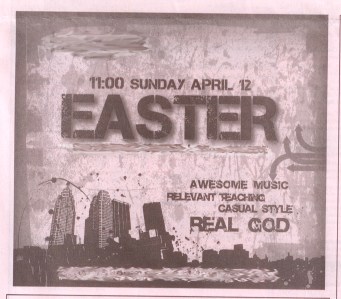 I found this ad in a newspaper last week. It doesn’t matter which newspaper, and I’ve intentionally removed any marks from the ad that would identify the church who placed it, because I want to deal with the content, not the agent.


 Leitourgeia kai Qurbana: Contra den Zeitgeist