Archive for the 'music' Category


Perspective

Just because these are the kinds of things which occur to me every so often, particularly when I’m 23 days from a birthday…

Led Zeppelin’s “Stairway to Heaven” came out in 1971. I first heard it in 1990 (eighth grade for me), nineteen years later. From my perspective, it seemed like that song was ancient, from a totally different world. However, this would analogous to a current eighth grader today hearing one of these songs for the first time today, none of which I think of as “ancient.”

Man. That’s not grey in my beard, is it?

By the way, as long as we’re on the topic, supposedly Jimmy Page and John Paul Jones want to restart Led Zeppelin without Robert Plant. All I can say is, Led Zeppelin itself came out of Page’s need to keep The Yardbirds going without, well, The Yardbirds, and that worked out okay, so maybe this will to. Loyal Soundgarden fan that I am, I cast my vote for Chris Cornell as Plant’s replacement (and, to bring it back to the original subject, I’ll note that Soundgarden’s “Hands All Over” is one of the songs on the 1989 list).

Coming soon: Cappella Romana’s Greatest Hits, Vol. I (330-1453)

Well, sort of. Mark Powell tells me that to some extent, Music of Byzantium was the first “greatest hits” collection, but to me that’s the live album with some bonus tracks. This is a compilation of selections from their studio recordings of the late antique/medieval Byzantine repertoire, released as a companion to the Byzantium: 330-1453 exhibit now running at London’s Royal Academy of Arts. I don’t know that this is the kind of thing that will really scream for a full-on review since it’s all previously-released material, but we’ll see. It certainly looks like a disc that will be a terrific introduction to medieval Byzantine chant as well as to Cappella Romana, and worth recommending on that basis at least. This will only be available in the UK for a bit yet, but it will eventually be out here, I’m told. You can order it online here, but shipping from the UK will double the cost. I’d just wait for the US release (or, if you’re going to the exhibit anyway, buy it from the gift shop in person).

Here’s the press release. I have taken the liberty of linking the recording titles to the pages where they may be purchased. I have them all and can recommend them all; I will say that The Fall of Constantinople and Byzantium in Rome tend to have higher production values than the other two in my opinion, and Music of Byzantium contains live versions of much of the same repertoire as The Fall of Constantinople, sometimes with interesting differences (and sometimes with a door slamming right in the middle of a number — ah, live music). Don’t let the price for Epiphany scare you; it’s out of print at the moment, but Mark says that it will be re-released at some point.

CAPPELLA ROMANA
FOR IMMEDIATE RELEASE
Contact: Mark Powell, mobile 503-927-9027; msg line 503.236.8202; E-mail mark@cappellaromana.org

London’s Royal Academy of Arts
Releases New CD Recording by Cappella Romana
for its Mega-Exhibition “Byzantium 330-1453”

25 October 2008 — PORTLAND, Ore, USA; London, United Kingdom — Cappella Romana announces the release of its 11th recording, the official companion CD commissioned for the exhibition, BYZANTIUM: 330-1452, at London’s Royal Academy of Arts (25 October ’08 to 22 March ’08. http://www.royalacademy.org.uk)

The Royal Academy calls this new CD “A glorious collection of choral music which traces the rise and fall of the Byzantine Empire, all sung by the world’s leading performers of Byzantine chant, Cappella Romana.” The ensemble’s first museum exhibition CD, Music of Byzantium, commissioned by the Metropolitan Museum of Art in 2004, sold 12,000 copies.

The new CD, Cappella Romana’s third release in 2008, is a compilation of earlier recordings. It features tracks from Epiphany, Cappella Romana’s first full-length recording of Medieval Byzantine chant, as well as from the CD titles The Fall of Constantinople, Byzantium in Rome, and Music of Byzantium.

The disc will initially be available in the UK and Europe exclusively through the Royal Academy. Beginning in November 2008, the title will be distributed and sold in North America through Cappella Romana (www.cappellaromana.org) by special arrangement with the Royal Academy.

The Royal Academy of Arts in London is the fourth major world museum to have engaged Cappella Romana for its expertise in Medieval Byzantine Chant, joining these three institutions:

* The Metropolitan Museum in New York (Byzantium: Faith and Power, 2004; with CD selling 12,000 copies)
* The J. Paul Getty Museum in Los Angeles (Byzantium and the West, 2004 and Icons from Sinai, 2006)
* The Smithsonian Institution in Washington, D.C. (In the Beginning: Bibles before the Year 1000, 2006)

The first evening lecture of “Byzantium: 300-1453” will be given by Dr. Alexander Lingas, Cappella Romana’s founder and artistic director, on 7 November. Titled “The Heavenly Liturgy: Byzantine Psalmody to 1453, ” it will be enhanced by sung demonstrations by Dr. Lingas, Cappella singer John Michael Boyer, and three cantors from Hagia Sophia Cathedral, London.

The Royal Academy’s exhibition has received major press coverage in the UK and throughout the world, including a review and photo essay in Time magazine (Fri., 24 Oct. 2008).

Review: Richard Toensing: Kontakion on the Nativity of Christ, by Cappella Romana

About four years ago, I was lucky enough to get to sing in concert performances of both the Gretchaninoff and Rachmaninoff settings of the Vigil (more commonly, and incompletely, known as “Vespers” to Western audiences because they don’t know what a Vigil is). Something that was very difficult about the experiences of singing them, however, was knowing that we English-speaking Orthodox Christians do not yet have equivalent works, and that to sing such things in translation would be to largely destroy much what makes the settings so beautiful, since they’re so tied to the Slavonic texts. Subsequent conversations about this with friends of mine who are composers and Orthodox Christians revealed a very real reluctance to become “Orthodox composers” — and I’m still not sure I totally get why, but there we are. Since then, I’ve discovered the music of people like Kurt Sander, whose setting of the Nunc dimittis in English is itself a mini-masterwork, and Ivan Moody, to say nothing of Fr. Sergei Glagolev — and while as a whole we are miles from maturity, it would not be at all fair to say that there are no English-language Orthodox composers attempting to pick up the gauntlet thrown down by some of their old-world counterparts.

Richard Toensing’s Kontakion on the Nativity of Christ is a large-scale work by a fully mature composer which picks up that gauntlet and throws it down again, quite honestly. The intended scope of the piece is indicated by its subtitle, “A Choral Concerto,” and one important point to make before we get any further — this is not, repeat not, a liturgical work. I suppose there might be, hypothetically speaking, a cathedral somewhere with an absolutely amazing choir who could pull it off liturgically, but who actually does the full Nativity kontakion liturgically anyway, these days?

(You might be thinking to yourself one of three things right now. If either 1 — “What’s a kontakion and why do I care?” — or 2 — “Don’t we sing different kontakia for various liturgical seasons?” — then I can tell you that a kontakion in its original form was a very lengthy kind of hymn with many stanzas and a refrain, and the proper kontakia we sing now are only the first stanzas of the applicable full-length versions. If 3 — “Well, we do sing a kontakion every time we do an Akathist” — then please pat yourself on the head and have a cookie.)

As a work intended explicitly for the concert stage rather than the parish choir, much like the Rachmaninoff Vigil setting, Toensing is free to paint on a vast, expansive canvas, and does he ever. He liberally employs text painting, use of soloists and small ensembles, an extensive harmonic vocabulary, adept counterpoint, tone clusters, and so on. Great — but does it sound like music? Yes, most definitely — glorious, lush, beautiful, dramatic, and demanding music. The press materials state that Toensing is “indebted to Slavic traditions,” and perhaps that’s true to some extent, but what I also hear is a master composer, fully on top of his game, synthesizing many of the best influences of 20th century choral writing, including Francis Poulenc, William Harris, Ralph Vaughan Williams, even Lloyd Pfautsch. The wordy text is set in a very sensitive but expressive manner often evocative of the deftness which made Benjamin Britten such a master with English. At some points I found myself thinking, “This is what Morten Lauridsen would sound like if he had more than one trick up his sleeve.” At the same time, the way Toensing uses the music to support the text is strongly suggestive, not just of well-trained artistic sensibility, but also of a deep faith informing his compositional choices, much like Bach.

Toensing shifts from one color to another with ease and control, and is as much an expert with different choral textures. For example, the first stanza begins with a solo cantor on a chant melody, joined gradually by the rest of the ensemble, building until finally the choir is all together on the refrain (“He who from eternity is God”). One stanza transitions smoothly into another, no matter how stark the contrast — in Movement III, Stanza IX (“Receive then, O Holy Lady”) he renders the refrain (“He who from eternity is God”) as a heart-stopping, everybody singing out, vocal-folds-to-the-wall climax, only to begin the next movement immediately with a simple, peaceful melody introduced by the women, without it ever feeling like any kind of a disconnect.

The members of Cappella Romana bring their usual high standard into the game, delivering Toensing’s “poeticized” version of St. Romanos the Melodist’s text with crispness and clarity. Too often choirs sing modern choral works like they’re just trying to get the notes right and they’ll let somebody else figure out how to make music with it later; in this premiere recording of Toensing’s work, Alexander Lingas refuses to take that route, and the ensemble makes music with it now, taking Toensing’s sonic palette firmly in hand and detailing the peaks and valleys rather than just sketching them in. Soprano LeeAnne DenBeste sings the Theotokos’ lines (I really hesitate to call “the part of the Theotokos”) with a crystal clear timbre and laserlike accuracy, and the other soloists acquit themselves admirably as well.

All of that said, I am not convinced that the depths of Toensing’s piece are fully plumbed, and the disc is not flawless. In the case of the former — well, no, of course not. A recording like this is hopefully the beginning of a conversation, rather than just a monologue. It would a rarity indeed for a premiere to be both the first and last word on a given piece (expressively speaking, at least — it is quite common for such recordings to be the first and last word from a commercial standpoint). This recording is without doubt a very strong opening statement to the conversation, but I would be very curious to know what the Kontakion might sound like using boys and men (with boys singing the solo soprano parts as well, not just the choral sections), and I would also love to hear, just for the sake of knowing the difference, what kind of nuances an English conductor might discover in the piece.

My criticisms of the disc itself center around one particular technical point — the acoustic is on the dry side, and there are times where the singers are clearly not loving the dryness of the room as much as they might — which I can well understand, singing services every week as I do in a church where the ceiling of acoustic tiles is inches from my head. My guess is that they chose the less-reverberant approach to clarify the text as much as possible, which I can also appreciate, but there are times where the vocal writing sounds like some reverberation of the chord has been assumed by the composer to be there, so when it doesn’t happen it sounds like something is missing. With nothing but admiration and respect for the effort as presented here, this is another reason why I’d be interested in a performance by somebody native to the English choral tradition — I would like to hear their solution.

One thing I am obliged to mention — something we forget sometimes in a world where we hear music in every kind of room and venue and in every medium imaginable except live in the hall is that music like this is intended to be heard, well, live in the hall. That’s really where the Kontakion needs to be heard, not on an iPod or in the car. It is difficult, therefore, to fairly judge this recording without knowing firsthand what it should sound like in person. I don’t say that to qualify my criticisms or to de-emphasize the praise; I’m just saying that to have a premiere recording three months before the premiere performance is putting the cart before the horse, particularly for somebody wanting to write as honest a review of the music as possible — it is unavoidable in the music landscape of today, unfortunately, but I sincerely hope I can have the chance at some point to experience Toensing’s music as it was intended rather than an electronic simulation of same. It would be akin to writing a review of The Dark Knight based on a pan-and-scan DVD screener watched on a 20″ TV. It doesn’t change the plot, the dialogue, the performances, or anything like that, but it is clear enough from the smaller-scale experience that “there’s a lot more ‘there’ there,” if you know what I mean, and without actually seeing it in IMAX to catch everything, you don’t know exactly what it is.

Besides the Kontakion are several “Orthodox Christmas carols,” Toensing’s settings of Fr. Jack Sparks’ metrical translations of Nativity hymnody. These are all positively delightful and inventive, surprisingly so, and good luck getting them out of your head once you’re familiar with them (particularly “What Shall We Call You,” from the Royal Hours of the Nativity, and “O Let Creation All Rejoice,” from the First Canon of Nativity Eve Matins). I could easily see these settings as having a place within the liturgical life of Orthodox Christianity, as well as possibly being adopted as anthems by church choirs in other communions. As with parts of the Kontakion, many of these are particularly evocative of the best of English choral writing, but there are also clearly some American folk influences (“Now Christ is Born Upon the Earth,” from the Canon of Nativity Matins, particularly has shapenote-esque things going on) suggesting that elements of both sung traditions may ultimately be useful as “American Orthodox music,” whatever it winds up being, coalesces.

In summary, Toensing’s Kontakion is an epic choral masterwork by a composer who is both American and Orthodox, and as a result it is perhaps the first such piece we might dub “American Orthodox.” If it is not quite on par with the best of its Russian Orthodox counterparts, it is only because it does not have the centuries of native Orthodox Christian tradition upon which to draw, not because of anything lacking in Toensing’s abilities as a composer or in the piece itself. The performance itself is, despite a key technical choice which is probably arguable one way or the other, a very compelling case for the work to have a life beyond Cappella Romana’s advocacy and championing, and I very much hope this happens. Recommended.

(Kurt Sander, I think you’re next up at bat.)

Festival on Fairfax 2008

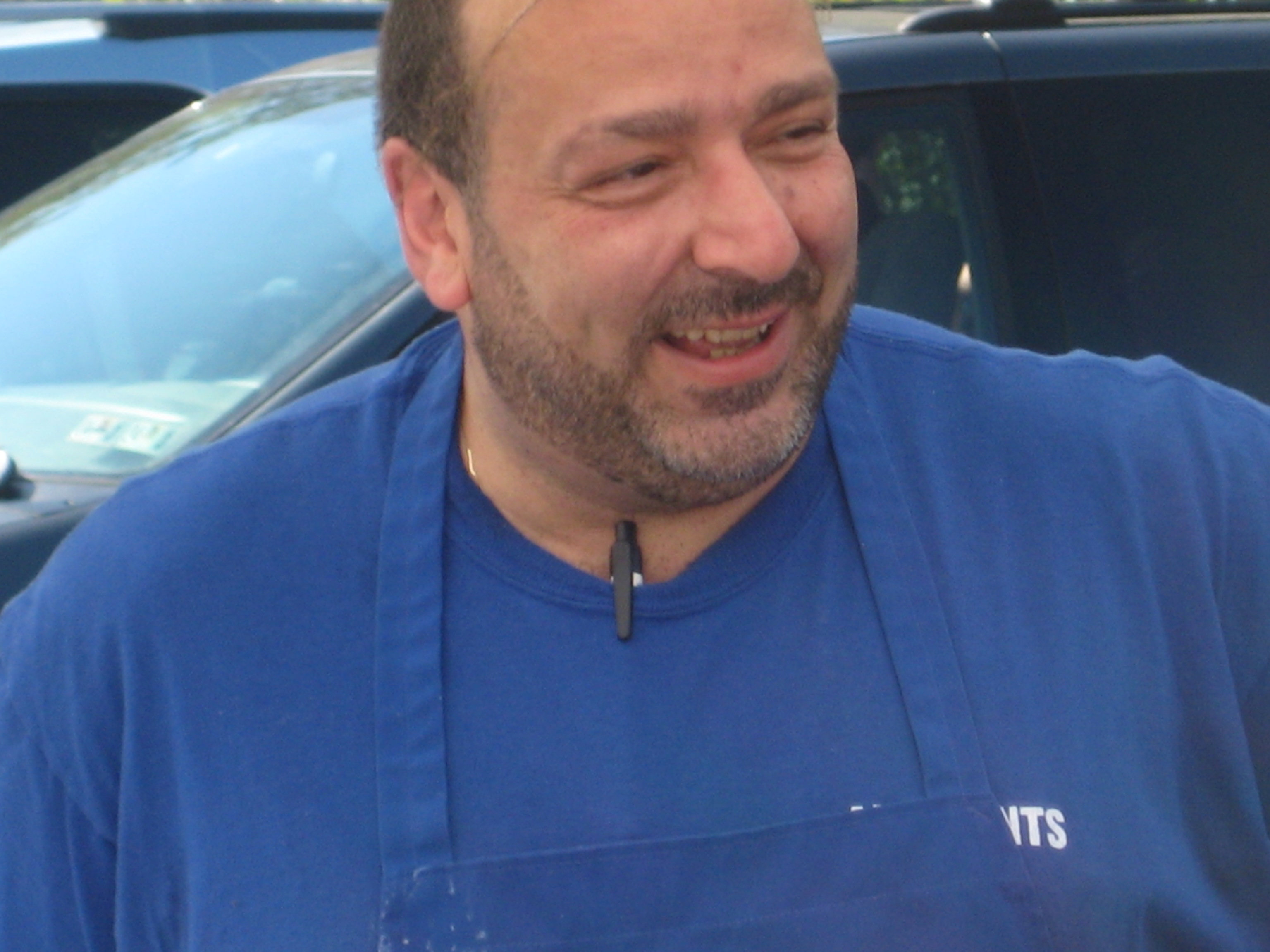
Something resembling a Greek or Middle Eastern festival is a staple of Orthodox parish life, it seems, and All Saints is no different — although we don’t call it a Greek or Middle Eastern festival, we just call it “The Festival on Fairfax” (Fairfax Road being where All Saints is located). Once a year, the community pulls together, throws open its doors to the world, and busts out the tsatsiki. Not to belabor a previously expressed point, but we legitimately have the best gyros in Bloomington, thanks to Johnny Ioannides (whose name I will continue to shout from the rooftops, since they’re just that good) — it’s just too bad it’s the only regularly scheduled day of the year they are publicly available.

Johnny Ioannides, the man who brings us the best gyros in Bloomington. Can we open this man a restaurant, please?

Johnny Ioannides, the man who brings us the best gyros in Bloomington. Can we open this man a restaurant, please?

(But it is not, emphatically not, a Greek festival. Or a Middle Eastern festival. Really. We also sell hot dogs. But no borscht.)

It’s always a good time, and in many respects, shows off the best sides of Bloomington’s little Orthodox church that could.

There are, truthfully, many things which differentiate what we do from the typical Greek festival. It’s not the mammoth fundraiser that many are; it’s not like Holy Trinity, where we charge admission in addition to food and merchandise, go all weekend and raise three quarters of the annual parish budget in the course of three days. Nope, we let you in free, we run one day only, and it pays for itself with a chunk left over but it’s hardly make-or-break for our day-to-day operations. More than one day, and we really hit a point of diminishing returns — particularly if we start having to pay staff rather than use volunteers. Getting bigger every year the way we do, we might have already hit this. Besides, Holy Trinity has the whole city of Indianapolis; we… uh, we don’t.

At any rate, the hope has been that eventually it would be more of a way of evangelizing, of being Christ to our community, rather than fundraising, but exactly how that will crystallize, precisely, remains to be seen. As with many things surrounding All Saints’ transition from being a small church community, only one or two steps removed from a mission, to being a mature parish, identity and defining characteristics are somewhat in flux for the moment. For one thing, much of Bloomington doesn’t even know (or care) we exist; in time, we hope to be more of a presence in the community. For the moment, the Festival on Fairfax is a fun way of at least holding an open house for our neighbors.

(Hey, there’s a thought. What about doing something that’s explicitly labeled and structured as an open house for the community?)

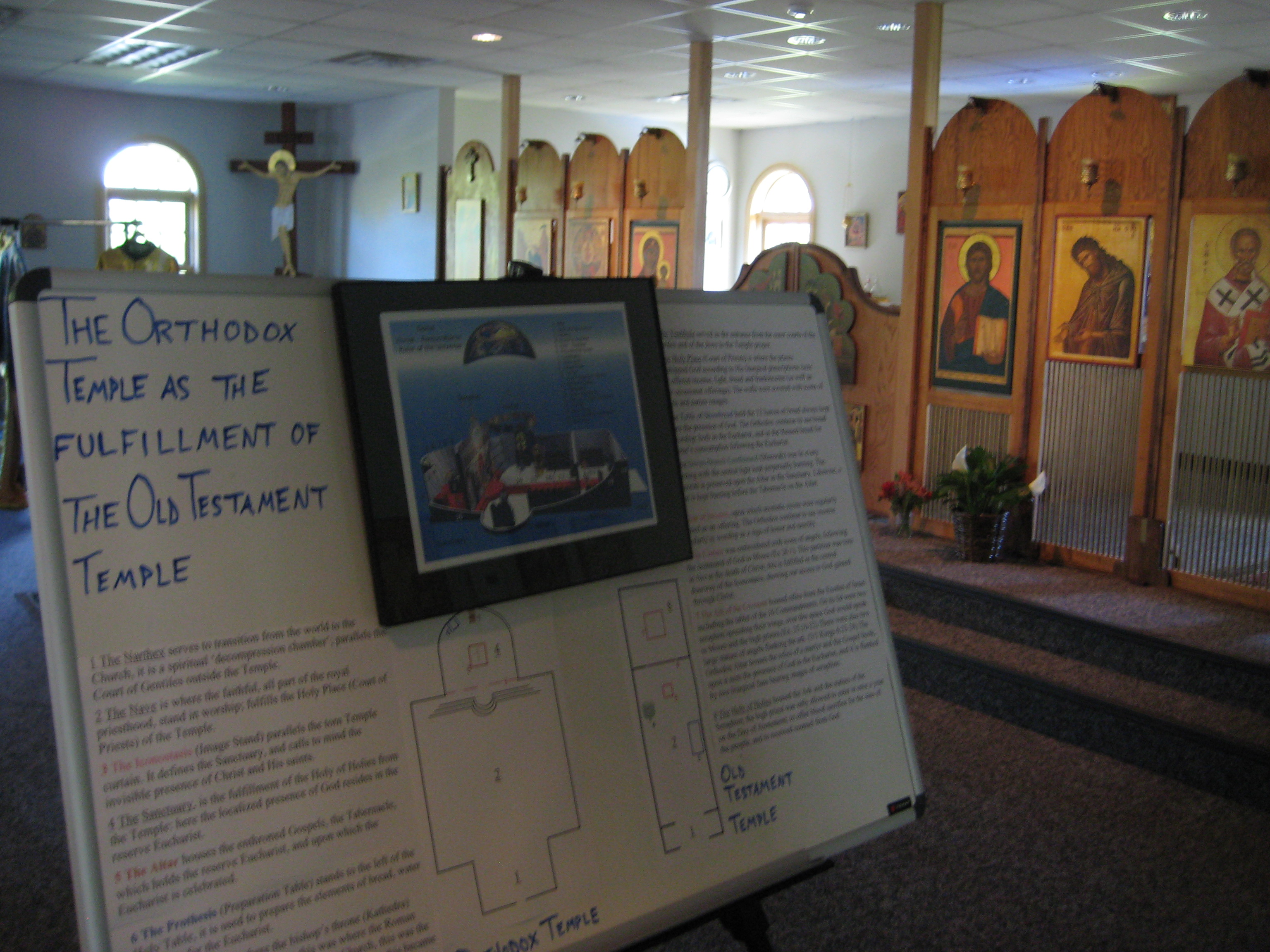
Anyway, here are some of the pictures I took throughout the day. Church tours are, of course, something we do, and there’s an information board we post relating the interior of an Orthodox church building to the interior of the Jewish temple. The big colorful image (blown up below) is, shall we say, a rather idealized digital model of a traditional Byzantine structure. I agree with my godson Lucas (who put the board together, and conducted the tours) that it would be nice if there were formal diocesan guidelines for building churches something along the lines of “come as close to this as you possibly can”; alas, much of Byzantine church architecture seems to assume the existence of an Emperor and his treasury, and the readiness of same to pay for things. Very tough for a smallish working class community to be able to come anywhere near this (as you can see from the acoustic tiles filling in for the dome).

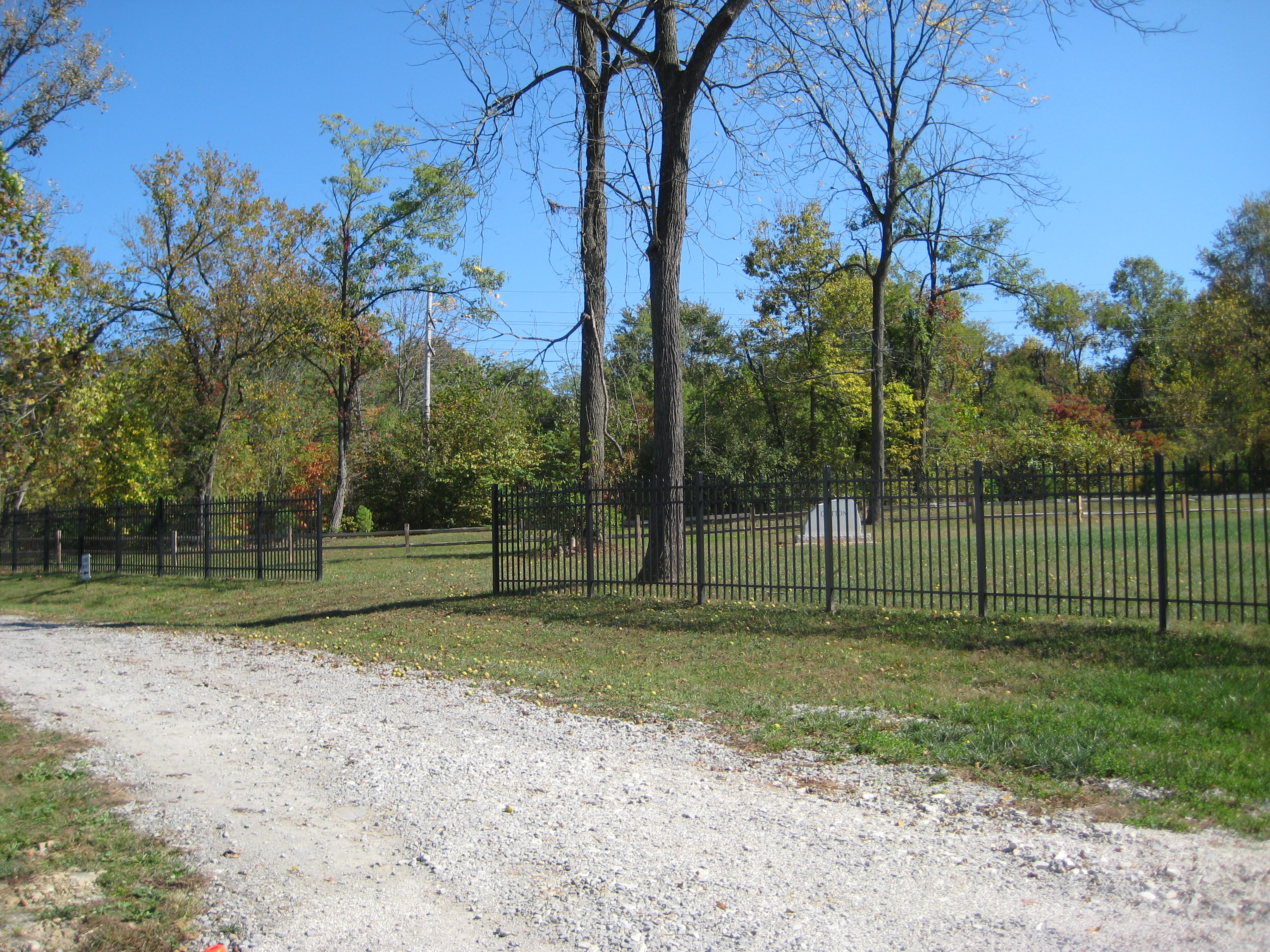
The only Orthodox cemetery in Indiana

The only Orthodox cemetery in Indiana

On the other hand, we are making good use of the property we have (some 24 acres), and slowly but surely we are building something which we hope will still be there in a couple of centuries. For example, we’ve got the only Orthodox cemetery in the whole state (so far as we know, the next nearest is at Holy Dormition Monastery in Rives Junction, Michigan).

A hayride in the Grove

A hayride in the Grove

We’ve also got a large section of the property called the Grove which is intended to be a common area for public events once it’s finally done. It’s close to being done; flooding over the summer, as well as a few other issues, set us back a bit, but there’s a stage built, electricity wired, a pond dug, and other access points and landscaping are being worked on. Fish and a water pump will be added to the pond (both apparently in an attempt to help deal with mosquitoes), as well. Hopefully by next summer’s music festival it’ll be completely ready to go; I believe the plan is also to hold at least a good chunk of next year’s Festival down there. In the meantime, the hayrides conducted during the Festival go through there, at least.

The Big Tent

The Big Tent

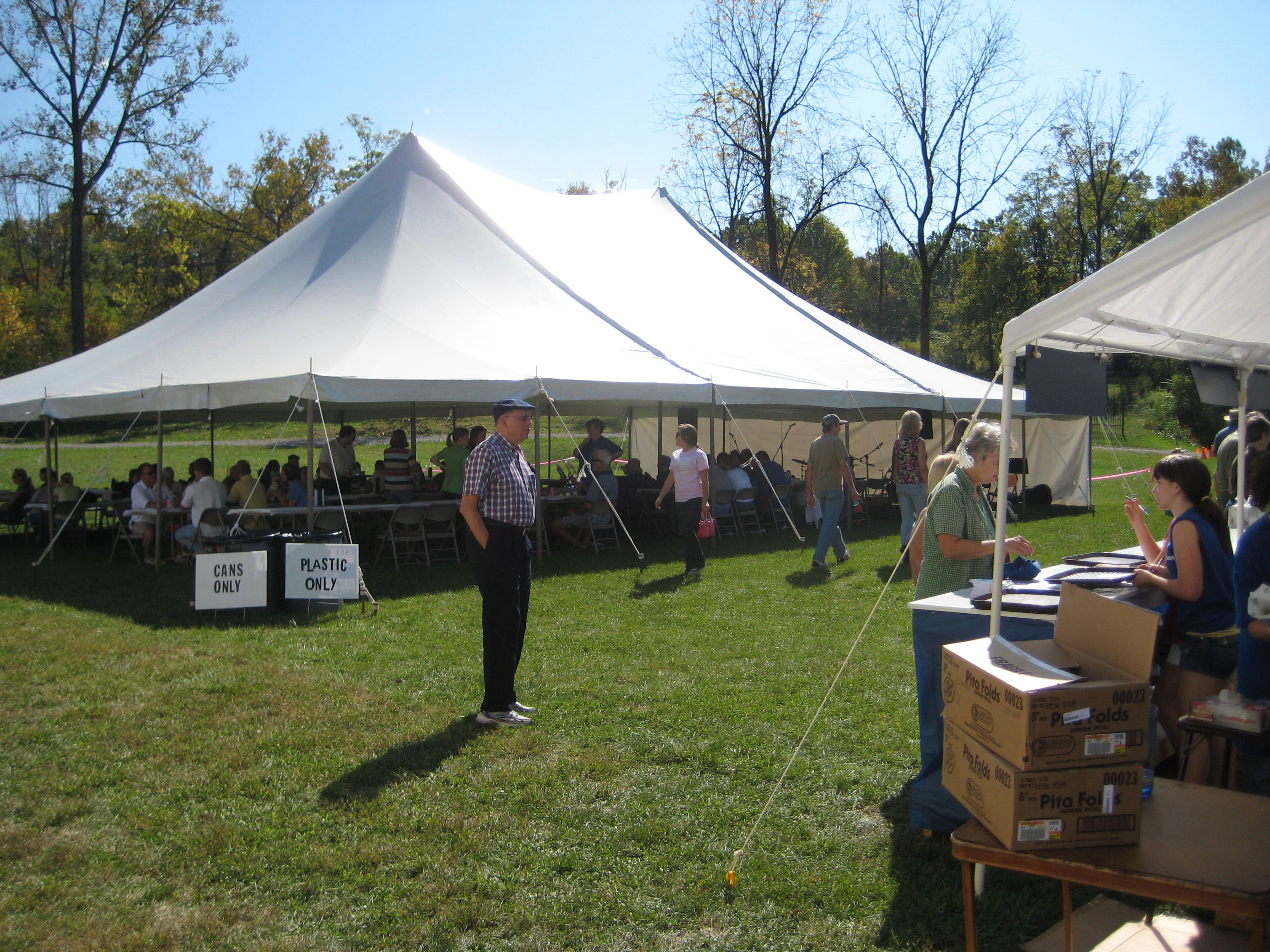
The center of the action for this year’s Festival was the Big Tent — this was the eating area, it was where the music was performed (we never seem to quite pull of dancing, alas), and it was where the food was served.

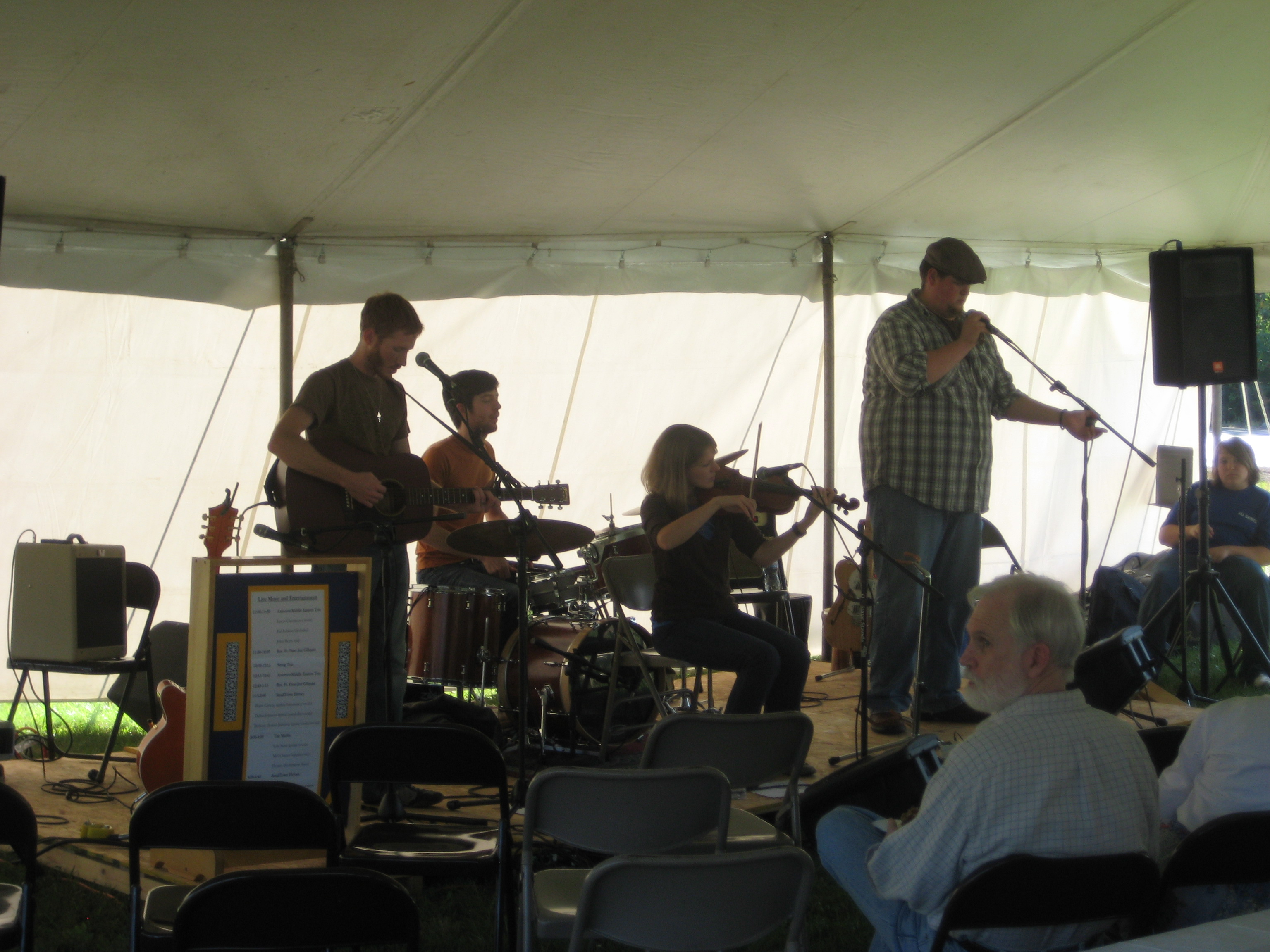
The SmallTown Heroes

The SmallTown Heroes

I have to say, I enjoyed the SmallTown Heroes immensely — enough to buy their CD, which I’ve also really liked (enough to review here eventually, I think).

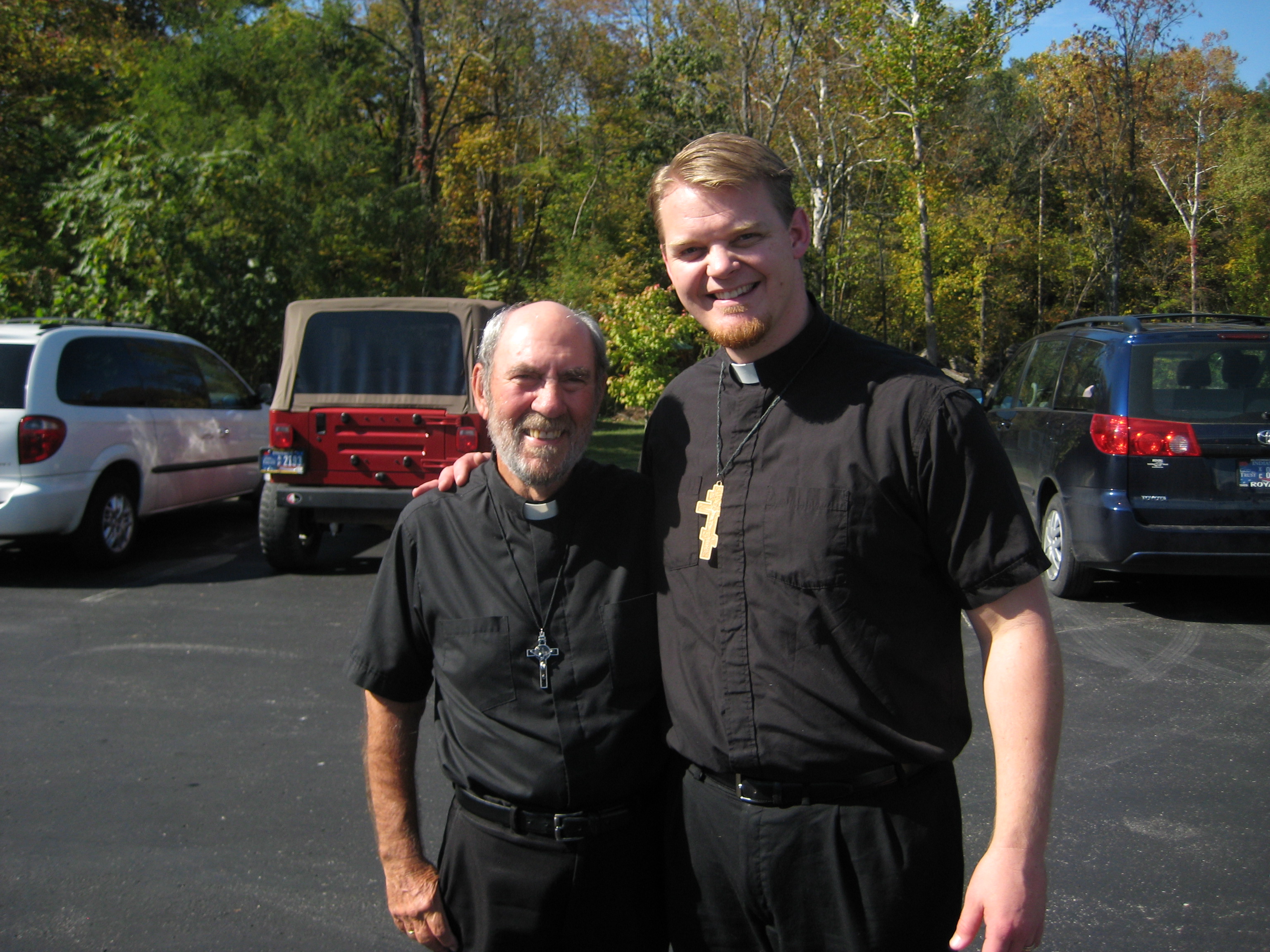
Fr. Athanasius Wilson, Fr. Peter Jon Gillquist’s predecessor, paid a visit to the Festival — always a joy to see him and Kh. Loretta. We don’t get to see him much anymore with his mission up in Greenwood. This community will always love him to pieces, and for very good reason. Without Fr. Athanasius, there would be no All Saints Orthodox Church right now, period. He was the right priest for the time, just as Fr. Peter is now (and hopefully will be for some time).

Fr. Athanasius Wilson and Fr. Peter Jon Gillquist

Fr. Athanasius Wilson and Fr. Peter Jon Gillquist

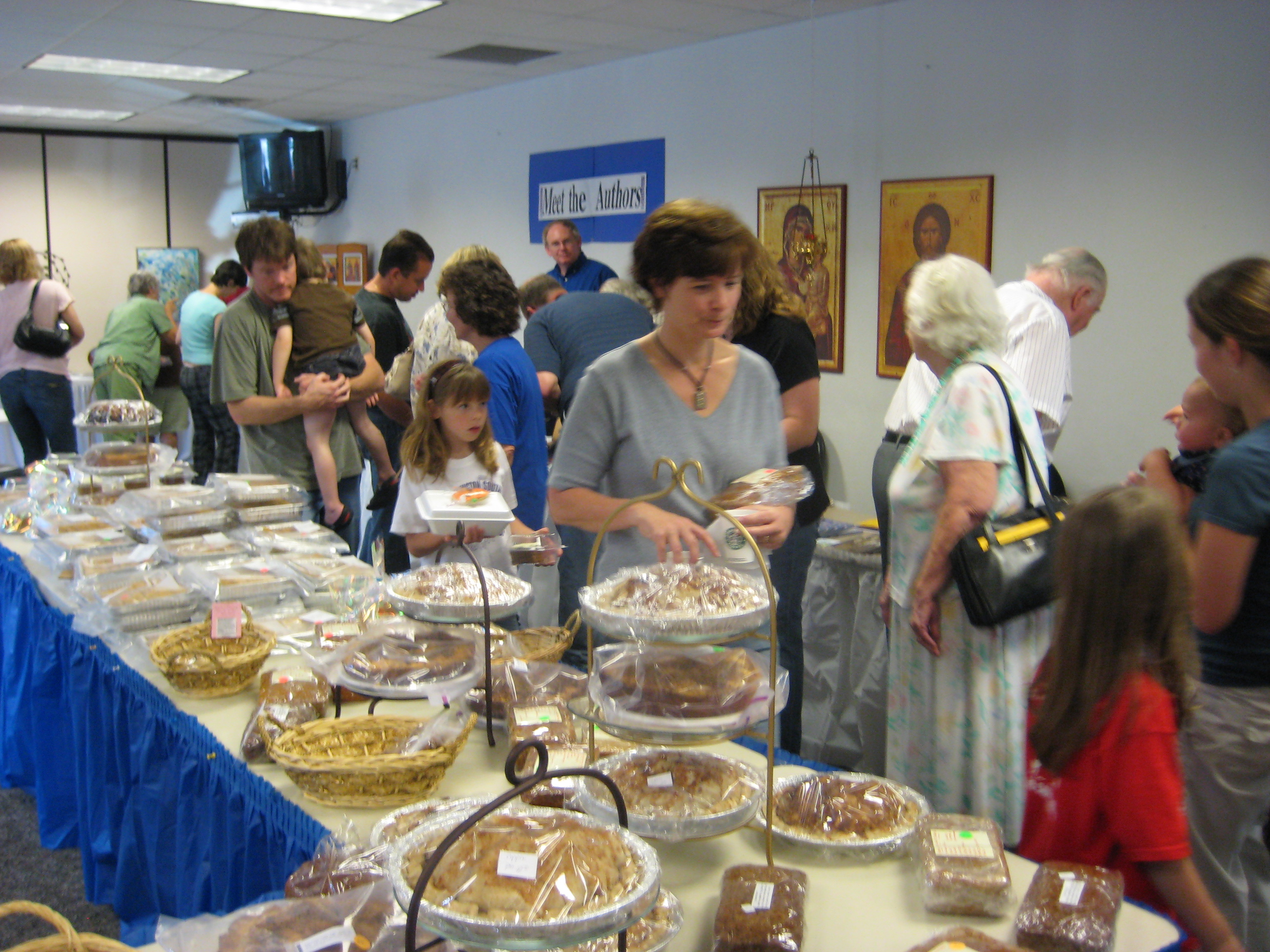
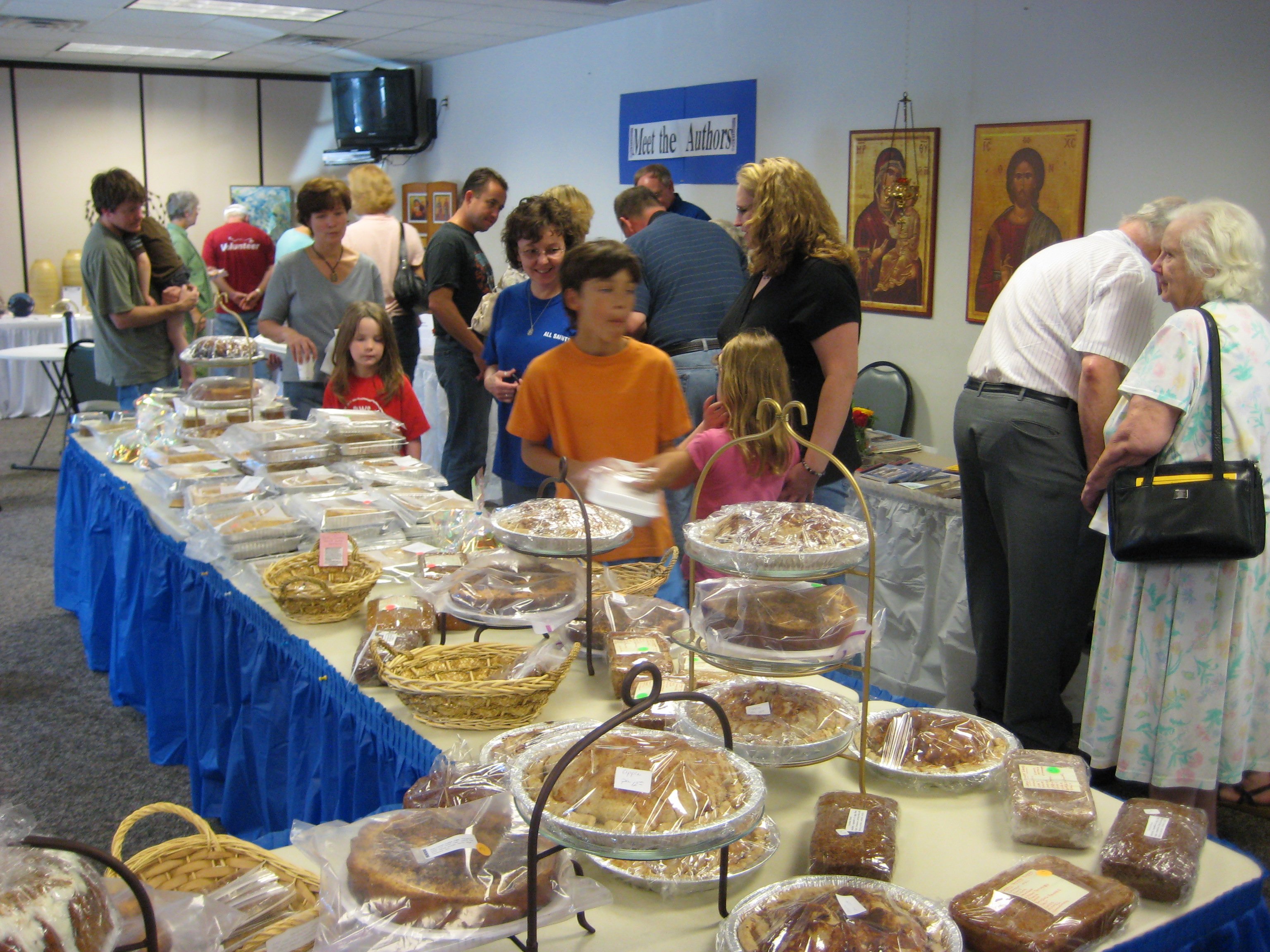
Besides tours of the nave, we also had the bake shop and silent auction inside the church. You want baklava? We’ve got baklava. Or, well, at least we did. You snooze, you lose. The parish bookstore was also open for business, and we had copies of Cappella Romana‘s The Divine Liturgy in English for sale and displayed prominently, natch.

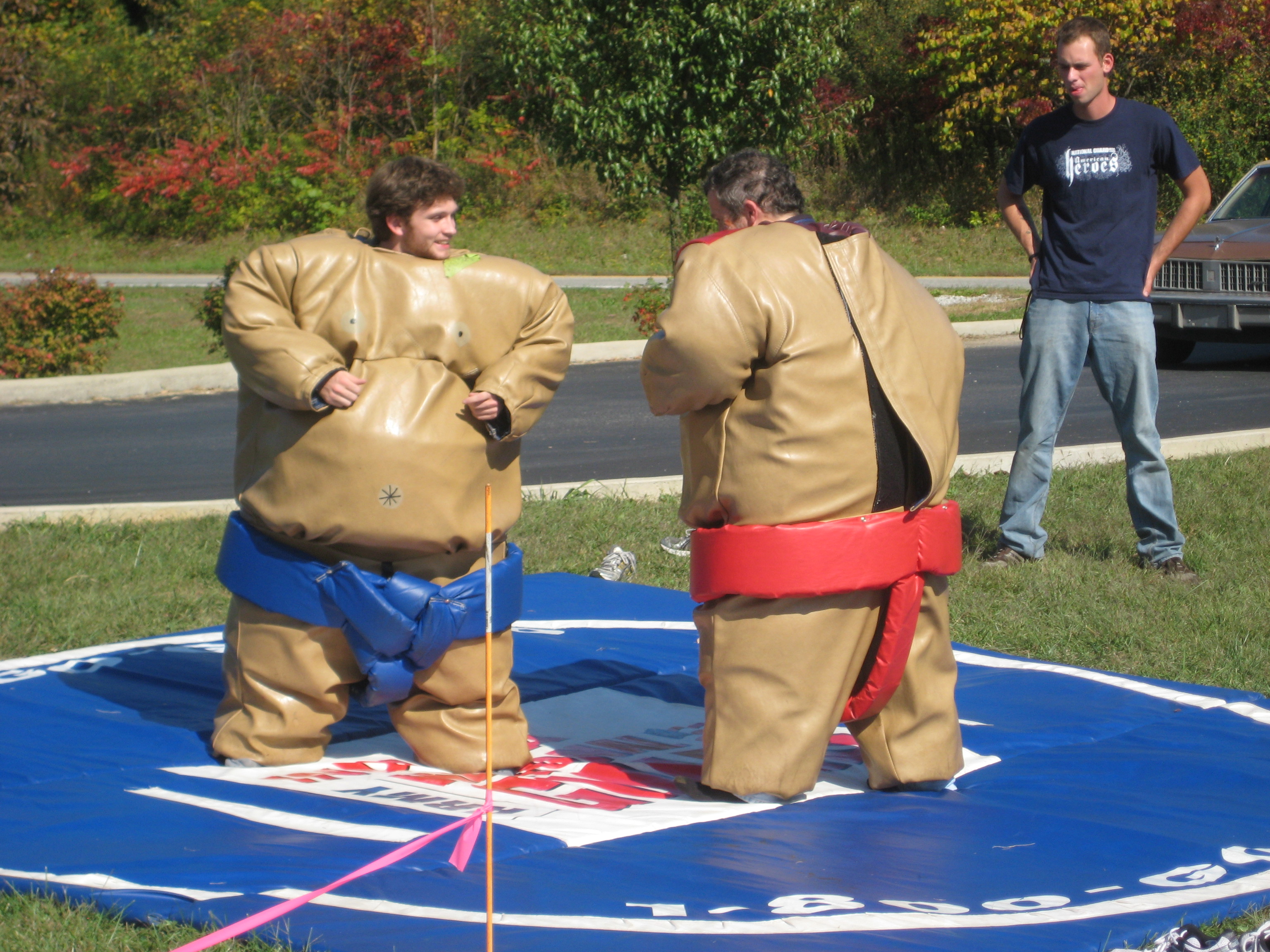
Eric Leveque (left) trying to work off the freshman fifteen with Charles Coats

Eric Leveque (left) trying to work off the freshman fifteen with Charles Coats

Speaking of baklava, evidently a couple of folks ate a bit too much and found a novel way to try to work it off.

The Festival closed with Vespers. This is something for which we’re still figuring out the best approach — before last year, we just cancelled Saturday Vespers, but it occurred to us that it didn’t make any sense, if we wanted the Festival to be more about outreach and evangelism rather than fundraising, to not include a service. Reaction has been mixed — last year it worked very well, and this year… Well, the trouble is, many of the parishioners are still having to work the food booths and whatnot while Vespers is in progress, and there’s still very clearly Festival activity going on come 5pm, so there jisn’t really a compelling reason for people to go inside (particularly on a gorgeous day like last Saturday was), and there’s no large-scale movement of the parishioners to generate momentum, either. So, I’d say that this year, we had fewer people than we would have for a regular Saturday Vespers, with many of the people we’d normally see at that service being outside selling gyros, and almost none of the Festival visitors. Maybe one or two, if that.

And just like that, it’s six o’clock and it’s over until next year — 10 October 2009. Mark it on your calendar now. Best gyros in Bloomington, I tell you.

Coming soon: The Divine Liturgy of St. James

On 22 October 2008, at 6pm, All Saints Orthodox Church will celebrate the Divine Liturgy of St. James for the Feast of St. James, the Brother of Our Lord.

It was mentioned to me about a year ago that this might be a desirable thing to pursue. It isn’t exactly happening the way originally envisioned; the hope at the time was that we would be in a new building with more forgiving acoustics than our current nave, but that hope remains unrealized for the time being. Nonetheless, we are pushing forward — hey, since local Catholic parishes have started celebrating the Traditional Latin Mass semi-regularly, leave it to us to break out our oldest rite, right?

The Divine Liturgy of St. James — can we call this the Iakovian Liturgy? I’d hate to call it the Jacobite Liturgy — is said to have been the rite taught to St. James by Our Lord and was subsequently the principal rite of the ancient Church of Jerusalem, edited and embellished as the St. Basil Liturgy and further pared down to become the St. John Chrysostom Liturgy. I will let liturgical scholars with PhDs argue whether or not the traditional first century dating of the Iakovian rite is accurate or if it’s more reasonable to assume that it came about somewhat later. Clearly the use of the Trisagion and the “Only-begotten Son…” are later accretions, but in terms of the overall structure and character — well, let’s just say that there are ideological reasons to want to support any of the various arguments, and leave it at that. One way or the other, we can say that we know it as the oldest complete form of the Divine Liturgy still in continuous use, and it is still in use by various Syrian and Indian communities.

Putting together an English text was not a small consideration; Archimandrite Ephrem (Lash)’s translation served as the base, but it is insufficient for use in an Antiochian parish, given the official preference for Elizabethan English. Where necessary, the Antiochian text was substituted (for components such as the Lord’s Prayer, the Creed, and so on); where possible, Fr. Ephrem’s text was kept, converting to Elizabethan English as needed. Particularities such as “Let our hearts be on high”/”We have them with the Lord” were also retained.

Once we had a text, then it fell to me to create a book for choir/congregational use. Thankfully, Sibelius 5 and Microsoft Word made that relatively easy. I adapted the St. Anthony’s Monastery settings of hymnody specific to St. James to our text, used the version of “Only-begotten Son…” from the Mt. Lebanon Choir Divine Hymnal, used the Trisagion we sing every Sunday (had to keep something the same) and then added all of the other parts — litany responses, anaphora responses, etc. The choir/congregation book ultimately contains every word and every note which concerns those worshiping from the nave — it is as complete as it needs to be without including the priest’s personal prayers and so on. (At 43 pages already, it would be significantly longer were I to include those.)

I will say that, in many respects, it’s a simpler liturgy; there are no antiphons, no troparia (although we will sing the Troparion to St. James as a recessional), there is no Megalynarion, and since it begins with the clergy processing into the church with the Gifts (from the skevophylakion, no less — such things make me happy, although we don’t actually have a skevophylakion), no Great Entrance in the middle of the service, either. From the choir’s perspective, there are significantly fewer major portions to sing, and the Alleluia and Prokeimenon are the only propers. The rubrics call for the Body of Christ to be received in the hand and for the Blood to be drunk from the chalice by the communicant, but we will be communed from a spoon regardless — no one’s particularly comfortable with what could go wrong the other way, given that we’re all used to the spoon by now.

Anyway, it will be an interesting liturgical adventure, to say the least. We’ve tried to visibly open it up to as much of Bloomington’s greater Christian community as wish to attend; given the provenance of the rite, it is clearly the common heritage of all Christians, and to be able to serve it in English is a gift we would like to be able to share with as many as possible, even if it’s our humble little church that’s doing it and not the Midwestern Regional Campus of the Cathedral of Holy Wisdom. (That place is going to be gorgeous, I have to say — and they might even have built a skevophylakion, I’m not sure.) To that end, we’ve put out a press release to the local papers (let’s not hold our breath that they’ll care, but who knows) and sent flyers to every area church and campus ministry we could find. We’ll see.

On a different matter — my friend Gavin used to have a favorite Microsoft joke (at least before he started working there): “Microsoft — solving tomorrow’s problems with yesterday’s technology, today.” So, maybe that could be tweaked and made appropriate to Orthodox Christianity — “Addressing tomorrow’s problems with yesterday’s Christianity, today.”

Or maybe not.

Various points of interest (or not)

George List was an emeritus faculty member for the Department of Folklore and Ethnomusicology here at IU. He retired in 1976, the year I was born, but still had an office and an assistant here. I first spoke to him over the phone in April, when I started working here at the Archives of Traditional Music; I met him for the first of three times in August. He was ninety-seven years old, he was frail, he was blind, he had been a widower for “seven long years” as he put it, and he had even outlived his son. Despite all of that, he was sharp as a tack, very active mentally, perfectly articulate. He was also clearly very lonely. He made a big impression on me the three times I got to meet him, perhaps more than I realize even now.

He passed away on Sunday, 28 September. It’s affected me this week a lot more than I thought it would — I even had a dream about him a couple of nights ago, although I don’t really remember much about it, beyond wanting to say goodbye in person and trying go back in time a couple of days by crossing the international date line. Aionia mneme.

Sometimes there are these fortuitous moments of synchronicity that tell you you were supposed to do something. Megan has been toying with the idea of getting an iPod for a little while, and I finally decided it was time to take the plunge and call it a late birthday present (my regular readers, both of them, may recall that I was in New York and she had just arrived in Germany on her birthday; I was so discombobulated that I didn’t remember to say “Happy birthday”, and she was so discombobulated that she didn’t notice). So we bought one of the new 120gb iPod Classics yesterday (it was $250; for reference, my 80gb Classic was $350 a year and a half ago), and after paying for it, the guy behind us in line, noticing we had bought a different pair of earbuds, asked us, “Hey, do you want the earbuds that come with that?”

We shrugged and said, “No, not really.”

“Can I buy them from you for $10?” He was about to spend $30 or some such on a replacement pair — seemed fair to us, and appeared to be one of those moments where the timing just worked out the way it was supposed to.

Of course, once we got home, we realized that we had also given him the USB cable. Oh well — keeps us humble.

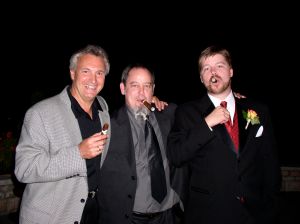
Me, Bryn, and some guy at Jeff Fletcher's wedding, 12 September 2005A year ago today my friend Bryn Patrick Martin passed away from a bad reaction to painkillers. It was a stupid way to go and entirely preventable; I’m still mad at him. He was a constant, and I mean a constant, in my life between 1993 and 2003; this picture of him and me smoking cigars (can’t remember who the guy on the far left was) was taken the last time I saw him, 12 September 2003. His devilish smile (and overall countenance), obscene sense of humor, and most of all his fierce loyalty to the people about whom he cared remain very much missed. Aionia mneme.

I note among the stats for the last few days that for the first time ever I’ve received a hit off of a Google search for “Richard Barrett.” Exactly how this works I’m not sure, since last time I checked, I think it was the 15th page of results before this blog popped up, so the searcher in question must have been very persistent. Not that I care about my Google rank, exactly, but I do hope that people don’t see all of the matches on the first several pages for the white supremacist Richard Barrett and think that’s me. (If he had any idea who I was, he’d probably hope people didn’t get us confused, too.) If people want to think I’m the English composer or the motivational speaker, that’s probably okay. (Maybe not the R&B pioneer or the minor-league Depression-era Seattle baseball player, since they’re both dead.)

“Richard Toensing: Kontakion on the Nativity of Christ” in my CD player

My review copy of this has arrived (thank you, Mark!). More to come soon.

Oh, man, you’re killin’ me

Yesterday, a well-meaning person asked me what the Orthodox tradition was with respect to paid — as in full-time and salaried — choir directors.

And, when I was done wiping the tears away from the peals of hysterical laughter, I explained that, in a nutshell, in historically Orthodox countries, it happens; in this country, lotsa luck. There are a very small number (single digit, I’d expect) of parishes in this country that can afford even a half-time salary for a choir director, let alone a full-time salary. If I had to guess, I’d say that probably being the chapel choir director at someplace like St. Vlad’s or Holy Cross Seminary is probably as good as it gets. I get a stipend, but it’s less than minimum wage once one figures out the actual hourly rate (particularly during Holy Week). “Professional Orthodox Church Musician” — we’re just not there yet, alas.

Someday somebody’s going to have start educating donors about the idea of endowing certain kinds of positions and ministries. It’s not unheard of, at least outside of Orthodox circles, for choir directors and music ministries in general to have their own endowments. Unfortunately, right now it’s not unheard of within Orthodox circles for priests to not be paid. All in good time.

A preview of “Richard Toensing: Kontakion on the Nativity of Christ”

Cappella Romana has been good enough to allow me to post the link to the newsletter subscribers-only preview for “Richard Toensing: Kontakion on the Nativity of Christ.” Take a look and a listen for yourselves, pre-order a copy if you feel moved to do so, and please note that if you sign up with your e-mail address in the box on the right marked “Stay in touch,” you’ll get these previews without me having to tell you about them!

Enjoy, and I’ll have more to say about this later.

Coming soon: Cappella Romana, “Richard Toensing: Kontakion on the Nativity of Christ”

I was treated this morning to a sneak preview of yet another new Cappella Romana recording. (I could in theory link to it, but for various reasons I don’t know if the link is to be made public at this time.) This one is of a setting of St. Romanos the Melodist’s Kontakion on the Nativity of Christ by contemporary American composer Richard Toensing, who also happens to be Orthodox himself (much like my friend John Muehleisen) and is at, I believe, St. Luke’s Orthodox Church (Antiochian) in Lafayette, Colorado. The CD will be out in October; I am told a review copy is coming my way, and as soon as I’m able I’ll post something (and possibly more; watch this space for details).

Looking forward to this one; I’ve met Dr. Toensing once and sung one of his settings of the Divine Liturgy, and what the press release says about his work being intended to “bridge the gap between Byzantine and American hymnody” is something I find very intriguing. My own setting of “O gladsome light” is an initial experiment in that direction, although from a monophonic perspective (which is where I personally believe we have to begin — the Western harmonic system didn’t just spring fully-grown from the head of Bach, but from centuries of development starting with monophonic melodies as starting points). I’m continuing to explore this idea; as I have things to share (maybe even recordings!) I’ll post them.

Meanwhile — if the samples I heard today are any indication, we’re in for another treat. I’ll keep you posted.


adventures in writing alexander lingas all saints bloomington all saints orthodox church american orthodox architecture american orthodox music american orthodoxy Antiochian Archdiocese Antiochian Orthodox Christian Archdiocese of North America Antiochians books byzantine chant cappella romana chant church architecture ecclesiastical chant ethnomusicologists ethnomusicology fellowship of ss. alban and sergius Greece Greek greek food greekness hazards of church music international travel tips ioannis arvanitis joe mckamey john michael boyer kurt sander Latin liturgical adventures liturgical architecture liturgical music liturgical texts and translation liturgy liturgy and life lycourgos angelopoulos medieval byzantine chant Metropolitan PHILIP militant americanist orthodoxy modern byzantine architecture modern greek music music as iconography my kids will latin and greek when they're newborns my kids will learn latin and greek when they're newborns orthodox architecture orthodox architecture is bloody expensive Orthodox choir schools Orthodox Ecclesiology orthodox outreach orthodox travel pascha at the singing school Patriarchate of Antioch Patriarch IGNATIUS IV Patriarch of Antioch publishing random acts of chant richard barrett in greece richard toensing rod dreher sacred music st. vlads st john of damascus society Syriac the Bishop MARK fan club the convert dilemma the dark knight The Episcopacy The Episcopate the only good language is a dead language this american church life travel we need more american saints why do we need beautiful music in churches?

Blog Stats

  • 269,213 hits

Flickr Photos