Archive for the 'General' Category


Feeling Minnesota: In which the author discusses being the descendant of a footnote to history

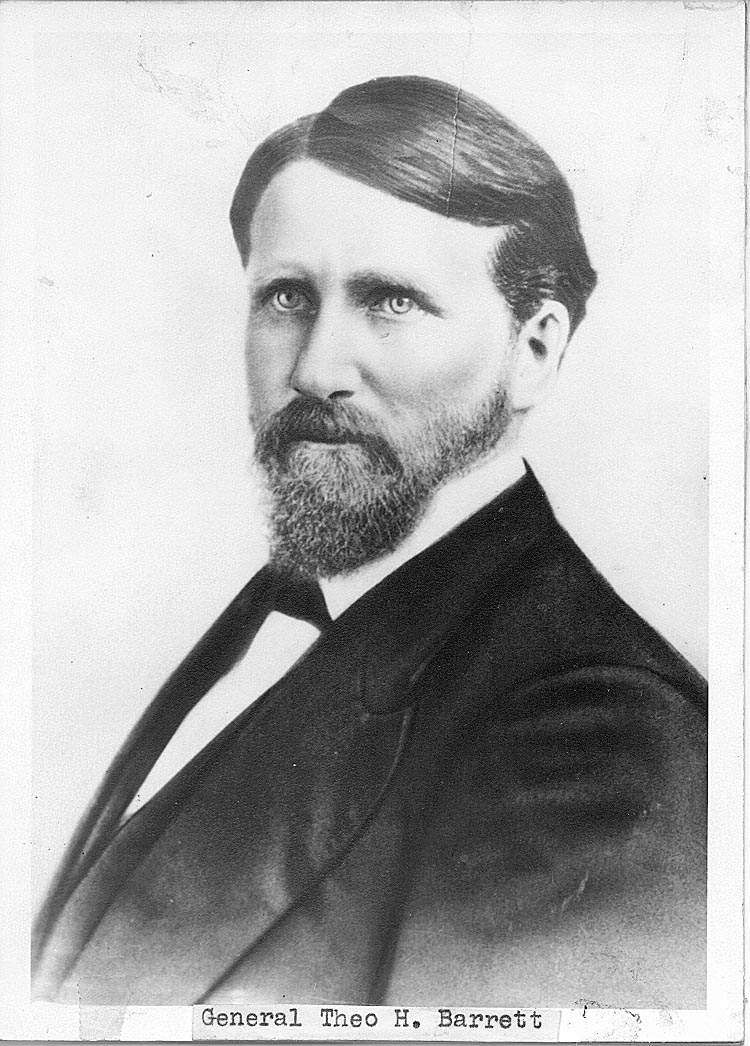
Sometime around 1990, I got to meet my dad’s aunt Frances. He hadn’t seen her in about thirty years; we met her in Edmonds, Washington at the condominium of my grandmother Irene (affectionately known as “Mimi”). I remember the evening very clearly; she talked a lot about writing her memoirs, and about my great-great-grandfather, Theodore H. Barrett, who had commanded a battalion of African American soldiers for the North in the Civil War. (Not having seen it yet, we briefly wondered if perhaps the movie Glory had been about him.) It turned out that a small town in Minnesota had grown up around the ranch Theodore had built after his military service, and was named for the general. Shortly thereafter, Frances passed away, but I never forgot that evening.

Seven years ago, on my way from Seattle to Bloomington, Indiana to re-start my junior year at the IU School of Music (it wasn’t yet called “Jacobs”), I made it a point to pass through Barrett. It’s about two hours or so west of the Twin Cities, and somewhat off the beaten path, but as I had never had a reason to go to Minnesota before and wasn’t sure when I would have another, I wasn’t going to miss the opportunity to connect somehow with my family’s past.

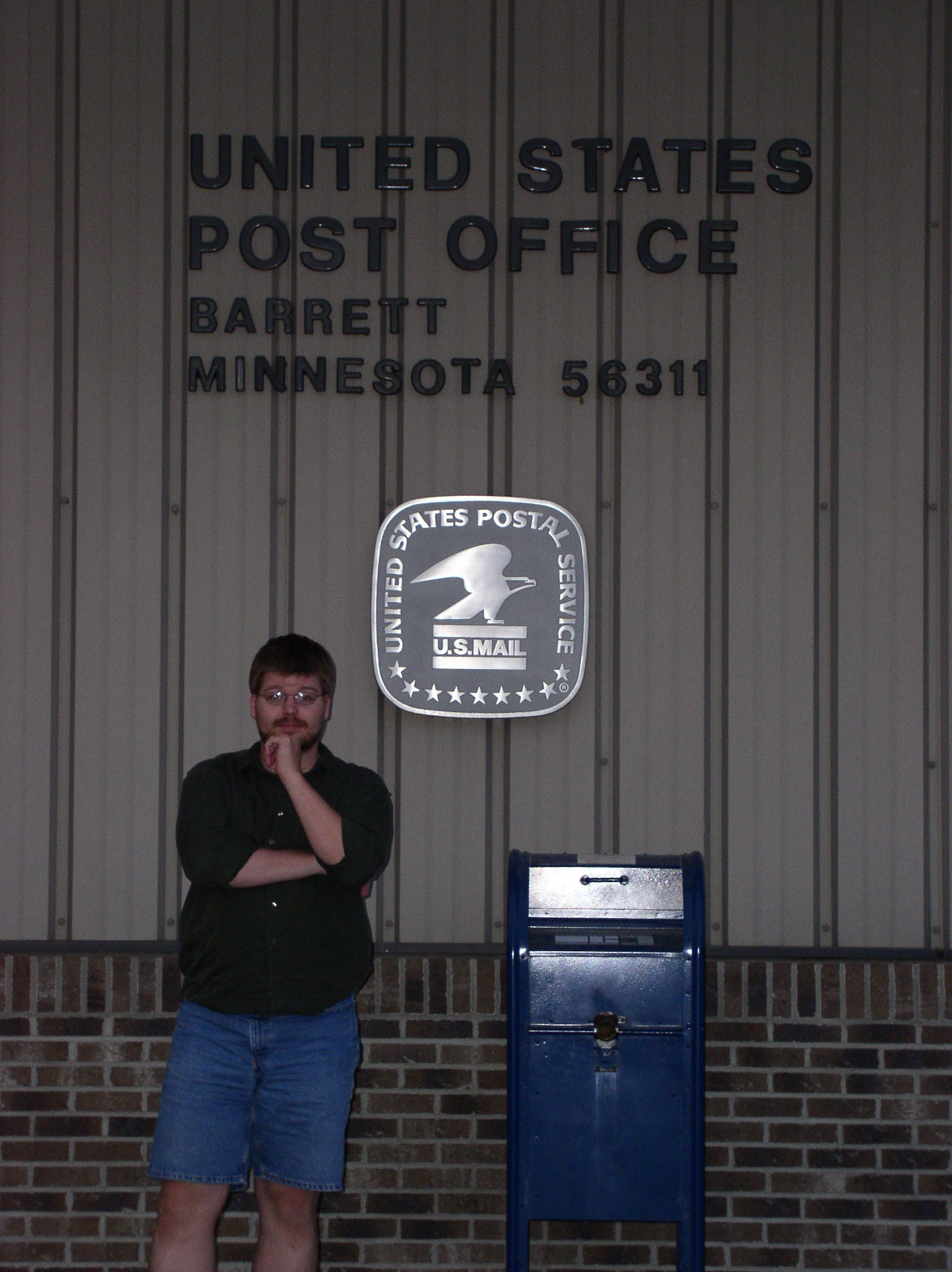
There wasn’t exactly a ton to see, particularly since it was past business hours and getting dark, but I was able to get a picture taken of me in front of the post office. I had always been curious to know if I had any relatives still in the area; the phone book didn’t show any Barretts still nearby. I would have stayed there for the night, or at least stopped and had dinner there, had there been any places open that offered that kind of service, but alas, nothing seemed to be operating.

Over the years, I tried digging into the other branches of the Barrett family to see if there was anybody out there to try to connect with; General Theodore had three children, two sons and a daughter, but I only knew about children that my dad’s grandfather, Theodore Sedgwick Barrett, had had. A copy of an obituary for the other son, Richardson Damon Barrett, indicated that he had stayed in Minnesota and had had a son, Roger, but there were no other details mentioned. The daughter, Georgia Barrett, was a mystery — no details about her seemed available at all. I discovered through a Google search that General Theodore was actually something of an infamous figure for Civil War historians, having led the North (and lost) in the Battle of Palmito Ranch, the last battle of the Civil War — fought some five weeks after Appomattox. I briefly mentioned this to a friend who is a Civil War buff, and he smiled and said, “I know exactly who your great-great-grandfather is. Pleased to know a descendant of General Barrett!”

A couple of weeks ago, I discovered that Barrett, Minnesota had a website. It didn’t mention anything about the history of the town, but links concerning the Old Settlers’ Reunion and the Historical Photo Project piqued my curiosity. I sent the city office a note identifying myself as a descendant of the general’s, asking if they were going to have any exhibits about Theodore or his life, and if they had any information about other descendants.

I got a very nice reply from Marita Rhude in the city office, and she put me in touch with Patricia Benson of the Grant County Historical Society. She sent me a scan of a handwritten document provided by none other than my dad’s Aunt Frances that detailed everything about Theodore’s descendants, as well as several photos — of him, his estate, and some of the tribe. One thing that was immediately clear is that the reason why I wasn’t finding out much about Barretts in other branches of the family is because, well, there wasn’t really much to know. Richardson Damon’s son Roger had a daughter, Deborah; Theodore’s daughter, Georgia, had no children. Theodore Sedgwick’s three children were my grandfather Jack, my dad’s aunt Frances, and then another son, Theodore Sylvester. Frances married and had two sons and a daughter; Theodore had no children. The sons of Jack’s sons, that is, myself and my uncle George’s sons, represent the last generation of Barretts descended from Theodore. There is no “greater Barrett family” outside of those of us descended from Jack.

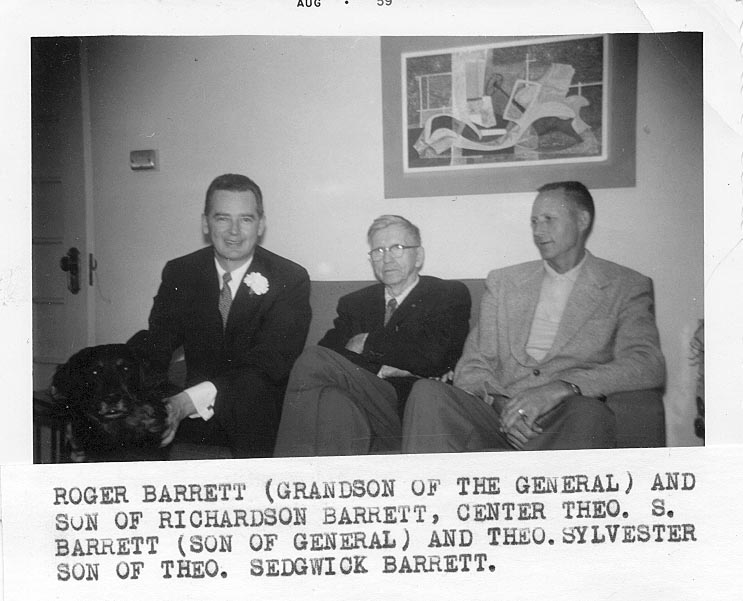
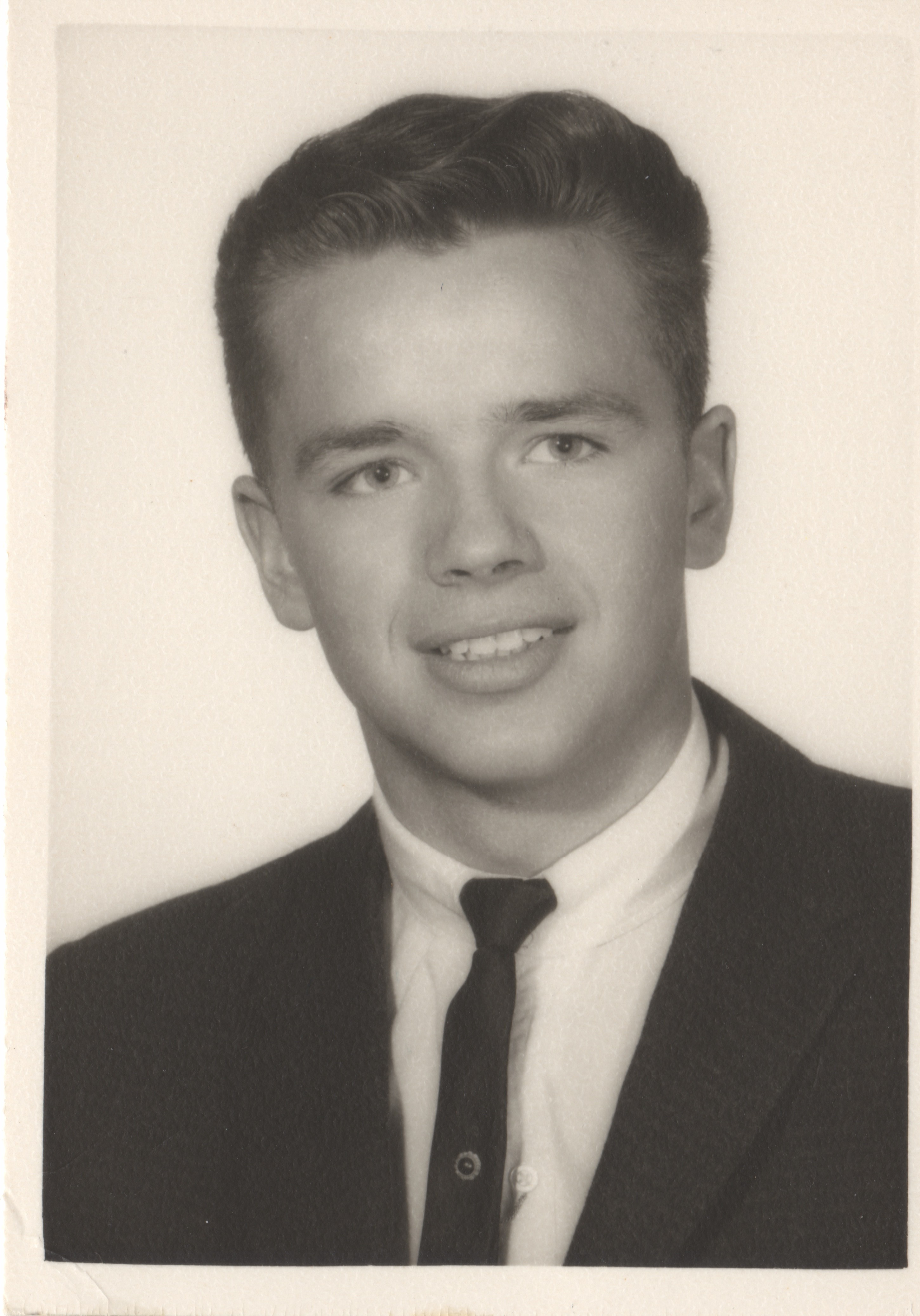
One of the pictures Ms. Benson sent me that was remarkable is from 1959 — it’s my dad’s grandfather, Theodore Sedgwick, his son Theodore Sylvester, and Richardson Damon’s son Roger. What strikes me about it is that Roger and Theodore Sylvester both unquestionably look like Barrett men to me. Roger looks a lot like the pictures I’ve seen of my grandfather Jack, and certainly bears a strong resemblance to my dad and my uncle George. My dad’s senior picture is posted here so that this might be obvious. Theodore Sylvester also has that going on, and curiously enough he also looks a lot like my aunt Pip, the youngest of my dad’s sisters.

Dick Barrett as a high school senior

I’m in the processing of circulating all of these photos to my family — my dad says that he only met his grandfather Theodore once, when he was around 13 years old. He was already blind, and he thought that Dad was my uncle George. Georgianna, Theodore’s wife and my dad’s grandmother, had died when she was still quite young, and none of the kids ever met her. Beyond that, it seems he never knew or heard about any of these people. It sort of makes me wonder how intentional that may have been — did Jack head up to Alaska to get away from his family? Hard to say, and I’m not sure there’s anybody left alive who can help fill in the gaps.

I’d really like to thank Marita Rhude in the Barrett city office and Patricia Benson of the Grant County Historical Society for their generosity and their time, and I’d also like to encourage anybody with a mind to do so to help out with the Historical Photo Project. If you stumble across this blog post and discover that you know anything more about these people or this place, I’d love to hear about it; drop me a line at rrbarret (AT) indiana.edu.

A visit from His Grace Bishop MARK

In a perfect world, the way I — or any other cantor — would learn the ropes of a hierarchical visit would be to spend ten to fifteen years singing at the analogion with a protopsaltis who knew what he was doing. Excepting that, I would take a priest who understood the rubrics with a thorough knowledge of detail and could explain clearly what was supposed to happen from the cantor’s perspective. Excepting that, liturgical books that were written to address matters from a cantor’s point of view rather than a cleric’s would be acceptable.

None of those possibilities in fact being the case, what I’ve had to do for the last five years is pretty much wing it. For my first episcopal visit, Fr. Athanasius handed me a photocopy of the Liturgikon’s rubrics for the Divine Liturgy and said, “These are wrong, but you’ll get the basic idea.” He gave me notes on what was really supposed to happen, which I followed, and in turn, that wound up being not quite what we did either. Some variation on that has occurred every time since then; each visit has gotten a little better, and each visit has yielded a priest or somebody coming up to me afterward and saying, “Oh yeah, what I forgot to tell you earlier was this…” It wasn’t until after the third visit, I think, that anybody bothered to tell me that the bishop is supposed to vest during Lauds and that there are some changes made to accommodate that action.

There are multiple issues; I don’t know what I don’t know, so if somebody tells me something that’s incorrect or incomplete, I don’t have any way of knowing that until after the mistake is made. Plus, our diocese has its own in-house hierarchical service book that differs from the Liturgikon in a couple of respects, the net result of that being that I don’t trust any rubric I see printed anywhere without somebody in a position of authority telling me, “Yes, that’s actually what we’re doing,” because it’s clear not everybody’s on the same page (literally). What has sometimes happened is that a priest will tell me to do one thing via a note sent from the altar or some such, only to have a subdeacon come scurrying along twenty seconds later instructing me to do exactly the opposite. Our priest has always served with His Grace at the altar, so he himself doesn’t know exactly what should be happening from the perspective of the kliros. This is made more complex by the fact that our diocesan service book, while unquestionably useful, is written by and for a priest, not a cantor. For example, at the reception of the bishop it’s just noted that “the following hymn is sung in tone 4” instead of “the irmos for the ninth ode of the Palm Sunday canon,” which would make it infinitely more useful in terms of actually locating the music for said “hymn in tone 4”. To say nothing of the fact that, every time we’ve ever had a hierarchical visit, the Trisagion has gone haywire; the congregation hears the Trisagion to which they’re accustomed, they automatically start singing along, but but they don’t realize that it’s different with a bishop until they notice that the choir has stopped and that they’re singing over His Grace. Yes, the order of the hierarchical Trisagion is in the bulletin, but it is perhaps unreasonable to assume that everybody has has read or retained it in-depth. At one of his last visits, Bp. MARK stopped in the middle of the Trisagion with a bit of a smile and said, “We’ll get this right someday.”

(Let me emphasize, lest I be misunderstood, that I do not think it reasonable or realistic to expect the congregation to know the order of the hierarchical Trisagion. This is one of those areas, rather, where I think the argument for a model of congregational singing that consists of “everybody sings everything” breaks down.)

But, again, each time has gotten a little better, and for His Grace’s visit a couple of weekends ago for the Feast of All Saints we got it mostly right. The one thing I know I missed was the “Many years, master” that replaces “We have seen the true light…”, but I had Papa Ephraim’s long “O Lord, guard our master and chief priest” prepared for the Kairon, and the solution for the Trisagion problem was to swap out the setting from Cappella Romana’s The Divine Liturgy in English, adapted for hierarchical use. It was not the familiar version, so the autopilot problem was avoided. (Bp. MARK had mentioned to us before that the Greek model, as heard on the Angelopoulos Divine Liturgy recording, was in fact the usual Trisagion for hierarchical visits.) I got one person afterward who asked, “Since when is God ‘strong’ and not ‘mighty’?”, but beyond that, things were pretty smooth.

While he was here he also gave a talk on ministering to a college town (which may show up down the road on Ancient Faith Radio; we’ll see — do note that an iPhone is actually a really fantastic portable voice recorder, and I was very glad to have it when our $2,000 sound system failed), and we also briefed him on where the building conversation stands. When we showed him Andrew’s sketch and told him about his ideas, his response, in short, was “Build it. Just let me know how I can help.”

I’ve observed before that, when I participate in a hierarchical Divine Liturgy, the structure of the service and the way the parts function suggest to me that the presence of a celebrating bishop is actually assumed to be the norm, and that only having a priest as the celebrant is the accommodation. A way this was made manifest this time around was at the Cherubic Hymn. To back up for a second — in February, Fr. Peter had me sing the long Cherubic Hymn from The Divine Liturgy in English for the Divine Liturgy of the Presentation of Christ in the Temple. He had liked how it had worked liturgically during John’s visit; we only needed to sing it once (instead of the threefold repetition we have to do with our usual setting), it was unhurried, and then he actually had enough time after the Great Entrance to do what he needed to do. “Sing it again,” he said, “I want to see if it really worked as well as I remember.” Well, afterward, he said, “No, that won’t work. It’s too long. I was waiting behind the iconostasis for three minutes for you to finish the first part.” So there went that idea.

Well, what was clear that weekend, as we repeated the Cherubic Hymn a third time, and then had to repeat “Let us now lay aside all earthly cares” on its own, a second time, then a third time, and still a fourth time before the procession came out from behind the iconostasis, was that the reason the other setting was “too long” is because it assumes the presence of a bishop. What was also clear was the assumption that the Cherubic Hymn will cover the Great Entrance a good chunk of the way around the church, since the priest only has one petition before he reaches the bishop at the solea. “Perhaps it’s better to make the long way the usual way so that you aren’t having to rejigger everything when the bishop comes,” I observed to Fr. Peter afterward. “You might be right,” he said. I think I will probably have the choir review the long Cherubic Hymn for next time.

In any event, it was good to have Bp. MARK with us; I haven’t seen him since January of ’09, a month before the confusion (as it is convenient to refer to it) started. Εἰς πολλὰ ἔτη, Δέσποτα!

I Josquin get enough: in which the author gets mistaken for a Russian priest and concludes his Californian sojourn

(Before I get started — couple of music jokes:

Q. Which famous composer carried the least amount of debt in his lifetime?

A. Berlioz.

Q. Which famous composer was only barely able to pay his bills every month?

A. Josquin.

Right, onward and upward.)

I got back from California a couple of weeks ago only to be plunged into some last-minute efforts for Bp. MARK’s pastoral visit to All Saints the very next weekend, and I’m only now really coming back up for air. I tell you, a blog is a lot harder to maintain when one actually has things going on in their life that are important to them!

Over the last five years or so, the narrative I’ve had in my head and that I’ve propagated is, more or less, “I failed as a musician because I wasn’t good enough, and the upside of this is that it enabled me to discover what I was actually good at doing.” This is part of why it was a huge shock to me to have John invite me out to California, even if he was desperate; my working assumption is that, as formally trained musicians go, everybody else is about a million times better than I am, and that the people who have me sing for them here and there do so mostly as a favor to me and because they’re short other options.

At some point while I was in California, John asked over a beer, “So, what other singing do you do besides All Saints?”

I kind of blinked, and explained that I didn’t really, save for the occasional recording studio gig in Indianapolis, and my godson Matthew‘s pickup choir that has done all of two Christmas concerts thus far (and that will be the end of its short happy life, as it works out).

“I’m surprised you’re not more involved in the scene,” he said. “A singer like you, you really should be.”

Well, there were two problems with this. First off is, frankly, what scene? There is no scene in Bloomington that isn’t strictly a product of the Jacobs School of Music, save for a large community choir that, meaning no disrespect to said community choir or its members, is not really what I would find fulfilling at this stage of the game. Some of the bigger churches do things, but I obviously don’t go to those churches, and despite efforts of mine to the contrary, All Saints just is not equipped in any way, shape, or form to be making its own contribution to “the scene,” nor are we likely to in the near future. There really isn’t anything in Indianapolis, either, at least nothing that would inspire me to want to commute on a regular basis, save for the random studio thing and miscellaneous choral performance my friend Max Murphy occasionally organizes. I suppose I could go to the choral folks at the School of Music and say, hey, I’m an alumnus, and I’m a registered fulltime grad student in the College of Arts and Sciences, any chance I might be able to have a spot in one of the chamber choirs? Realistically, however, there aren’t enough choral spots for the singers they have. So, what scene is it of which I should be part, again?

Secondly, as I explained, I quit five years ago because it was clear to me I wasn’t all that good in the first place. In context, this seemed like such a painfully obvious thing to say as to make me almost embarrassed to have to say it; John is somebody who has been making music at a very high level since he was a little kid, has had a rather rarefied musical education as a result of those — and many other — experiences, and who has been, not just a specialist, but an expert in his field from a very young age, to the extent that formal, piece-of-paper education has almost been more of a hindrance than a help. I’m, well, working class by comparison, at best.

Still, he said, “Well, you’re doing just fine with us,” and went on to say that if geography were no object, there would be a number of excellent opportunities of which I would have no problem taking advantage, in his view.

This jogged a memory for me.

Bryon Grohman is a guy I got to know a bit the two years we overlapped at IU. He was a doctoral student but we were close to the same age, and I first met him taking vocal pedagogy from him. At his encouragement, I was able to publish the paper I wrote for him in the Journal of Singing, and after the class was over, we got to be friendly, at least enough to have a beer together here and there when we had the chance. When he passed his quals, I was supposed to buy him a drink before he left town; we weren’t able to quite make the connection, but we were at least able to chat briefly. It was right when I was deciding to hang it up; I told him that, and I said that while I wasn’t sure what I was going to do next, it was just clear to me that downstage center at the Met wasn’t in my future.

“That may be,” he said. “But whatever you do, you need to not forget that you are a very well-trained musician, and that’s not something that can be taken away from you.”

I hadn’t remembered that conversation in five years before what John and I were talking about brought it to mind, and it made me think a bit.

Anyway, the concerts on the whole were a lot of fun. Ian, my cellist friend, was able to come to the Friday night performance at the Oakland cathedral, I finally got to meet his mom after years of hearing about him talking about his parents, and it looks like he may have been recruited to play in BACH’s presentation of Mozart’s Requiem this fall.

One of the good things about not really having done any performing in the last few years, and to have that downtime come on the heels of the experiences that convinced me to quit, is that my expectations regarding anything were virtually nonexistent. Any performance I can walk away from is a good one. What this means is that crashing and burning doesn’t bother me all that much; at the very least, it doesn’t raise existential dilemmas for me. It just makes me say, “Well, that can go better next time,” and that’s that. So, I can say that I enjoyed singing in all three concerts; the second two were a lot more consistent than the first for everybody, I think, but whatever wasn’t right the first night, it was still light-years ahead from some of the things I’ve done to which I might compare it. This means that I may not be the best person to ask, but it also means that if you do ask me, I’ll tell you that I had a ball with all three of them, and that it was wonderful getting to sing beautiful music with a group of good musicians in three good venues.

One interesting thing about the experience: in the last few years, outside of church, whenever I’ve been in a situation where I’ve had to sing a solo, it’s really been something I’ve hated doing. In one of Matthew’s concerts, for example, I had a little Gregorian chant incipit before a motet, and even that was horribly traumatic. I felt awful singing it in rehearsal, I dreaded the moment when I would have to sing it in the concert, and then it felt awful singing it in performance.

Well, John gave me a solo verse in the ninth ode of the Paschal canon for these concerts. I hadn’t expected or wanted him to do that, I had avoided volunteering for other solos, and I almost told him no, but it really didn’t seem to be up for discussion, so I just let it go. The first rehearsal where I sang it, it felt awkward vocally and I was self-conscious and it really was not enjoyable to do. The dress rehearsal wasn’t much different.

But then the concerts came, and much to my surprise, it felt fine, I wasn’t terrified out of my wits, and I was still alive at the end of it. It was actually, dare I say it, an enjoyable thing to do. I’m still not sure what changed.

On a totally different note (as it were)… the one thing that I told John I really wanted to make sure I did while I was in the Bay area was go to St. John Maximovitch’s cathedral. He’s one of the only saints in the United States where one has that kind of opportunity, and it was very important to me to have a chance to visit him. Absolutely, John said.

Well, as it worked out, it seemed to be a never-ending struggle finding the time to make it out that way. John’s car getting vandalized ate up one of the days that was discussed as a possibility, and that put us very much at a deficit in terms of available time. It was a lot like trying to go to the Hagia Sophia cathedral in London the first time I visited there; the ordeal in terms of just figuring out how and when to go the location reached a level where it could plausibly have been a spiritual struggle masquerading as a series of unrelated annoyances. To John’s credit, no matter how difficult as it got, he refused my offers to let him off the hook. What it amounted to nonetheless was that we got to Geary Avenue at 5:40pm on the Saturday of the last concert, needing to be in Daly City by 6:15pm — literally the last possible five minutes I would have, since I was flying out of Sacramento the next afternoon. John dropped me off, told me to put on my cassock before going in and to text him when I was done.

The cassock had an interesting effect; as I walked up to the cathedral, a woman started talking to me in Russian. “Sorry, I don’t speak Russian,” I said.

“Oh,” replied the woman in accent-free American English. “Can you tell me how to get to the freeway from here?”

Inside the cathedral, another woman came up to me, her palms cupped over each other. I again had to say I didn’t speak Russian. “Oh, sorry, Father,” she said. “Will you give me a blessing?”

Well, I thought. That’s never happened to me before. “Oh, I’m sorry, I’m not a priest,” I said. “I’m a, er, psalomchik.” (“You should have replied in Greek,” John chuckled when I told him the story.)

I had just enough time to be amazed by the cathedral, venerate St. John the Wonderworker of Shanghai and San Francisco, and be told at the book counter that they couldn’t sell me anything because they weren’t the regular person and didn’t know if they could take a check or not, before John texted me — We gotta go.

Yes, it would have been nice to have had an hour or two so that my experience there could have been a bit more, shall we say, meditative. It was decidedly not the same half-day of contemplating the holiness of the saint that I had at St. Nektarios’ monastery last summer. I didn’t even have time to get a picture of anything. But nonetheless, I got to go, and I got to see St. John’s incorrupt relics with my own eyes. That’s something, most definitely.

“Why did you tell me to put on the cassock?” I asked John as we drove away.

“You’re wearing jeans and a short-sleeved shirt, and they tend to be a bit persnickety about that,” he said. “They also tend to get a bit weird about making sure you’re actually Orthodox and not a tourist. You wearing the rasso was a quick way to bypass all of those issues.” Word to the wise, I suppose.

We got back to Sacramento quite late that night, and Matins was at 8am the next morning. I stumbled through Matins, Divine Liturgy and Kneeling Vespers a bit given how tired I was, but then it was immediately off to the airport for both us — I to fly back to Indiana and John to fly to Portland for a Cappella Romana fundraiser and a mini-tour on the Oregon coast. My brief couple of weeks pretending to be a singer again was in the books; time to go home.

A couple days after I got home, Ian the cellist was coming through Bloomington again, and we talked about my time out there a bit. He really enjoyed the concert, and he had some interesting thoughts about what it really meant to be a good musician. “Thing is, being around a school like IU can distort what being a musician really is,” he said. “Here, it’s just all about being super-competitive all the time. But when you go to a gig, what it’s about is showing up and being able to do what you’re asked to do. That transcription you did, not just anybody could have done that, but you got off the plane and did it, and you were able to do it because you were trained to do it, even if it seemed like just a party trick at the time with no application. People like you and me really do come out of a place like this being able to perform at a particular level, and even if it maybe takes you a few days to shake off the rust when you haven’t done it in awhile, you’re still going to be able to do it.”

I really don’t know if this trip will wind up leading to any other musical opportunities; it might, it might not. We’ll cross that bridge when we come to it. I came back wanting to discuss with Matthew how we might make his pickup group more of a going concern, but as I alluded to, that’s not going to be a possibility moving forward, for reasons I’ll explain later.

If nothing else, however, maybe the experience of my couple of weeks in California allows me to change the narrative a bit. Maybe I didn’t fail as a musician. Maybe it really was just that I chose otherwise, not that I didn’t have a choice by virtue of not being good enough. Maybe I can take the line of my CV that says “failed singer” and have it just say “singer.”

Two weeks well-spent, one way or the other. Many thanks to John for the opportunity, the hospitality, the friendship and encouragement (to say nothing of the helpful jabs to the ribs), Dušan Radosavljevic for being a fantastic help at several points and a great person to get to know in general, St. John Maximovitch for not smacking me down despite having to be in and out, and Andrew Chung and the rest of the Josquin Singers/Bay Area Classical Harmonies for letting me play with them in their sandbox for a bit. Hope we get to do it again at some point, guys.
All Saints in the Herald-Times

Bloomington’s local paper, The Herald-Times, ran a piece on All Saints for their religion page in today’s edition. If you’re a subscriber, you can find it here; otherwise, it’s posted over at Orthodox Hoosiers.

The story here is this — last weekend was our annual pastoral visit from His Grace Bp. MARK (about which more a bit later), and we realized somewhat at the last minute that it might be a good event to try to publicize to the greater community, particularly since he was giving a post-Vespers talk about ministry in a college town. Parish council chair Jeff Weber had called the paper, and they told him they’d be happy to run whatever we sent them as long as it was 400 words or less and we got it to them by noon Wednesday. Somebody had taken a shot at writing a really short press release, and while it wasn’t bad as an event announcement, I knew from my own experience getting press releases to the Herald-Times that what had been written wasn’t going to fly. So, Tuesday night, in consultation with Fr. Peter and parish council chair Jeff Weber, I wrote a press release for Bp. MARK’s visit as well as a short, rather general feature article about All Saints and Orthodoxy in Bloomington. With Fr. Peter’s and Jeff’s suggestions and tweaks, we got them over to the paper at 11:59am Wednesday.

And on Saturday, we opened the paper and saw nary a word of what we had sent them.

This last Thursday, Fr. Peter left me a voicemail, saying that he had talked to the appropriate editor at the Herald-Times, and they had been very apologetic, saying that somebody had been out of town, wires got crossed, etc., they would run what we sent them this weekend modifying for past tense, and that they looked forward to covering All Saints more in the future.

So, today, the feature article was there, and true to their word, they printed the whole thing, changing only the applicable verb tenses relating to the episcopal visit.

Anyway, all’s well that ends well; we’re hoping that cultivating a bit more of a relationship with the Herald-Times will help raise awareness of All Saints in the community, so there will hopefully be more of these in the near future.

St. Vlad’s symposium next week

A brief post for the moment (with a longer post coming) — anybody out there planning on going to the St. Vladimir’s Annual Summer Symposium next week? I am strongly considering going, last minute though it may be, and am curious who else might be there. Let me know.

Pearls Before Swine weighs in on Orthodox administrative unity in North America?

My godson Lucas is a big Pearls Before Swine fan and often passes along strips that he think might resonate with my lack of a sense of humor. This one struck us both as neatly summarizing how many of the arguments concerning “American Orthodoxy” appear to go:

Pearls Before Swine

The ison cannot be the “dummy note”: in which the author gets to be a Cappella Romana groupie and gets to know the Oakland Police Department better than ever anticipated

I’ve forgotten some things about what it’s like to be a “professional musician” in the intervening years since I went into remission for it.

First of all, I’ve forgotten that there really are things about it I enjoy. I’ve had a ball the eleven days or so that I’ve been here, getting to make music with people who know what they’re doing, in a setting where getting notes and rhythms right is assumed to be the basic starting point, not something unrealistically hoped for as the entirety of the final product, and in an environment, physically, acoustically, and otherwise, that is conducive to such an effort. The rehearsals we’ve had for the Josquin Singers have all gone by really quickly; the three hours are up before I know it.

It’s also a mode of existence that tends to be nomadic, and that brings together very interesting groups of people for short periods of time.

While we were planning my trip, John mentioned that he was taking a group of Cappella Romana singers to Pepperdine University for the Ascending Voice II conference while I’d be here, and that I’d be welcome to tag along if I wanted.

We’ll just say it didn’t take me long to think about it.

So, last Thursday, after singing Matins and Divine Liturgy for the Ascension at John’s parish, John, his student Dusan, and I took the short flight to Los Angeles, and there we met up with CR singers Andrew Gorny, David Krueger, and John’s dad, John S. Boyer (whom I had met once before in 1997 for a joint concert between Cappella and the Tudor Choir in which I sang). The six of us hopped in a rental minivan and drove to the Pepperdine campus in Malibu, met up with the other member of the crew Alex Khalil, and we were able to catch about three quarters of the evening’s Chanticleer concert (the showstopping highlight of which was countertenor Cortez Mitchell’s solo in “Summertime”).

The purpose of Cappella Romana’s presence at Ascending Voice was to give a Byzantine chant demonstration lecture and a workshop on Friday, and to sing a full Matins Saturday morning. John asked if, since I was there, I wouldn’t mind holding isokratima with David Krueger; sure, no problem, I said. So, following the concert, we rehearsed the demo repertoire.

Theoretically, really strong, solid musicians would be placed on the ison. It’s there so that the singers on the melody can hear the home note of the mode, and so it needs to be steady and unwavering. It can be really difficult even for singers who know what they’re doing. My experience with the drone note in parish practice, as a practical matter, is that it tends to be the “dummy note” — that is, it tends to be where people who can’t read music or who are otherwise not the most capable musicians in the choir get stuck. The intent is usually that even if singing the melody isn’t a realistic way for these people to participate, they should at least be able to hold a single note. Unfortunately, the result is often that non-singers wind up not being able to sustain the pitch; it goes flat and they can’t hear it, they can’t hear how the moves work, and so on and so forth. The deadly case is when such a singer decides that, because it’s the ison, it needs to be woofed up as much as possible, which usually means it goes way flat instantly, losing maybe a major third in pitch within seconds. In other words, the function of the drone — to be a tonal support and foundation for those on the melody — winds up being completely defeated, and those singing the melody have to work twice as hard in order to ignore what they’re hearing from those singing the ison and still stay in tune. There tends to be not much that can be done about this; yes, as stated, you actually do need strong musicians on the drone every bit as much as you do on the melody, but there usually aren’t enough people who are sufficiently confident with both reading and singing as it is to be able to spare them to support the isokratima. So you make do.

David Krueger, let it be said, does not have this problem. The guy is a freakin’ rock, and he’s got low notes that shake the floorboards. The rehearsal was a tremendously educational experience, and was great until the Southern Appalachian Chamber Singers came down around midnight and told us we were keeping them up. (“That probably wasn’t exactly successful evangelism,” John Boyer père quipped later.)

By the way, the very first thing I discovered Friday morning was that somebody was asleep at the switch in terms of finding a location for Pepperdine University. I mean, come on. What were they thinking? Terrible. Just terrible.

Both the demo and the workshop were fun; the lecture was largely the same as what John said at All Saints, but with live musical examples instead of recordings. Among other things, the examples included Ps. 102 and the Beatitudes (as heard on the Lycourgos Angelopoulos Divine Liturgy recording), the Polyeleos, and a setting of the Cherubic hymn, all off of Byzantine notation. The workshop involved teaching the participants music from the Divine Liturgy in English off of Western notation scores.

Matins on Saturday was quite an experience; we set it up with antiphonal choirs, we were all in cassocks, and we did the canons for the day in their entirety. I mostly held isokratima for the left choir, but lampadarios Alex Khalil was nice enough to let me sing a handful of troparia in the canons.

The priest who served was Fr. George Taweel of St. Nicholas, the Antiochian Cathedral in Los Angeles. Finding a priest was a bit of a challenge; John had called virtually every Greek priest in the area with no luck, but Alex knew Fr. Michael Najim, the Cathedral’s dean, and he was able to send Fr. George. Fr. George’s daughter Diana actually went to IU, and I knew her a bit from her time there. It was nice to meet him; we had lunch with him afterward, and he was a terrifically knowledgeable man and very interesting person with whom to have a conversation.

After lunch, it was back to the airport, back to Sacramento, just making it back to Annunciation for Vespers. It was a trip, short and guerilla-style as it was, that was great for which to be a fly on the wall; Alex Khalil in particular was a great person to meet. He’s an ethnomusicologist who just completed his PhD, and his dissertation is something that I think will have applicability for what I’m doing. Short version is that in his research, he applied a historical context to an ethnographic study of Byzantine chant; what I’m thinking about is sort of the reverse, where I’m interested in seeing if I can give an ethnomusicological context to a historical study of liturgy. I hope I get more of a chance to talk to him down the road.

I had hoped that friend-of-this-blog and Pepperdine employee David Dickens and I would have a chance to meet; we set up a lunch on Friday, but we managed to miss each other and he wound up being caught up by work anyway. Alas. Better luck next time.

After church on Sunday it was back on the road, heading first to Ascension Cathedral in Oakland for another Byzantine chant demonstration at their Greek festival. It was largely the same repertoire as what we did at Pepperdine, again off of Byzantine notation; I had assumed that I was holding ison again, but John pulled me over and had me follow along with the melody as best as I could. (This was, in general, a more successful effort on the slower pieces.) In the audience was my friend Ian Jones, a cellist who was the very first person I ever met as a student at IU, and for whom Oakland is home. He will hopefully be able to make the Friday concert at the Cathedral; in any event, it was great to see him on his own turf.

After that it was time to head to rehearsal, and as we had rehearsal again in the Bay area Monday night, John and I stayed overnight in Oakland at his friend and fellow Josquin Singer Andrew Chung‘s condo overlooking Lake Merritt rather than drive back to Sacramento.

In theory this was a smart move; we hopefully were going to have much of Monday to hang out in the San Francisco area, with seeing St. John Maximovitch’s cathedral being on the agenda. Unfortunately, John’s car got broken into during the night, leaving him minus a driver’s side window (although nothing got stolen, thank God), and we ended up  having to spend the day dealing with that. It took close to two hours just to file a police report; the form took all of two minutes to fill out, but then waiting in line to actually turn the piece of paper in to get a case number took upwards of an hour and a half. It then took another couple of hours to actually get the window replaced, and then — hey, look at that! It’s time to go to rehearsal.

Oh well. It happens.

Anyway, today has been the “day off,” which has consisted of pretty much just enjoying being in one place for the day on my part, and John furiously putting together the program for this weekend’s concerts. I don’t know how the guy does it; he’s got these concerts, his normal church duties, students, the Pepperdine thing last week, and then next week he has Cappella commitments in Oregon. He runs around a heck of a lot more than I ever did as a singer, vocally he’s always giving everything he’s got, and I know that if I were trying to do all of that, I wouldn’t last a week. He’s got to have vocal folds made of steel, that’s all I can say.

Tomorrow is the dress rehearsal, then the concerts are Thursday, Friday, and Saturday; after Liturgy on Sunday it will be off to the airport and I’ll be on my way home. It seems odd that I’m almost to the last stage of the trip, but there we are. More a bit later.

Bay Area, California: Josquin Singers, “The Empty Tomb & Tongues of Fire, From Easter to Pentecost in East & West”

Here are the details of the concert I’m singing next weekend in the San Francisco area with the Josquin Singers — please come if you’re around!

Celebrating the Feast of Feasts and the foundation of the Church, Artistic Director John Michael Boyer leads the ensemble on a journey from Easter to Pentecost and from East to West.  The holidays of Pascha (Easter) and Pentecost have yielded some of the most joyful and profound music in both the East and the West. This Pentecost weekend, the Josquin Singers will perform repertoire from this joyful season taken from the chant and polyphonic traditions of Rome, England, Moscow and Constantinople, sung in their original languages of Latin, Greek and Slavonic.

Thursday, May 20, 2010 7:30 pm
Blessed Sacrament Cathedral, Sacramento
1017 11th Street, Sacramento
$25 General, $20 Senior, $12 Student
CLICK HERE TO PURCHASE TICKETS

Friday, May 21, 2010 7:30 pm
Greek Orthodox Cathedral of the Ascension
4700 Lincoln Avenue, Oakland
$25 Suggested Donation
CLICK HERE TO MAKE RESERVATIONS

Saturday, May 22, 2010 7:30 pm
Holy Trinity Greek Orthodox Church
999 Brotherhood Way, San Francisco
$25 General, $20 Senior, $12 Student
CLICK HERE TO PURCHASE TICKETS

At the tail end of Paschaltide: in which the author finishes his first year of for-real grad school, counts a couple of mutually-exclusive chickens, and winds up unexpectedly in Sacramento

The first half of spring semester got away from me as a result of my extracurricular activities at the beginning of the term, and then my losing a week from illness. The second half of spring semester got away from me because of the remainder of Lent, Holy Week, Pascha, getting the Orthodox Hoosiers website up and running, presenting a paper as well as singing some Byzantine chant for IU’s Medieval Studies Symposium, and then finishing all of my regular schoolwork for the term. It now being the last 30+ hours of the Paschal season or so, I suppose I should say this one last time: Ortanne Laivino! Anwa ortanne Laivino!

Which reminds me: I’m about twenty pages or so away from finally finishing The Silmarillion. I’ve started it any number of times, and gotten a little farther each time, but I finally made a point to keep forging on ahead, come what may. It’s been a rewarding read; it’s not necessarily Tolkien’s most transparent prose and it is a bit challenging to keep track of who is who the whole way through, but that’s probably just because I’m not terribly bright and it is nonetheless very much worth it. I’ll have more to say on it later.

As the end of the semester was coming into view, a couple of interesting things happened. First, I wound up, somewhat unexpectedly, with a choice as to what I could do this summer. I was offered a summer FLAS again to go back to Greece if I wanted, but the truth is, as much as I want to go back, this summer just didn’t seem like the right time. For one thing, Megan is going to Germany for the next academic year, from the end of September ’10 to the beginning of August ’11, and it’s been six years since we’ve both been home during the summer. For another thing, the logistics of being in Greece this summer would be significantly more complicated than last summer was, and with airfare having jumped since last year, most of my stipend would be spoken for before I ever set foot in the country, and that mostly for “redundant” expenses (i. e., having to pay for two places to live for the summer, one in the States and one in Athens). For yet another thing, I have a mammoth Greek and Latin exam to take in about a year, as well as my qualifying exams in Fall ’11, and my advisor and I agreed that with those events on the schedule, eight weeks in Athens doing Modern Greek would probably not be the best use of my time this summer.

While I was contemplating some of these issues a few months ago, I mused to a colleague that it was too bad History didn’t seem to do any sort of summer support if you didn’t have an instructor position. “Oh, no, that’s not true,” he said. “The e-mail just went out — you can apply for pre-dissertation fellowships.”

“Really? I thought I wasn’t far enough along for one of those.”

“Are you writing your dissertation yet?”

“No.”

“Then you’re pre-dissertation. Apply.”

So, I went ahead and wrote up a research proposal for the summer. My advisor said that people either traveling somewhere or who have taken their exams tend to be more competitive, but that it would be worth a shot.

As it happened, a couple of weeks ago I was notified that I am the Hill and Lilly Pre-Dissertation Fellow for History. On a practical level, it is a much better deal financially than the FLAS was going to be, and it means that both Megan and I can be in the same place for the summer. On an academic level, the project that I proposed will do a lot to prepare me for my impending exams, so hopefully I’ll end the summer feeling reasonably ahead of the game. I will look at trying to go back to Greece next summer; it would probably be good for me to look at the American School of Classical Studies’ Byzantine Greek program, and the nice thing about that is that there are a few different possible avenues of funding which aren’t mutually exclusive. That’s sort of an issue with the FLAS — if you have it, you can’t have anything else. I think the idea is sort of that they want you to have enough money to get where you need to go and do what you need to do, but they don’t want you to have enough money to be distracted by other possibilities.

In any event, I have to blink a bit at the realization that not only has History opened their doors to me, but they also seem interested enough in what I’m doing to want to facilitate it during the summer, too. It’s a nice turn of events to have happened.

The other interesting thing that happened was that, a couple of weeks after Pascha, I got an e-mail from John Boyer asking if I might be available to sing in a concert he was putting on with the Josquin Singers in the Bay Area over Pentecost weekend. Long story short, I flew out to Sacramento this last Saturday, the day after finals week was over, and I’ll be here until Sunday, 23 May. I’ll give the details of the concert in a different post, but it’s a neat project in which to be able to participate, and I’m really glad it’s worked out. To be honest, it’s been a little strange how it’s all come together; I haven’t really actively sought out professional singing opportunities for about five years, and it isn’t exactly like I spent hours talking myself up to John while he was in Bloomington. The trip has already worked musician muscles I haven’t had to work in half a decade; as soon as I got off the plane, John asked, “How are your dictation skills?” Turns out there is this three-part Russian setting of the First Ode of the Paschal Canon for which the score has not yet been published, but John wanted to do it in the concert anyway, so I was given the task of transcribing it. It was reasonably easy until the last repeat of the troparion; that’s 40 seconds of polytonal madness, and it took me about two days to get anything that seemed even reasonably close. I will be very curious to look at the published score and see just how many laughs are warranted. (Many thanks, incidentally, to Ivan Plis at Georgetown University, aka “SlavicPolymath,” for giving it a listen and confirming that much of what I had come up with was about as close as we were gonna get.)

That’s the long and the short of it for now. More a bit later. One last time for this year, probably: Christ is risen! Truly he is risen!

Event of interest: Extraordinary Form Mass at Indiana University

I was poking around my alma mater‘s online events calendar this last weekend, looking for something else, when I noticed that there was a lecture scheduled for this evening (Wednesday) titled, “Liturgical History and Musical Performance Practice: Issues to consider for a performance of a Missa Tridentina,” to be given by one Fr. Dominic Holtz, O. P., of the Aquinas Institute of Theology at Saint Louis University. Well, of course I needed to be there, so I made sure it was on my schedule for the day.

The next day, my godson Matthew mentioned to me that he would be singing in a Tridentine Mass Thursday evening that was being celebrated as part of the final project for the graduate Choral Literature course. I mentioned the lecture to him, and he said, yes, Fr. Holtz was the celebrant.

So this got all kinds of interesting really quickly. First of all, the Mass is going to be at St. Paul’s Catholic Center, the Newman Center at Indiana University. St. Paul’s, and Fr. Bob Keller in particular, has been really nice to us Orthodox, having let the OCF folks use the chapel for ostensibly “on-campus” services and so on, plus they hosted the All Saints choir’s concert a couple of years ago, so as far as I’m concerned they’re friends, but they are in no way, shape, or form architecturally or aesthetically intended for a Tridentine Mass. The church was built in 1968 and decidedly reflects what was in the air at the time. Secondly, they’re using a School of Music choir for a course project but taking great pains to celebrate it as a real Mass, and bringing a priest from St. Louis to do so? Fascinating — there have been a couple of EF Masses in Bloomington in the last two or three years, but they’ve been celebrated at St. John’s, and Fr. Michael Magiera of Holy Rosary Church in Indianapolis has been the celebrant.

Anyway — I’ll have more to say when I have more time in which to say it, but what I will say for the moment is that I found Fr. Holtz’s lecture very engaging on, and sensitive to, a number of issues, and he also came across as quite knowledgeable. I am looking forward to the Mass, and I think it would be a good thing for anybody in the area for whom this kind of thing is of interest to go and show their support, particularly given that it is being held at St. Paul’s. It will be at 8pm (with a brief talk at 7:30pm), at St. Paul’s Catholic Center, 1413 E. 17th St., Bloomington, IN. Hope to see you there; I’ll be the guy crossing himself in the wrong direction.


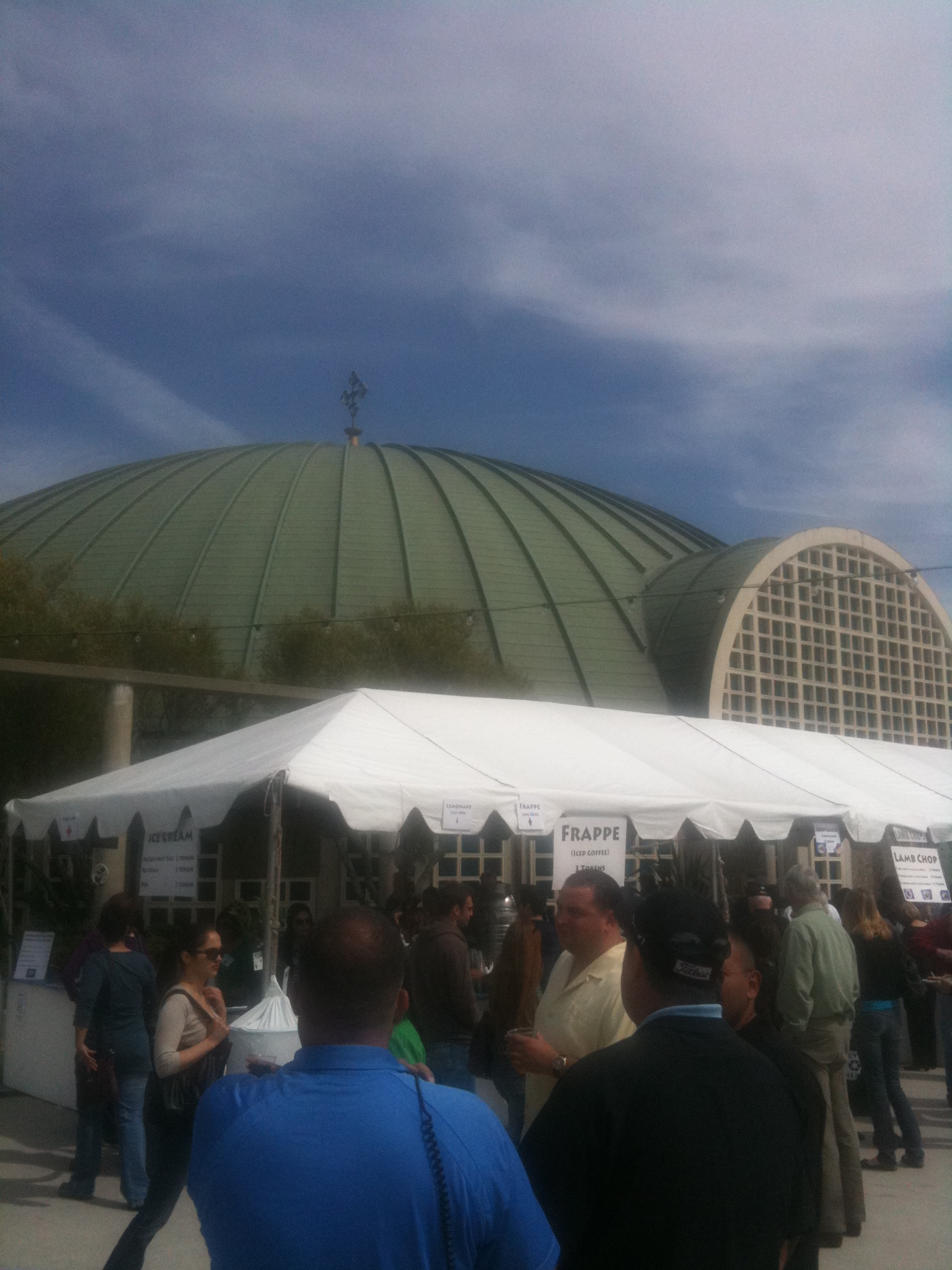
adventures in writing alexander lingas all saints bloomington all saints orthodox church american orthodox architecture american orthodox music american orthodoxy Antiochian Archdiocese Antiochian Orthodox Christian Archdiocese of North America Antiochians books byzantine chant cappella romana chant church architecture ecclesiastical chant ethnomusicologists ethnomusicology fellowship of ss. alban and sergius Greece Greek greek food greekness hazards of church music international travel tips ioannis arvanitis joe mckamey john michael boyer kurt sander Latin liturgical adventures liturgical architecture liturgical music liturgical texts and translation liturgy liturgy and life lycourgos angelopoulos medieval byzantine chant Metropolitan PHILIP militant americanist orthodoxy modern byzantine architecture modern greek music music as iconography my kids will latin and greek when they're newborns my kids will learn latin and greek when they're newborns orthodox architecture orthodox architecture is bloody expensive Orthodox choir schools Orthodox Ecclesiology orthodox outreach orthodox travel pascha at the singing school Patriarchate of Antioch Patriarch IGNATIUS IV Patriarch of Antioch publishing random acts of chant richard barrett in greece richard toensing rod dreher sacred music st. vlads st john of damascus society Syriac the Bishop MARK fan club the convert dilemma the dark knight The Episcopacy The Episcopate the only good language is a dead language this american church life travel we need more american saints why do we need beautiful music in churches?

Blog Stats

  • 270,428 hits

Flickr Photos